7 Tips to Decorate Above Kitchen Cabinets
Empty space above kitchen cabinets can be tricky to style. You want a polished look without creating clutter, and you’re not alone—many people struggle to balance decor, storage, and hard-to-reach areas. These tips will help you create a display that feels intentional and complements your kitchen.
Measure the space above your cabinets, noting ceiling height, vents, molding, and door clearance. Match your decor to the kitchen’s style and limit colors to two or three tones.
Choose slim pieces for narrow gaps and layered art or shelves for larger spaces. Add greenery to soften cabinet lines, then mix artwork, trays, baskets, and ceramics by height, shape, and texture.
Secure stable pieces, protect ventilation, and dust regularly. Keep exploring for more ways to create a polished display.
Key Takeaways
- Measure cabinet tops, ceiling height, gaps, and obstructions before selecting or arranging decorations.
- Match colors, materials, and accents to your kitchen’s existing style for a cohesive appearance.
- Combine artwork, greenery, baskets, trays, and ceramics while varying heights, textures, and shapes.
- Create balanced groupings with layered objects, gentle height changes, and enough negative space.
- Choose stable, washable pieces and keep decorations away from heat sources, vents, and ventilation pathways.
Measure the Space Above Your Cabinets
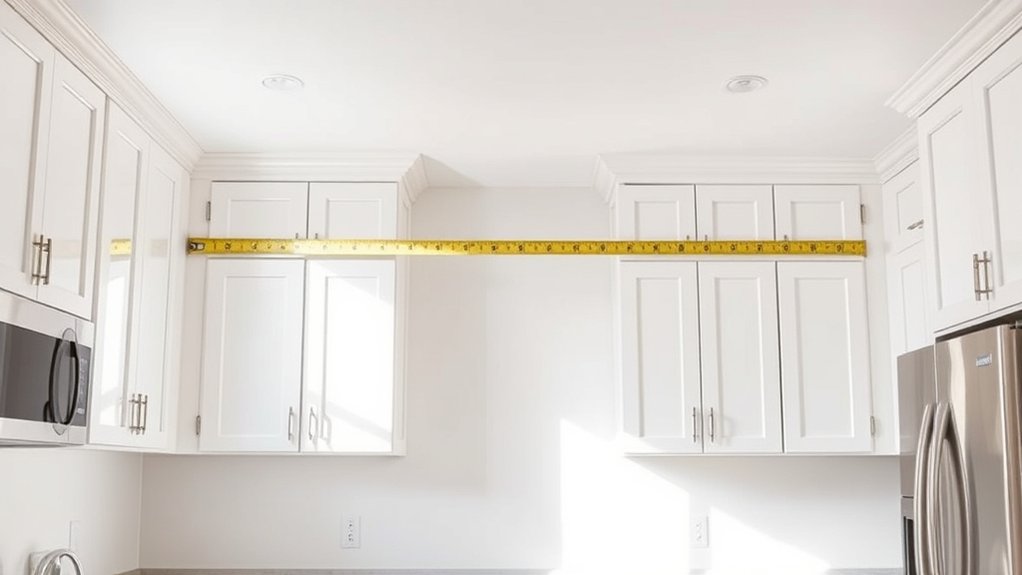
Before decorating, measure the space above your cabinets to determine what will fit comfortably. Use measuring tools such as a tape measure, level, and step stool to work safely and accurately.
Record the cabinet length, available height, and depth from the wall to the cabinet edge. Measure each section separately if your cabinets vary in size or include corners.
Next, note nearby features that could limit your arrangement, including ceiling molding, vents, lights, and cabinet doors. Leave enough clearance for doors to open fully and for you to dust or remove items without difficulty.
Follow practical spacing guidelines by keeping taller pieces away from low ceilings and allowing visual breathing room between objects. Check your measurements twice, then sketch the area on paper or mark dimensions in a notes app.
This preparation helps you select appropriately sized containers, artwork, or other accents without overcrowding the space or creating an awkward, difficult-to-maintain display.
Match Decor to Your Kitchen’s Style
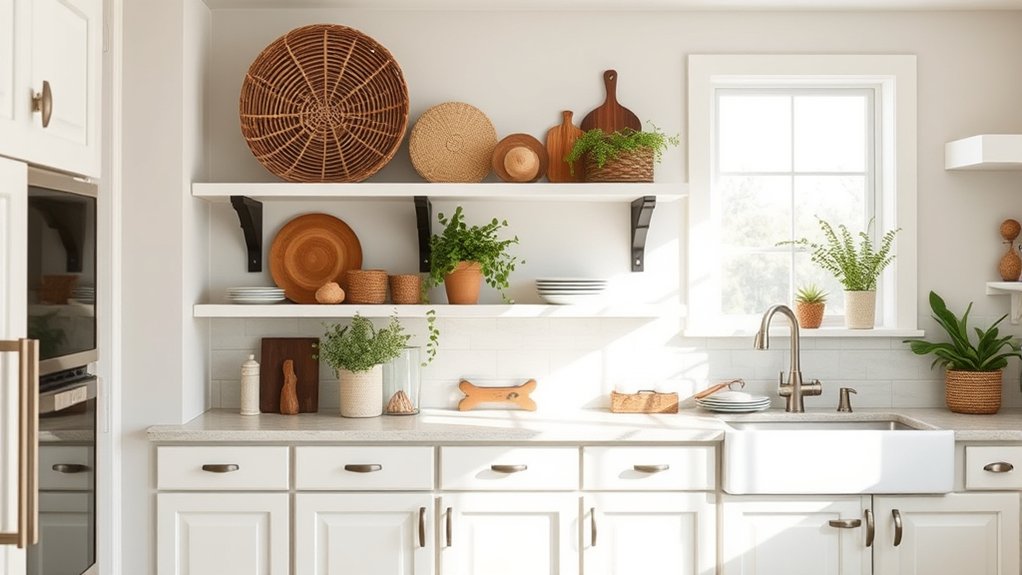
Match your above-cabinet decor to your kitchen’s style for a cohesive look. Start by identifying the overall style, then choose colors and materials that complement it. Add decorative accents that enhance the space without competing with the rest of the design.
Identify Your Kitchen Style
Your kitchen’s style should guide what you display above the cabinets, whether it’s farmhouse, modern, traditional, or eclectic. Start by studying your room’s defining features, including cabinet materials, door profiles, hardware shapes, and kitchen architecture.
These details reveal the look you should reinforce rather than compete with.
For a farmhouse kitchen, choose practical, relaxed accents such as baskets, pottery, or vintage-inspired signs. In a modern space, keep the arrangement streamlined with sculptural objects and clean silhouettes.
Traditional kitchens suit classic pieces, including framed art, urns, or neatly stacked books. If your kitchen feels eclectic, combine meaningful finds while maintaining a deliberate arrangement.
Before decorating, remove anything that doesn’t fit your style. When each piece reflects your kitchen’s character, the space above your cabinets looks intentional, cohesive, and naturally connected to the room below.
Coordinate Colors And Materials
Once you’ve identified your kitchen’s style, choose colors and materials that support it. For a cohesive display above your cabinets, repeat shades already present in your backsplash, countertops, flooring, or cabinetry.
Color coordination keeps the area connected without making it look overly planned. Choose finishes that suit your kitchen’s character, too.
In a farmhouse space, wood, ceramic, and woven textures can reinforce its warmth. In a modern kitchen, smooth metal, glass, or painted finishes may work better.
Material matching doesn’t mean everything must look identical. Instead, combine related textures and finishes that complement your existing surfaces.
Keep the palette limited to two or three tones, and avoid materials that clash with your hardware or cabinet finish. This approach makes your decor feel intentional, polished, and naturally integrated.
Choose Complementary Decorative Accents
Choose decorative accents that complement your kitchen’s style rather than compete with it. For a farmhouse kitchen, display woven baskets, ceramic pitchers, or simple wooden signs above the cabinets. In a modern space, choose sculptural vases, streamlined artwork, or metallic objects with clean lines.
If your kitchen feels traditional, consider framed prints, decorative plates, or elegant glassware. Repeat colors and finishes already present in the room to create a cohesive look.
Add seasonal accents sparingly, such as a small wreath in winter or fresh greenery in spring, so your display stays polished instead of cluttered. You can also include personal mementos, such as travel finds or inherited dishes, to give the arrangement character.
Group similar pieces together, vary their heights, and leave breathing room between accents for a balanced, intentional finish.
Choose Decor for Small or Large Gaps
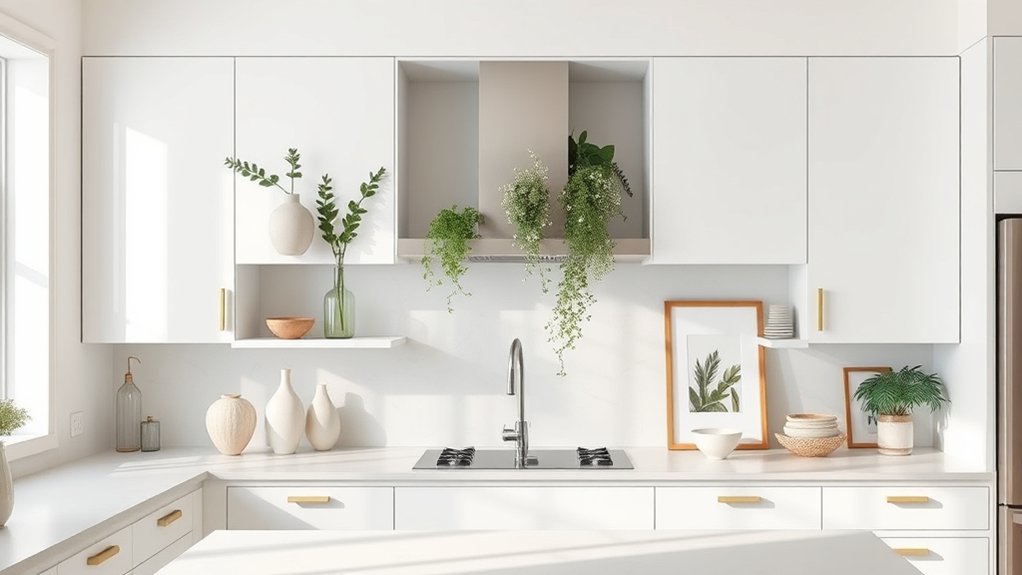
The gap above your cabinets should guide the scale of your décor. For a narrow space, choose slim, low-profile pieces that add interest without making the kitchen feel crowded.
Lean a small framed print against the wall, group a few shallow vessels, or install a single rail for a tidy display. Avoid tall objects that disappear into the ceiling or look wedged into the opening.
A larger gap gives you room to create height and structure. Layer oversized artwork, substantial pottery, or architectural objects to fill the vertical space with intention.
Floating shelves can bridge a wide opening while providing a practical spot for carefully edited accents. Leave breathing room between each item so the arrangement feels balanced rather than cluttered.
You can also use decorative lighting to highlight the display and visually connect it with the kitchen. Before buying anything, measure the gap, cabinet width, and ceiling height.
Then select pieces that complement those proportions.
Add Greenery to Soften Cabinet Lines
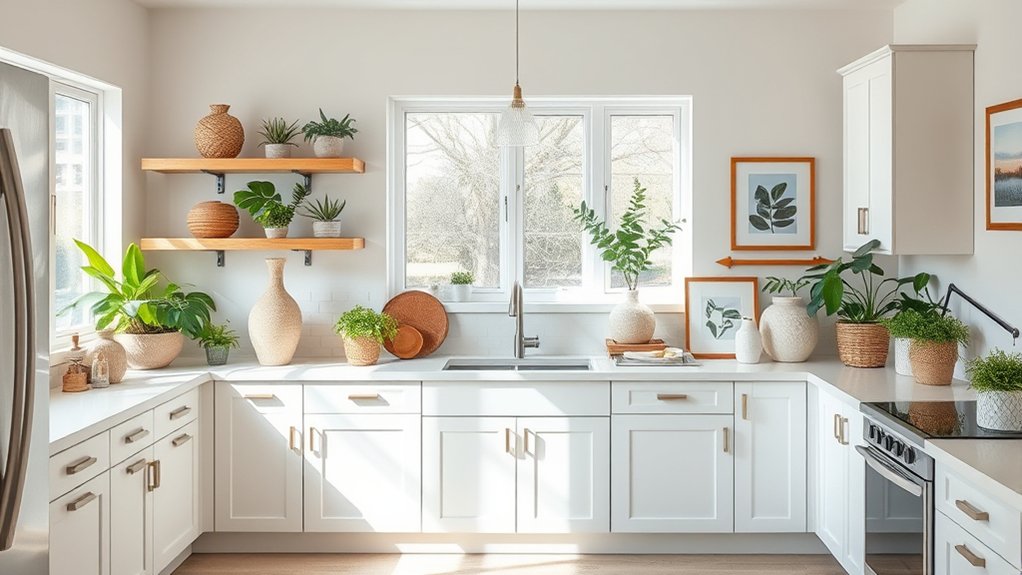
Plants can soften the straight lines of cabinets and bring natural color to the space above them. Choose greenery that suits your kitchen’s light, temperature, and available space.
In a bright room, place small potted herbs in attractive containers for useful, fragrant color. Herb arrangements featuring basil, rosemary, thyme, or mint can make the area feel fresh while keeping cooking essentials nearby.
If you prefer low-maintenance options, select realistic faux plants or hardy varieties such as pothos and snake plants.
Use trailing vines to break up long cabinet runs and add gentle movement. Let them spill slightly over an edge, but trim them regularly so they don’t interfere with doors, vents, or cooking surfaces.
Vary plant heights and container shapes to create a balanced display without overcrowding the gap. Leave enough space between pots for easy dusting and watering.
Before adding greenery, check that shelves can support the containers securely. Rotate live plants occasionally so each side receives even light and grows evenly.
Display Artwork and Leaning Kitchen Decor
Artwork and leaning kitchen decor can add personality above cabinets without making the space feel cluttered. Choose one large print, framed family recipe, or vintage kitchen sign that reflects your style.
For a relaxed art display, lean the piece against the wall instead of drilling holes. This makes seasonal updates easy. Keep frames secure and position them where cabinet doors won’t bump them.
| Choice | Visual effect |
|---|---|
| Framed print | Adds color and character |
| Vintage sign | Creates nostalgic charm |
| Recipe card | Personalizes the kitchen |
| Small canvas | Softens a blank wall |
Use leaning decor such as a shallow tray, cookbook, or cutting board beside the artwork, but avoid crowding the cabinet top.
Select pieces that relate to your kitchen’s colors without matching every detail. If the space feels busy, remove one item rather than adding another.
You’ll create a thoughtful focal point that feels collected, practical, and easy to refresh without overwhelming the room or competing with your greenery.
Layer Decor by Height, Shape, and Texture
Once you’ve chosen your artwork or leaning accents, vary the height, shape, and texture of the remaining pieces to create a balanced display. Place a tall vase or lidded jar beside shorter bowls, books, or framed prints to build a gentle rise and fall across the cabinet tops.
Vary heights, shapes, and textures to create a balanced arrangement with a gentle rise and fall across the cabinet tops.
Use round objects to soften the straight lines of cabinetry, then add a narrow tray or rectangular box for structure. Layer contrast by pairing smooth ceramics with woven baskets, aged wood, ribbed glass, or hammered metal.
Mixing textures keeps the arrangement visually interesting without requiring many items. Repeat one or two colors throughout the display so the different forms feel connected.
Leave small gaps between groupings, and let a few pieces overlap slightly to create depth. For a relaxed look, combine varied heights in uneven clusters rather than lining everything up.
Step back occasionally to check the overall rhythm, adjusting any piece that feels too heavy, crowded, or isolated.
Keep Above-Cabinet Decor Clean and Safe
Keep above-cabinet decor clean by choosing materials that don’t collect much dust and wiping each piece regularly. Make sure displays are stable and secure so they don’t shift or fall, especially during cleaning or nearby activity. Leave enough space around items and vents to maintain proper kitchen ventilation.
Reduce Dust Buildup
Dust can quickly collect on above-cabinet decorations, especially in kitchens with open shelves or frequent cooking. To reduce buildup, choose smooth, washable items and wipe them regularly with a slightly damp microfiber cloth.
Avoid dry dusting, which can send particles into the air and spread airborne allergens throughout your kitchen. Set a cleaning frequency that matches your cooking habits; weekly attention may suit a busy kitchen, while monthly cleaning might work in a quieter space.
Use a step stool carefully so you can reach each piece without stretching, and wear a mask if dust irritates your breathing. For deeper cleaning, remove decorations, wash appropriate items with mild soap, and let everything dry fully before returning it.
Keep cabinet tops clear enough to wipe easily, and check corners where grease and dust combine.
Choose Stable Displays
Choose decorations with a broad base and low center of gravity so they won’t wobble or fall when cabinets vibrate or items are moved nearby. Select sturdy pieces that fit the shelf without overhanging its edge.
Before arranging them, check each item for cracks, loose parts, or uneven bottoms that could cause instability. Practice balancing weight by placing heavier objects toward the center and lighter accents beside them.
Keep groupings compact, and avoid stacking pieces unless the lower item provides a firm, level foundation. For secure placement, add removable museum putty or discreet non-slip pads beneath valuable or easily shifted decor.
Leave enough room to reach items safely, and lift, rather than drag, decorations during cleaning. A stable arrangement protects your decor, cabinets, and anyone working nearby.
Ensure Proper Ventilation
Once your displays are stable, arrange them so air can circulate freely around the cabinet tops. Leave a few inches between décor and the ceiling, walls, and nearby vents to support airflow circulation.
Don’t cover range-hood openings, grilles, or other ventilation pathways with baskets, signs, or decorative fabric. Keep items away from heat sources, especially above a stove, where grease and warmth can create safety concerns.
Check that your exhaust system vents properly and doesn’t blow directly onto lightweight pieces. Choose heat-resistant materials when décor must sit near cooking areas, and remove anything that could melt, ignite, or fall.
Wipe surfaces regularly because dust and grease can restrict airflow and make cleaning harder. If the space feels hot, damp, or smoky, reduce the display and improve ventilation promptly.
Frequently Asked Questions
How Often Should Above-Cabinet Decorations Be Changed Seasonally?
You should change above-cabinet decorations about four times yearly, aligning with spring, summer, fall, and winter. You don’t need a complete makeover each season; simply rotate accents, colors, and textures to keep your kitchen feeling invigorating.
For easy seasonal decor ideas, swap greenery, baskets, candles, or small signs. Follow decorating theme suggestions that complement your existing style, and store off-season pieces in labeled containers.
Revitalizing selectively saves time, money, and storage space.
What Budget-Friendly Items Work Best for Decorating Above Kitchen Cabinets?
Use thrifted vases, framed prints, faux plants, and cookbooks to decorate above your kitchen cabinets affordably. Floating shelves add display space without requiring expensive built-ins.
Decorative baskets hide clutter and bring texture. Repurpose jars, trays, wooden crates, or cutting boards for character.
Shop dollar stores, flea markets, and your own storage areas before buying new pieces. Group items by color, vary heights, and leave breathing room so your arrangement looks intentional, not crowded.
How Can Renters Decorate Above Cabinets Without Making Permanent Changes?
You can decorate above cabinets without permanent changes by choosing lightweight, freestanding accents. Try removable wallpaper on foam board rather than directly on the wall, so you can lift it away easily.
Arrange decorative baskets, faux plants, framed prints, or colorful dishes to add personality without drilling. Use removable adhesive hooks only for lightweight pieces, and place felt pads beneath objects to protect cabinet tops.
Keep everything secure, accessible, and easy to remove when you move.
Should Above-Cabinet Decor Coordinate With Nearby Dining or Living Areas?
Yes, you should coordinate above-cabinet decor with nearby dining or living areas, but you don’t need an identical look. Use color coordination to connect artwork, baskets, ceramics, or greenery with furnishings in adjoining spaces.
Practice style matching by repeating materials, shapes, or finishes, while allowing the kitchen to display its own personality. Keep the shift natural: choose a shared accent color and complementary textures, then avoid overcrowding the visual flow between rooms.
What Lighting Options Highlight Decorations Above Kitchen Cabinets?
You can highlight decorations above kitchen cabinets with LED strip lighting, which creates an even, subtle glow along the cabinet tops. Choose warm-white bulbs to make wood, ceramics, and artwork feel inviting.
For more focused drama, install adjustable accent spotlights aimed at individual objects. Battery-operated puck lights offer a simple option where wiring isn’t available.
Use dimmers whenever possible, so you can control brightness and keep the display from overpowering your kitchen.
Conclusion
With these seven tips, you’ll transform that forgotten strip above your kitchen cabinets into a showstopping design moment. Measure first, match your style, and choose pieces that suit the space.
Add greenery, artwork, varied heights, and inviting textures without creating a clutter catastrophe. Keep everything secure and dust-free, too.
Soon, your kitchen’s upper edges won’t merely look finished. They’ll steal the spotlight, turning an overlooked gap into the most dazzling detail in your entire home.