How Can You Organize Kitchen Cabinets and Drawers With 3 Simple Tips?
A cluttered kitchen can make even simple meal prep feel stressful, especially when cabinets are overflowing and drawers are hard to navigate. You’re not alone—many people struggle to keep their storage spaces tidy and practical. The right kitchen cabinet and drawer organization products can make a noticeable difference.
You can organize kitchen cabinets and drawers in three simple steps. First, empty each space, discard expired or damaged items, and donate duplicates or unused tools. Next, create practical zones by storing pots near the stove, dishes near the dishwasher, and everyday utensils within easy reach.
Finally, add dividers for lids and cutting boards, plus risers for plates and bowls. Test your layout during meal prep and adjust it after a week for smoother routines, as the following tips explain.
Key Takeaways
- Declutter first by removing everything, discarding expired or damaged items, and donating duplicates or unused essentials.
- Group similar items together and place frequently used kitchenware near its point of use.
- Use dividers, risers, and vertical storage to separate lids, pans, cutting boards, and baking sheets.
- Wipe cabinets and drawers clean, then label zones if helpful for maintaining the organization.
- Test the layout during meal preparation and adjust it after a week for better accessibility.
Declutter Kitchen Cabinets and Drawers
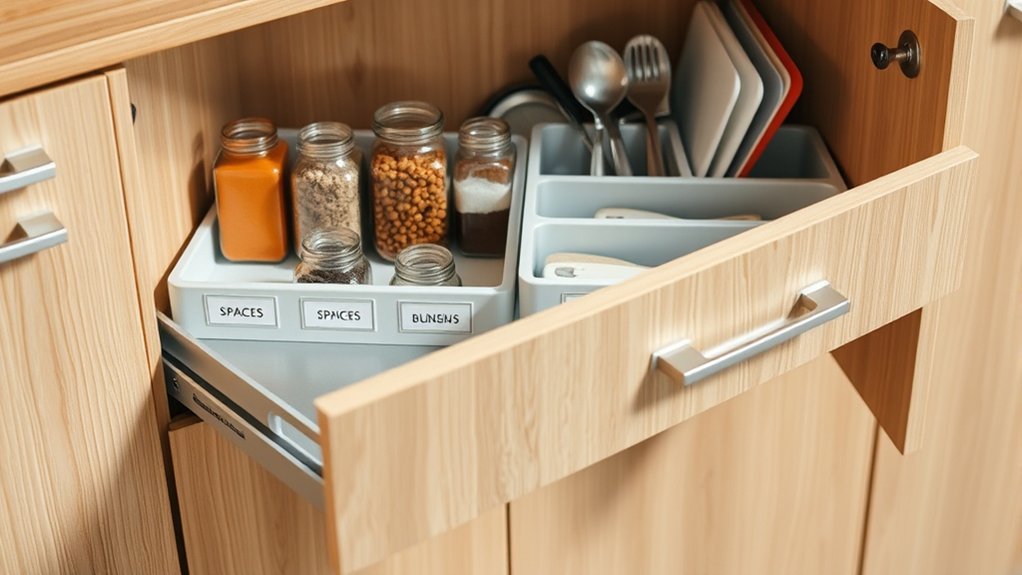
Before you organize your kitchen cabinets and drawers, remove everything and sort items into keep, donate, recycle, and discard piles. Check each piece for damage, duplicates, expired contents, and usefulness.
If you haven’t used an item in a year, consider donating it unless it serves a specific seasonal purpose. Discard cracked containers, dull tools you can’t sharpen, and expired pantry goods safely.
Wipe empty shelves and drawers with a suitable cleaner, then let them dry completely. During pantry organization, group similar foods and remove unnecessary packaging that takes up space.
Keep only containers with matching lids, and recycle extras whenever possible. For utensil sorting, spread everything out and separate everyday tools from specialty items.
Donate duplicates and discard broken pieces. Resist keeping items solely because they were expensive or gifts; useful space matters more.
Measure available storage before returning anything, and leave questionable items in a box for a month. If you don’t miss them, let them go.
Create Kitchen Zones for Everyday Items
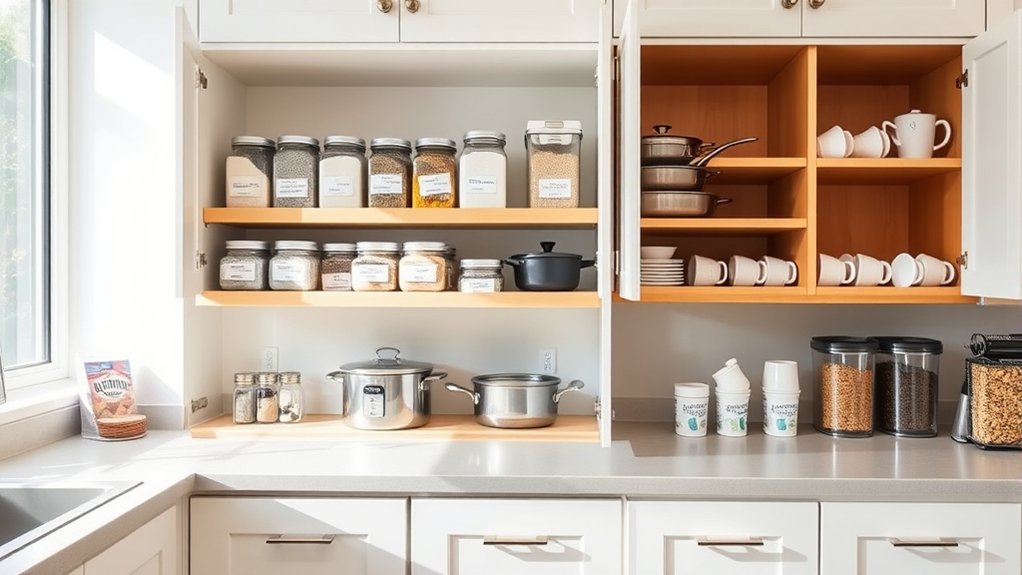
Once the cabinets and drawers are clean, create zones based on how you use your kitchen. Place frequently used items near their point of use, so cooking feels natural instead of requiring extra steps.
Think about your routines, from making coffee to packing lunches, and assign each task a dedicated home.
| Kitchen zone | Store nearby |
|---|---|
| Coffee station | Mugs, filters, and coffee |
| Meal prep zones | Cutting boards, bowls, and knives |
Keep pots and pans close to the stove, dishes near the dishwasher, and food-storage containers near your main prep area.
For effective utensil organization, place spatulas, wooden spoons, and tongs beside the cooktop. Store measuring cups and mixing tools near pantry ingredients or your countertop workspace.
Give everyday dishes the easiest-to-reach shelves, while reserving less convenient locations for specialty equipment.
Labeling isn’t essential, but it can help everyone return items correctly. As you arrange each zone, test your movements during a typical meal.
If you repeatedly cross the kitchen, shift the items until the layout supports your routine. Keep each zone focused, practical, and easy to maintain.
Use Dividers and Risers to Free Up Space
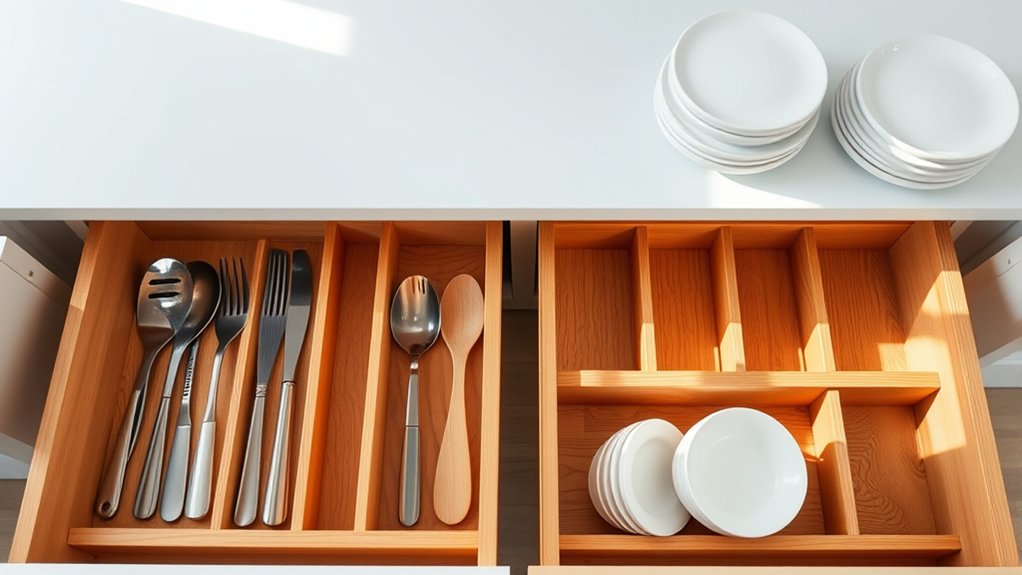
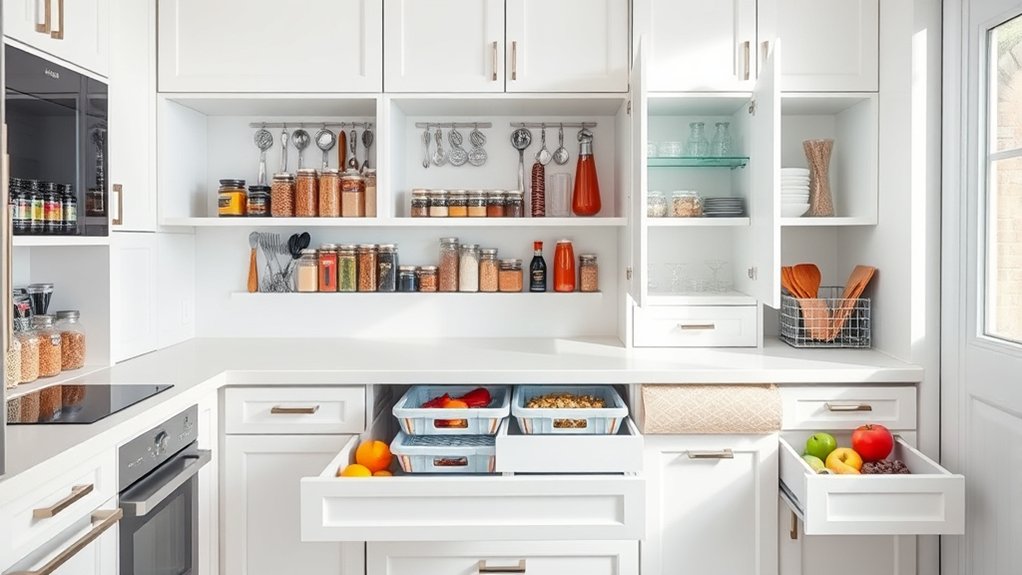
Use dividers and risers to turn open cabinet space into organized, accessible storage. Add a riser inside a crowded cabinet to create a second level for plates, bowls, or mugs.
Create organized cabinet storage with risers and dividers, giving dishes a second level and keeping everything within easy reach.
You’ll see everything at a glance instead of stacking items so high that you must unload the shelf.
Use adjustable dividers to separate baking sheets, cutting boards, pot lids, and serving trays. Stand each item vertically, then label sections if multiple household members share the kitchen.
This simple approach improves shelf organization and keeps pieces from sliding into messy piles.
Choose sturdy, washable storage solutions that fit your cabinet dimensions. Measure the width, depth, and height before you shop, and leave enough clearance to remove items comfortably.
Use narrow risers for short cabinets and deeper platforms for bulky cookware. Don’t overcrowd newly created levels; reserve a little space so you can return items easily.
Reassess your setup after a week and adjust dividers or risers where your routine demands.
Frequently Asked Questions
How Often Should I Reorganize My Kitchen Cabinets and Drawers?
You should reorganize your kitchen cabinets and drawers every three to six months, or whenever items become difficult to find. Add quick monthly checks to your Cleaning routines, removing expired food, duplicates, and unused tools.
Adjust shelves after seasonal changes or new purchases. Use practical Labeling strategies for bins and containers, especially in deep cabinets.
If clutter returns quickly, reorganize sooner and change your storage system rather than forcing it to work.
What Storage Solutions Work Best for Renters With Limited Kitchen Space?
Choose rental-friendly storage that adds capacity without drilling or permanent changes. Use adhesive hooks, tension rods, and over-the-door racks for utensils, towels, and cutting boards.
Stackable shelves and slim rolling carts create vertical space inside cabinets and narrow gaps. Try drawer dividers, magnetic strips, and shelf risers to keep essentials accessible.
These compact organization solutions help you maximize every inch while preserving your security deposit and making your kitchen easier to maintain daily.
How Can I Organize Cabinets Safely for Children?
Use these childproofing tips to organize cabinets safely: place knives, cleaners, medicines, glassware, and small choking hazards in high, locked cabinets. Store everyday plastic dishes and approved snacks in lower, accessible spaces.
Install sturdy cabinet latches, secure freestanding storage, and keep cords out of reach. Follow safe storage practices by labeling containers, closing doors immediately, and checking locks regularly.
Reassess arrangements as your child grows and new risks emerge.
Which Kitchen Items Should Be Stored Away From Heat and Moisture?
Store Heat sensitive items away from ovens, stovetops, dishwashers, and sunny windows. Keep chocolate, cooking oils, spices, canned goods, plastic containers, wooden utensils, and small appliances in cool cabinets.
Protect Moisture prone cookware, including cast iron, carbon steel, wooden tools, and baking sheets, from sinks and steam. Dry everything thoroughly before storing, use airtight containers for dry ingredients, and leave space for air circulation to prevent rust, warping, mold, and spoilage in your cabinets.
How Do I Maintain an Organized Kitchen After Hosting Large Gatherings?
After guests leave, restore order before the last glass dries. Start guest cleanup by clearing leftovers, loading the dishwasher, and wiping counters and cabinet handles. Return every item to its assigned home rather than creating temporary piles.
During post-party storage, label containers, stack them neatly, and freeze anything you won’t eat soon. Empty the trash, sweep the floor, and restock essentials. Finish by checking drawers and cabinets so tomorrow’s cooking feels effortless.
Conclusion
With a little planning, you can turn crowded cabinets and drawers into efficient kitchen zones. Start by removing unused items, then group everyday tools where you’ll reach them easily.
Add drawer dividers, shelf risers, or small bins to maximize space without remodeling. For example, one busy family moved coffee supplies into a single cabinet, used risers for mugs, and reclaimed an entire drawer.
Try these simple kitchen cabinet and drawer organization tips today, and you’ll make cooking and cleanup faster, easier, and more enjoyable.