How to Dispose of Old Kitchen Knives Safely
Old kitchen knives can be difficult to get rid of safely, especially when you’re unsure whether to donate, recycle, or throw them away. You’re not alone—many people struggle with how to dispose of old kitchen knives without risking cuts or injuries.
To dispose of old kitchen knives safely, inspect them first.
Donate or recycle clean, intact knives only after confirming the organization or facility accepts them.
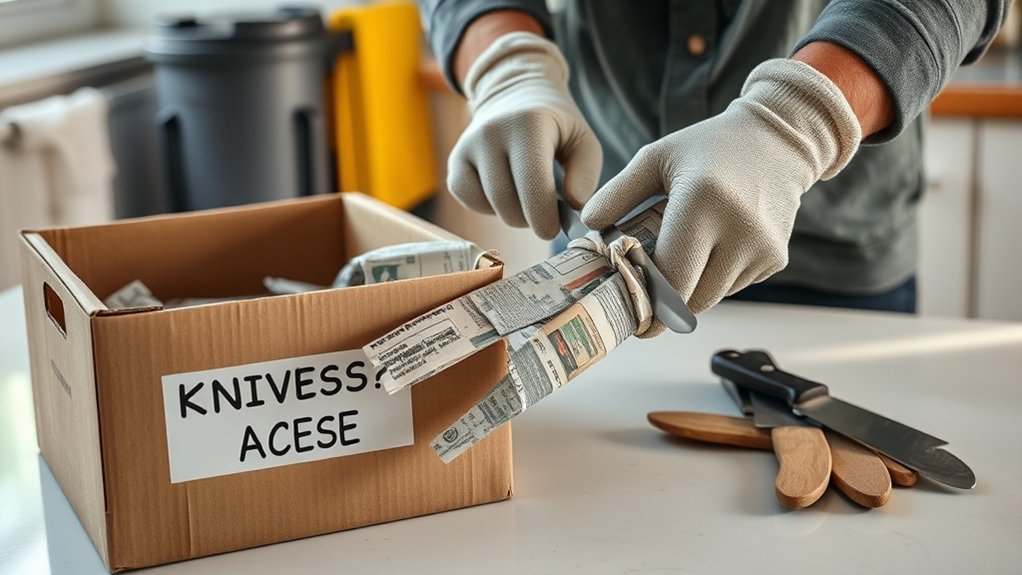
For damaged knives, wear cut-resistant gloves, wrap each blade in thick cardboard, and secure it with strong tape.
Place the wrapped knives in a sturdy, puncture-resistant container labeled “Sharp.”
Check your local waste authority’s rules before placing anything in the trash.
Keep knives away from children, and find out more safe disposal options below.
Key Takeaways
- Inspect knives for cracks, severe rust, chips, bends, loose handles, or other damage before deciding whether to reuse or discard them.
- Wear cut-resistant gloves, keep blades pointed away from your body, and never test sharpness with your fingers.
- Wrap each blade completely in thick cardboard or newspaper, secure it with strong tape, and label the package “Sharp.”
- Place wrapped knives in a sturdy, puncture-resistant container, keeping them away from children and pets until collection.
- Contact your local waste authority or recycling center to confirm accepted materials, drop-off requirements, and whether donation is appropriate.
How to Dispose of Kitchen Knives Safely
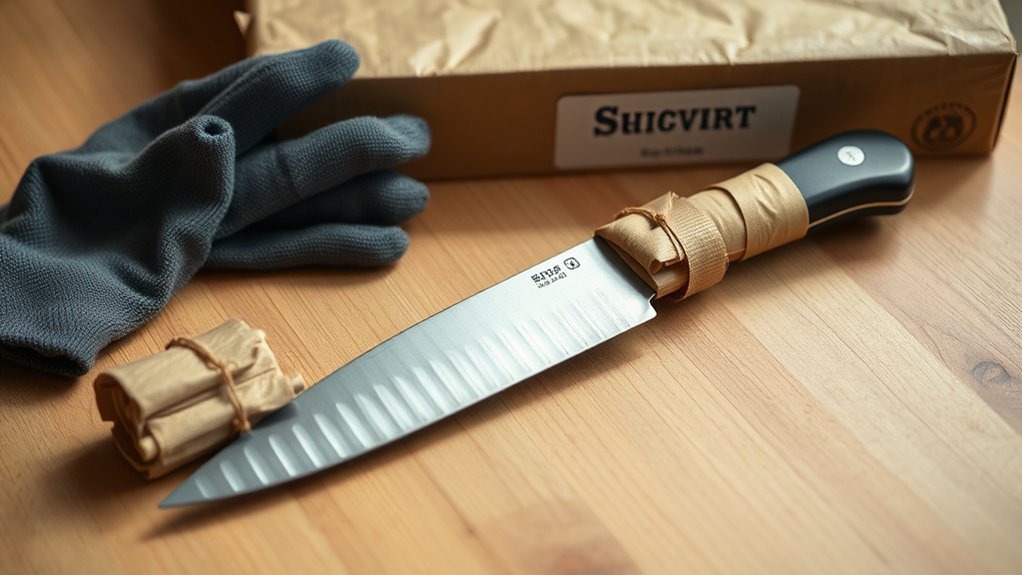
Before disposing of an old kitchen knife, protect the blade and anyone who might handle it. For kitchen safety, clean and dry the knife, then wrap its blade completely in thick cardboard.
Secure the cardboard with strong tape, keeping the handle exposed if possible so others can identify the object safely. You can also place the wrapped knife inside a sturdy box, seal it, and label it clearly as “sharp.”
Don’t use a thin plastic bag, loose paper, or an unsealed container; the blade can puncture the covering and cause an injury. If the knife has a removable blade, cover each sharp component separately.
Consider whether the knife remains useful before discarding it. Knife sharpening might restore a dull edge, while a damaged, cracked, or loose-handled knife deserves disposal.
Keep the prepared package away from children and pets until you’re ready to place it with your household waste. Handle the package carefully, and never toss an uncovered knife into any bin.
Check Your Local Disposal Rules
Check your local waste authority’s rules before placing a wrapped kitchen knife in the trash or recycling. Requirements differ by city, county, and waste company, so don’t assume ordinary household guidance applies.
- Visit your local authority’s website or call its waste hotline to confirm accepted disposal methods.
- Check whether workers require knives in a rigid, sealed container, such as a cardboard box or metal can.
- Ask whether collection crews accept sharp objects in general trash, recycling, or a separate drop-off program.
- Confirm any labeling, curbside, transfer-station, or appointment requirements before you transport the package.
Some communities direct you to household hazardous-waste facilities, while others recommend specialized scrap-metal sites. Never place a loose blade in a recycling bin; it can injure workers and damage equipment.
If local guidance mentions knife sharpening or handle replacement services, follow those instructions for service-related waste. Don’t mix service information with disposal rules.
When online instructions conflict, contact the authority directly and follow its latest advice. Keep the knife secured until disposal day.
Decide Whether the Knives Can Be Reused
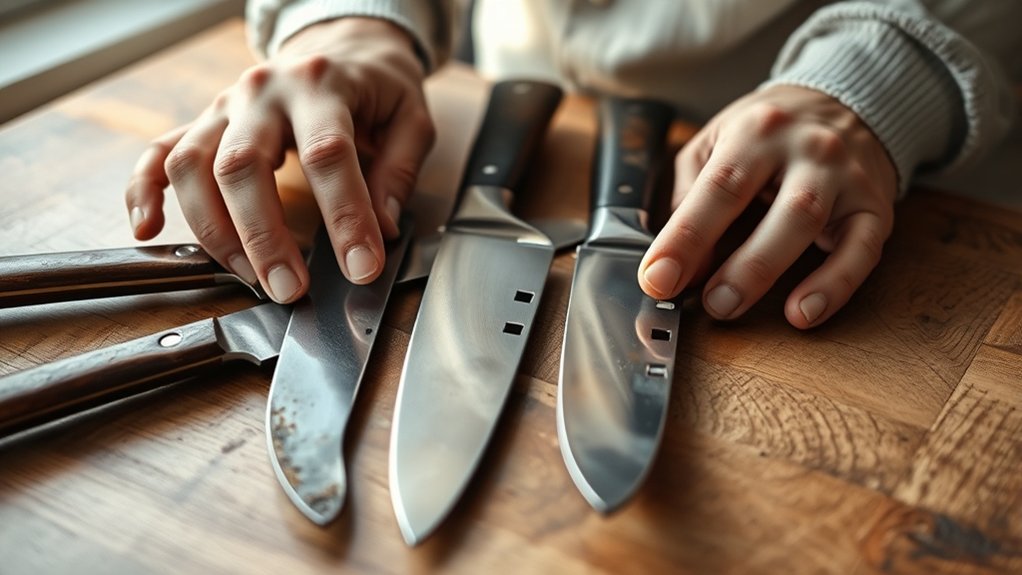
Before you dispose of your knives, check each blade for cracks, deep rust, or other serious damage. Make sure the handle is stable and secure as well. If a knife is still safe and usable, consider donating it to a charity, community kitchen, or reuse program.
Assess Blade Condition
Examine each knife’s blade and handle for deep cracks, severe rust, loose parts, or other damage that could make it unsafe to use. Then assess the blade itself before deciding whether reuse makes sense.
- Look for chips, bends, pits, or hairline cracks along the cutting edge and spine.
- Check for heavy corrosion that may weaken the metal or resist cleaning.
- Test whether blade sharpening could restore a dull edge without removing excessive metal.
- Consider the handle material. Heat damage, splitting, or contamination may make the knife unsuitable, even if the blade looks usable.
Wear cut-resistant gloves and hold each knife under good lighting. Don’t try to salvage a blade with structural damage. Set questionable knives aside for safe disposal, and reserve sound, clean blades for sharpening or another practical use. Never use a damaged knife just because it appears inexpensive to replace.
Check Handle Stability
Inspect the handle for cracks, splits, looseness, or movement where it meets the blade. Hold the knife firmly and check whether the handle shifts, rattles, or feels uneven.
A loose connection can let the blade twist unexpectedly, increasing your risk of cuts. Examine rivets, screws, and the bolster for gaps, rust, or missing parts.
Test the handle’s surface too: deep gouges, swelling, peeling, or a slippery finish can compromise control, especially when your hands are wet.
Handle maintenance, such as tightening fasteners or replacing a damaged grip, may restore stability if the blade remains sound. However, don’t reuse a knife with a cracked handle, exposed tang, or failed repair.
Prioritize grip safety. If you can’t maintain a secure, comfortable hold, set the knife aside for safe disposal.
Consider Donation Options
Can the knife still serve someone safely? Before donating, inspect the blade, handle, and locking features. If you find cracks, severe rust, looseness, or chips that could cause injury, don’t pass it along; dispose of it responsibly instead. A sound knife may help a neighbor, culinary student, community kitchen, or charity.
- Clean and dry the knife thoroughly.
- Consider professional knife sharpening if the edge is dull but the blade remains structurally sound.
- Wrap the blade securely in cardboard, then label the package clearly.
- Ask the recipient whether they accept used knives and explain any flaws honestly.
Choose organizations with proper kitchen safety practices, and transport the wrapped knife in a sturdy container. You’ll support reuse without exposing anyone to an avoidable hazard. If donation isn’t appropriate, follow local disposal guidelines.
Donate Knives in Good Condition
Donate knives only if they’re clean, intact, and safe to use. Before giving them away, check for loose handles, severe rust, or damaged blades.
Once you’ve confirmed they’re in good condition, look for suitable donation locations, such as thrift stores, community kitchens, or culinary programs. Be sure to contact each organization first to ask about its donation policies.
Check Knife Condition
Before deciding how to dispose of an old kitchen knife, check its condition. You can donate a knife only when it remains safe, functional, and suitable for another cook.
Inspect it carefully before handling or cleaning it:
- Look for cracks, chips, rust, or loose handles.
- Check whether the blade sits firmly and evenly.
- Test the handle for a secure grip and hidden damage.
- Consider knife sharpening if the edge is dull but intact.
Don’t donate a knife with a broken blade, severe corrosion, wobbly construction, or dangerous defects.
Kitchen safety comes first, so wrap the blade securely while you evaluate it. Avoid testing sharpness with your fingers.
If the knife needs only minor cleaning or sharpening, it may still qualify as usable. If repairs can’t restore safe performance, choose a disposal method designed for damaged knives instead.
Choose Donation Locations
If your kitchen knife remains clean, sturdy, and safe to use, you can donate it to a local charity, thrift store, culinary school, or community kitchen that accepts kitchen tools.
Call first, because donation policies vary. Ask whether staff require sheathing or packaging.
Charity organizations may welcome usable cookware, while community centers often equip shared kitchens or cooking programs.
| Location | Best for | Before donating |
|---|---|---|
| Thrift store | General household use | Confirm knife acceptance |
| Culinary school | Student practice | Check training needs |
| Community kitchen | Shared meal preparation | Ask about safety rules |
Clean the blade, dry it thoroughly, and place it in a knife guard or sturdy cardboard sleeve.
Label the package clearly, then transport it carefully with the blade secured.
Never donate a chipped, loose-handled, or dangerously dull knife. Recycle or dispose of it safely instead.
Find Local Knife Recycling Options
Your local recycling center or household hazardous-waste facility may accept old kitchen knives, so check its website or call ahead for current guidelines. Ask whether the program accepts stainless steel, ceramic, or mixed-material blades, and learn how staff want you to prepare them.
Check your local recycling center’s guidelines first; acceptance and preparation rules may vary for stainless steel, ceramic, or mixed-material knives.
- Wrap each knife securely in thick cardboard, then tape the package closed.
- Mark the package “Sharp” so workers can handle it cautiously.
- Transport it in a rigid container that keeps blades from shifting.
- Follow posted drop-off hours, quantity limits, and identification requirements.
Don’t place loose knives in your curbside bin unless your local provider specifically approves them. A recycling center might direct you to a specialized household collection event instead.
Keep checking municipal updates if no permanent option exists. Before recycling, consider whether Knife sharpening could restore a usable blade; reusing it may support Kitchen safety when you maintain the edge properly.
Never bring a damaged, exposed knife to a public facility without securing it first, and don’t leave it beside a collection bin.
Contact Scrap Metal Drop-Off Sites
When local recycling programs don’t accept kitchen knives, contact nearby scrap metal drop-off sites. Ask whether the facility accepts household cutlery and which preparation rules apply. Some sites require appointments, proof of residency, or specific sorting, so confirm details before you travel.
Tell staff that you’re bringing kitchen knives, and describe their materials, such as stainless steel, carbon steel, or a mixed handle. This information helps workers direct you to the correct metal recycling container.
Ask whether the site accepts knives with plastic or wooden handles, since some facilities separate these components.
For recycling safety, carry the knives in a rigid box or sturdy container with the blades secured and pointing away from openings. Don’t hand them over loose, and don’t place them in a public collection bin unless the site specifically permits it.
Follow posted instructions, use designated drop-off areas, and keep children away while you transport the package. Record the facility’s hours and accepted materials so your next visit goes smoothly.
Throw Away Damaged Knives Safely
When you need to throw away a damaged knife, wrap the blade securely to help prevent injuries. Then, place it in a sturdy container that won’t tear or break, and label it clearly as containing sharp objects.
Wrap Blades Securely
Before throwing away a damaged kitchen knife, wrap the blade securely in several layers of thick cardboard or newspaper and seal the package with strong tape. This barrier keeps sharp edges from cutting you or anyone handling your trash.
- Inspect the blade: Look for cracks, loose handles, or Blade corrosion before wrapping.
- Cover the point: Fold cardboard over the tip, then add layers along the entire blade.
- Secure every edge: Apply strong tape around the package, keeping the handle exposed only if necessary.
- Label the bundle: Mark it “Sharp” so others recognize the hazard immediately.
Don’t try Knife sharpening on a severely damaged knife before disposal. Handle the wrapped package carefully, and wash your hands afterward.
Keep loose tape, paper, and cardboard away from children while you prepare the knife for disposal.
Use A Sturdy Container
Place the wrapped knife inside a sturdy, puncture-resistant container, such as a small metal tin or rigid plastic box, before putting it in the trash. Choose a container that won’t split, collapse, or allow the blade to pierce its sides.
A clean food can with a secure lid can work, provided you remove sharp edges from the lid and don’t force the knife inside. Don’t use thin cardboard, grocery bags, or flimsy plastic, since sharp tools can tear through them and injure someone handling your waste.
Keep the sealed container away from children and pets until collection day. Don’t place it with kitchen storage items or reuse it for food.
If the container feels weak, select a stronger one before disposal. This extra barrier helps protect you, neighbors, and sanitation workers.
Label Sharp Contents
Once the knife is secured in a sturdy container, label it clearly as “Sharp: Do Not Open” or “Caution: Sharp Object.” Write the warning in large, waterproof lettering so anyone handling the trash notices it immediately. Don’t hide the label beneath tape, bags, or other materials.
Good Kitchen safety depends on clear communication, especially when damaged blades could injure sanitation workers or family members.
Before disposal, check these details:
- Mark every side that someone might see.
- Add “Broken Knife” if the blade has jagged edges.
- Seal the container firmly after labeling.
- Keep it away from children and pets until collection.
Avoid vague labels such as “metal” or “trash.” If grease covers the surface, practice Sharp cleaning first, then dry the container and apply fresh, readable labels. Follow your local disposal service’s instructions, too.
Make Knives Safe for the Trash
Wrap each knife individually in several layers of newspaper, cardboard, or bubble wrap, then secure the bundle with strong tape. Cover the entire blade and any pointed tip so nothing can pierce the wrapping. Add another layer if you can feel an edge through the material.
Place the wrapped knife inside a sturdy box or rigid plastic container. Don’t put it loosely in a thin bag, where it could cut through and injure someone. Fill empty space with crumpled paper so the knife can’t shift during collection. Seal the container securely with tape.
Write “SHARP” or “HANDLE WITH CARE” clearly on the outside, even if you’ve already labeled the contents. Keep the package away from children and pets until disposal day. Check your local waste rules; some areas require knives to go to a recycling center or transfer station.
Never attempt Knife sharpening before disposal, and don’t forget that Kitchen safety includes protecting sanitation workers. Wash and dry the knife first if residue remains.
Repurpose Old Knives at Home
If a knife is still structurally sound but no longer useful in the kitchen, you can repurpose it instead of throwing it away. Before starting, inspect the handle, blade, and fasteners, and choose projects that match your skills. Keep Kitchen safety central: wear gloves when handling the blade, secure your work surface, and supervise children and pets.
- Turn a broad blade into a garden marker by engraving plant names on the handle or attaching a weatherproof label.
- Mount a dull, cleaned blade on a workshop wall as a rustic tool hanger, using the handle for hooks or pegs.
- Transform a sturdy handle into a drawer pull, coat hook, or cabinet accent after removing the blade safely.
- Use a retired cleaver as a decorative sign, displaying it in a frame with a kitchen-themed message.
These projects encourage Culinary creativity while reducing waste. Clean every part thoroughly, secure decorative pieces firmly, and choose nonfood uses for repurposed knives.
Avoid Dangerous Knife Disposal Mistakes
Avoid tossing loose knives into trash bags, recycling bins, or donation boxes, where exposed blades can injure you or sanitation workers. Don’t leave knives beside dumpsters or place them in curbside recycling, because sorting equipment and workers aren’t designed to handle sharp objects.
Before disposal, check your local Disposal regulations. Your community may require knives to go to a household hazardous-waste facility, transfer station, or designated collection event. Call ahead if you’re unsure; rules vary by location.
If officials allow trash disposal, wrap each blade in thick cardboard, secure it with strong tape, and label the package “Sharp—Kitchen Knife.” Keep the point and edge fully covered, and place the bundle inside a sturdy box rather than a thin bag. Never hand an unsafe knife to a charity, neighbor, or child.
Wear Safety gear, including cut-resistant gloves and eye protection, while cleaning or wrapping damaged knives. Keep blades pointed away from your body, and don’t test sharpness with your fingers.
Frequently Asked Questions
Can Kitchen Knives Be Sharpened Instead of Discarded?
Yes, you can sharpen many kitchen knives instead of discarding them. Knife sharpening restores a dull edge, improves cutting control, and extends a blade’s useful life.
Use a whetstone, honing rod, or professional sharpening service, and follow safety instructions carefully. However, replace knives with cracks, severe rust, loose handles, or damaged blades.
When sharpening won’t help, research responsible Knife disposal methods, such as wrapping the blade securely before recycling or disposal.
How Should Antique or Collectible Knives Be Handled?
Treating every old knife like junk is a brilliant way to turn history into landfill. If you have an antique or collectible knife, don’t sharpen, alter, or discard it before researching its origin.
Handle it with clean gloves, protect the blade and handle, and store it in a dry, padded case. Seek professional Antique restoration advice and independent Collectible valuation.
If disposal remains necessary, wrap it securely and contact local waste services.
Are Knife Blocks and Protective Sheaths Recyclable?
Knife blocks and protective sheaths may be recyclable, but it depends on their materials. You can recycle clean wooden blocks through local wood-recycling programs, while plastic sheaths may belong in household recycling if your facility accepts that plastic type.
Don’t place metal-reinforced or contaminated items in your bin. For responsible knife disposal, check municipal guidelines and investigate recycling options first.
If recycling isn’t available, reuse, donate, or discard these accessories safely.
What Should Restaurants Do With Large Quantities of Old Knives?
You should inventory, secure, and arrange professional recycling or disposal for large quantities of old knives. First, check local knife disposal regulations and contact your waste authority for approved options.
Next, follow hazardous waste procedures if blades carry chemicals, biological residue, or other contamination. Don’t place loose knives in ordinary bins.
Bundle them in rigid, labeled containers, restrict access, and document transfers. A licensed metal recycler or commercial waste contractor can help.
Can Online Marketplaces Legally Sell Used Kitchen Knives?
Yes, you can usually sell used kitchen knives online, but you must follow marketplace policies and local laws. Check age restrictions, prohibited-item rules, shipping requirements, and any regional disposal regulations before listing.
You should describe each knife accurately, disclose damage, and package it securely to prevent injury. Prioritize knife safety by covering the blade, using rigid packaging, and confirming the buyer’s eligibility.
Some jurisdictions may ban certain blade types or sales methods entirely.
Conclusion
Disposing of old kitchen knives safely protects you, sanitation workers, and your community. First, check local rules and see whether someone can reuse or recycle the knives.
If you’re throwing them away, wrap each blade securely, label the package, and place it where disposal services allow. Don’t toss loose knives into the trash or recycling bin.
Why risk an injury when careful preparation takes only minutes? With the right approach, you’ll clear your kitchen responsibly and safely while following proper old kitchen knife disposal practices.