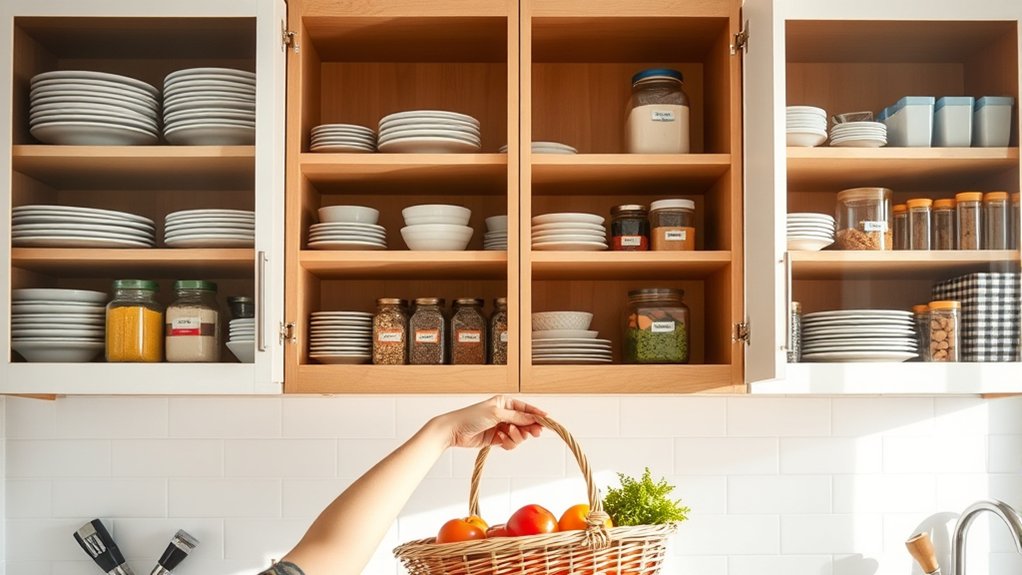
10 Tips to Organize Your Kitchen Cabinets Efficiently
Cluttered cabinets, wasted space, and never finding what you need can make cooking feel harder than it should. You’re not alone—many people struggle to keep their kitchens organized, especially when storage is limited. These practical kitchen cabinet organization tips can help you create a more efficient, easy-to-maintain space.
To organize your kitchen cabinets efficiently, declutter expired and unused items first. Group what remains by routine, such as baking, breakfast, snacks, and meal prep. Assign each category a convenient zone, keeping daily dishes and mugs at eye level.
Add shelf risers, dividers, lazy Susans, and pullouts to maximize space. Nest food containers, store lids upright, and contain small tools. Label shelves and maintain a weekly reset.
Keep going for more practical ways to streamline every cabinet.
Key Takeaways
- Declutter cabinets by removing expired, damaged, unused, and duplicate items before cleaning shelves and checking hardware.
- Group items by function, such as baking, breakfast, snacks, meal preparation, and entertaining, then label each storage zone.
- Keep frequently used dishes, mugs, utensils, and ingredients at eye level, while storing seasonal items on higher shelves.
- Maximize space with shelf risers, pullouts, lazy Susans, narrow bins, door organizers, and adjustable dividers.
- Nest food containers by size, store lids upright, and maintain organization through weekly resets and regular seasonal reviews.
Declutter Your Kitchen Cabinets First
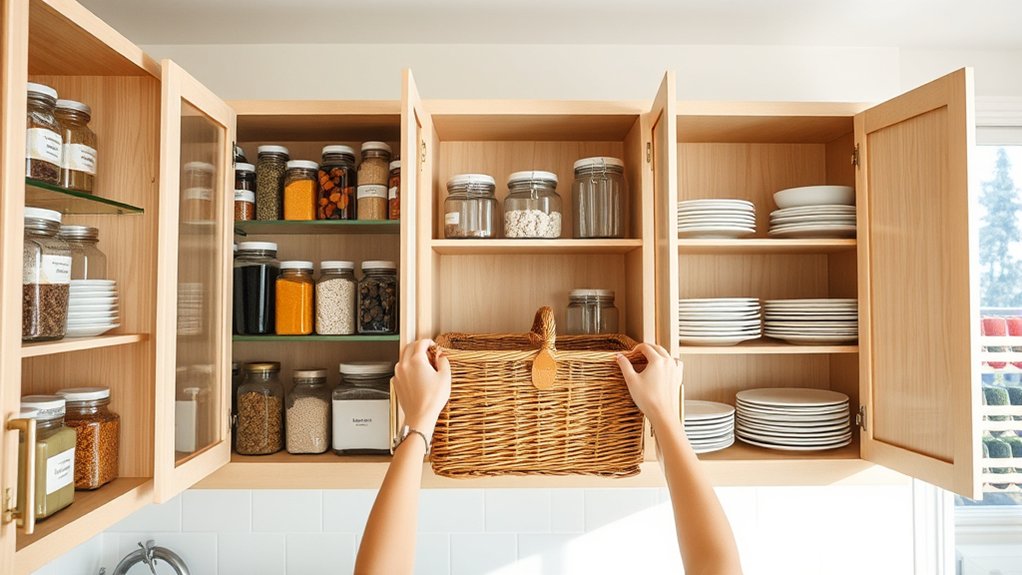
Before organizing your kitchen cabinets, remove everything and sort items by use. Then inspect each shelf, drawer, and corner for expired food, broken tools, duplicates, and items you no longer need.
Set aside anything you haven’t used recently, and donate or discard it honestly. Don’t let sentimental value turn clutter into a permanent fixture.
As you empty the cabinets, wipe crumbs, grease, and spills from every surface. Effective kitchen cleaning gives you a fresh starting point and helps you notice damage, pests, or moisture problems.
Match your cleaning method to the cabinet materials: use a gentle, damp cloth on wood, avoid soaking laminate edges, and follow the manufacturer’s care instructions for painted finishes. Dry each area completely before returning anything.
Check hinges, handles, shelf supports, and drawer tracks, too. Tighten loose hardware and replace damaged liners.
Once you’ve removed unnecessary items and cleaned thoroughly, your cabinets will have more usable space and a clearer foundation for efficient organization.
Group Items by How You Use Them
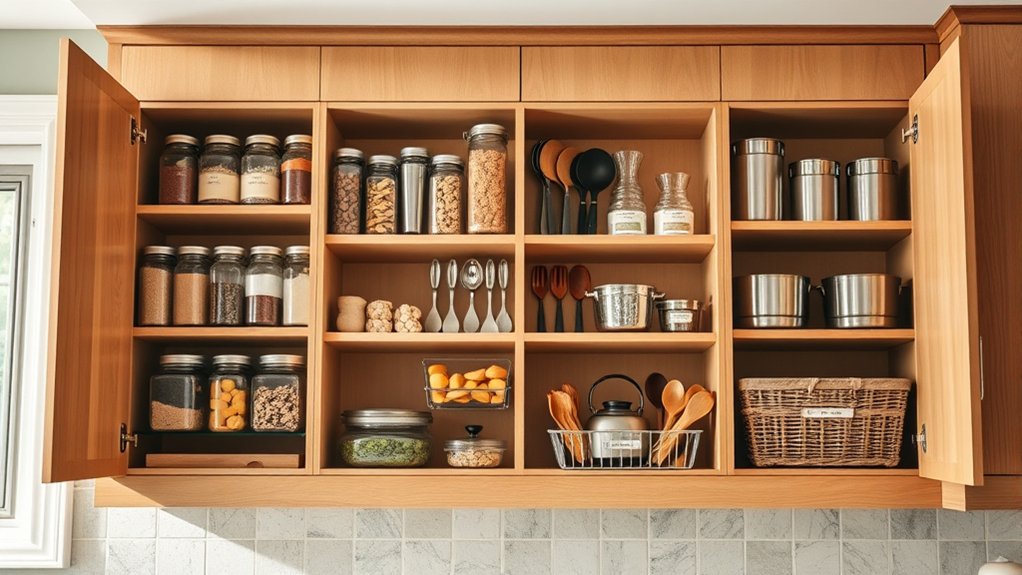
With your cabinets clean and clutter-free, group the remaining items by how you use them. Think through your regular routines, such as making breakfast, packing lunches, baking, brewing coffee, or preparing dinner.
Group kitchen items by everyday routines, making breakfast, packing lunches, baking, brewing coffee, and preparing dinner more efficient.
Place tools and ingredients that support each task in the same category, even if they’re different types of items. For example, gather measuring cups, mixing bowls, and baking supplies under baking, while keeping cutting boards, knives, and containers together for meal prep.
Create a separate group for quick snacks, another for entertaining, and one for everyday cooking. Keep rarely used tools together, and distinguish seasonal items, such as holiday cookie cutters or barbecue accessories, from supplies you reach for weekly.
Label each category clearly with a simple name so you can sort new purchases quickly. As you organize, consider which routines overlap, and avoid creating too many narrow groups.
Your goal is to make every item’s purpose obvious, speeding up preparation and cleanup.
Assign Each Category a Cabinet Zone
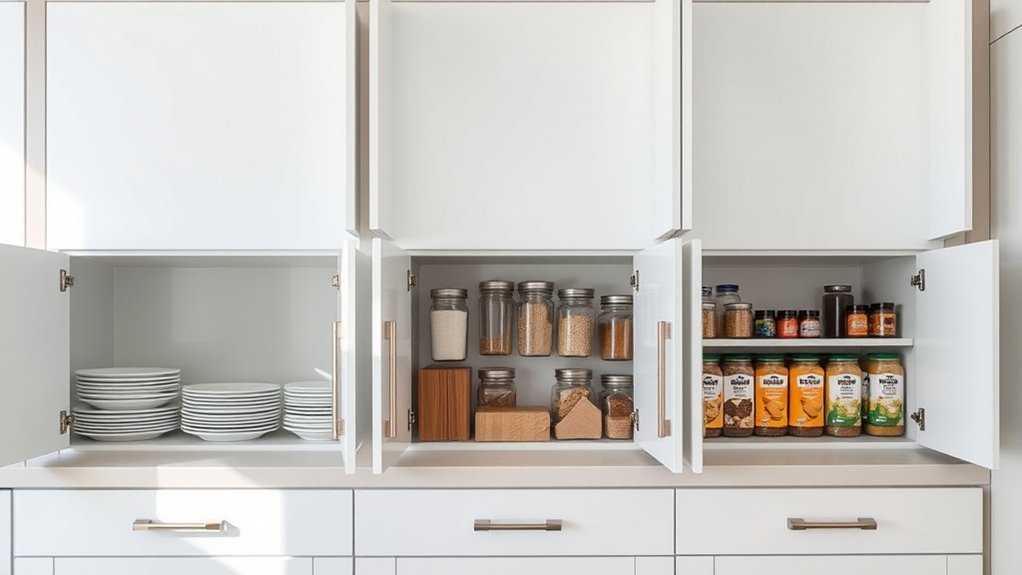
Assign each category a specific cabinet zone based on how often and where you use it. Match each group to the task it supports, so your kitchen flows naturally and you avoid unnecessary movement. This approach strengthens your Kitchen design while making daily cleanup easier.
- Store pots, pans, and baking tools in cabinets closest to the range or oven.
- Keep plates, bowls, and serving pieces near the dishwasher or dining area.
- Place glasses, mugs, and drink supplies near the refrigerator or water source.
Reserve lower cabinets for bulky cookware, appliances, and heavier containers. Use corner cabinets for specialty items you use occasionally, such as holiday platters or canning equipment.
Dedicate a pantry section to dry goods, grouping staples separately from snacks and baking ingredients. Label shelves or cabinet doors if several household members put items away.
During a remodel, these simple remodeling tips can help you plan zones before installation. Review each zone after a week, then adjust categories if your routine exposes awkward locations or wasted space.
Place Everyday Essentials at Eye Level
Place the items you use every day at eye level so they’re easy to grab. Keep your essentials within reach, and you won’t waste time searching for them. Store less frequently used items on higher or lower shelves.
Prioritize Daily-Use Items
Keep the items you use every day—such as plates, glasses, mugs, and cooking utensils—at eye level so they’re easy to reach. Arrange shelves around your routine, giving prime cabinet space to tools and dishware you grab most often. This setup streamlines meal prep and reduces unnecessary searching.
- Group plates and bowls together for quick serving.
- Place mugs beside coffee or tea supplies.
- Organize frequently used utensils in a divided drawer.
Review your cabinets weekly and adjust positions when your habits change. Reserve higher shelves for occasional baking equipment, entertaining pieces, or seasonal dishes, keeping your everyday zone focused and uncluttered.
Use shelf risers to create extra levels without stacking items precariously. Labeling can help family members return essentials correctly, while matching sets make the arrangement look orderly.
Keep spice storage organized separately according to frequency, ensuring your cabinet layout supports your cooking rhythm.
Keep Essentials Within Reach
How much easier would your routine feel if the essentials were always within reach? Place the items you use every day, such as plates, mugs, bowls, and cooking oils, on eye-level shelves. You’ll grab them quickly without bending, stretching, or searching through crowded cabinets.
Group similar supplies together so you can reset each item easily after use. During pantry organization, position frequently used staples, including rice, pasta, and canned goods, where you can see them immediately.
Reserve higher shelves for backup supplies and occasional ingredients. For appliance storage, keep your coffee maker, toaster, or blender on an accessible shelf or counter zone, while rarely used appliances can go higher.
Leave enough space between items to prevent clutter and make your kitchen feel effortless to use each day.
Add Shelf Risers to Double Storage
Shelf risers create a second level inside tall cabinets, helping you store plates, bowls, and cans without stacking everything into unstable piles. Use shelf risers to turn unused vertical space into practical double storage while keeping each item visible.
Before buying, measure your cabinet’s width, depth, and available height. Choose sturdy materials that can support your dishes, and select a design with enough clearance for your tallest items.
Then group similar pieces beneath or above each platform.
- Place everyday plates on the lower level for quick grabbing.
- Store saucers, mugs, or small bowls on top.
- Keep canned goods together, arranging older cans in front.
Position risers where they won’t block cabinet doors or nearby shelves. Leave a little breathing room around each stack so you can remove items without knocking others over.
If you use adjustable risers, customize their height to fit your collection. Labeling sections can also help you return items neatly after use, so your cabinet stays orderly longer.
Improve Access to Corner Cabinets
Corner cabinets often waste space because their deep, awkward shape makes items difficult to reach. You can fix this problem with practical corner cabinet remedies that bring stored items forward.
Install a full-circle lazy Susan so you can rotate shelves and see every container without kneeling or stretching. For tighter spaces, choose kidney-shaped shelves that swing outward independently, giving you direct access to the back corners.
A pullout system works well, too; its shelves glide toward you, turning hidden storage into usable space. Before choosing among these lazy susan solutions, measure the cabinet’s height, width, and door clearance.
Remove rarely used items, then position frequently needed cookware on the easiest-to-reach shelves. Keep heavier pieces low to improve stability, and avoid overloading rotating or sliding hardware.
Label shelf edges if multiple people use the kitchen, so everyone can return items consistently. Check moving parts periodically, tighten loose screws, and clean spills promptly to keep the mechanism smooth.
Contain Small Tools and Utensils
Small tools and utensils can quickly clutter cabinet shelves, so group them in divided trays, bins, or countertop-free drawer organizers. You’ll find what you need faster when every item has a designated spot. Choose organizers that fit your cabinet dimensions, and measure shelf depth before buying containers.
- Sort by purpose: Keep peelers, graters, and zesters together; place measuring tools in another section.
- Use vertical space: Add narrow bins or adjustable dividers to prevent tools from forming messy piles.
- Label categories: Mark containers for baking, food preparation, or serving so everyone can return items correctly.
For effective utensil storage, reserve the most accessible areas for tools you use daily. Place occasional gadgets toward the back, but avoid hiding them behind unrelated supplies.
Small tools with handles should stand upright when possible, making them easier to grab. Remove duplicates and damaged items regularly to preserve space.
If drawers are limited, attach a slim organizer inside a cabinet door for lightweight tools. This system keeps shelves orderly without taking over your work surfaces.
Stack Pots, Pans, and Lids
Stack your pots and pans carefully to save cabinet space and prevent scratches. Use vertical dividers to organize pans, nest pots by size, and store lids separately so they’re easy to find. This keeps everything organized and ready to use.
Use Vertical Dividers
Use vertical dividers to store pots, pans, and lids upright, making each item easier to see and grab. Instead of stacking cookware, position sturdy separators across a cabinet shelf or inside a deep drawer.
This setup keeps handles accessible and prevents heavy pieces from shifting when you reach for one.
Choose dividers that fit your cabinet’s width and adjust without tools. Shelf organizers with nonslip bases can add stability while protecting surfaces.
Arrange each category in its own section:
- Place pans in wider slots for quick access.
- Stand lids vertically, with handles facing upward.
- Reserve narrow spaces for baking sheets and boards.
Measure your storage area first, then install enough vertical dividers to create secure compartments. Labeling sections can help everyone return items correctly.
You’ll spend less time searching and avoid unnecessary cabinet clutter.
Nest Pots Carefully
Nest pots, pans, and lids by size to save space without making cookware difficult to retrieve. Place the largest pot at the bottom, then nest smaller pieces inside it, using soft cloths or pan protectors between surfaces to prevent scratches.
Keep handles aligned outward or turned sideways so you can lift each piece easily. Match cookware by shape and frequency of use; store everyday pots within easy reach and reserve specialty pieces for higher shelves.
Creative cookware placement can help you use awkward corners, while decorative pot arrangements keep visible storage attractive without sacrificing function.
Don’t force mismatched pieces together, since tight stacks can chip finishes and make removal frustrating. Leave enough clearance above each stack to grasp the top item comfortably.
This approach keeps your cabinet orderly, accessible, and protected.
Store Lids Separately
Once pots and pans are neatly stacked, store their lids separately to prevent unstable stacks and make each piece easier to find. This simple lid storage strategy keeps cabinets orderly and protects handles from unnecessary pressure. Separate lids by size, then choose a system that fits your space and cooking habits.
- Use a vertical rack: File lids upright in a cabinet organizer, allowing you to lift one out without disturbing others.
- Install door hooks: Mount adhesive or screw-in holders inside a cabinet door for convenient access without using shelf space.
- Try a divider: Place adjustable dividers in a deep drawer to keep lids standing, grouped, and easy to return.
Label sections if several lids look alike. You’ll spend less time searching, reduce clutter, and keep every pot and pan ready for use.
Organize Food Containers and Lids
Keep food containers and lids together so you can find the right match quickly. Start by removing damaged, stained, or lidless pieces.
Group the remaining containers by shape and size, then nest smaller ones inside larger ones to save cabinet space. Keep each matching lid with its container when possible, or place lids upright in a nearby divider so you can scan them easily.
Choose one cabinet or drawer for food storage, preferably near your meal-preparation area. Use clear bins to separate containers by size, material, or purpose.
Store frequently used pieces at eye level and reserve higher shelves for occasional-use items. Keep glass containers apart from lightweight plastic to prevent chips and scratches.
If several containers look alike, use container labels to identify sizes or contents quickly. Leave enough room around each stack so you can remove one piece without toppling others.
Before returning items, check that every lid fits securely and that stacks remain stable.
Label and Maintain Your Organized Cabinets
With your food containers sorted, label shelves, bins, or dividers so every item has a clear home. Use consistent wording and readable lettering, choosing waterproof labels for areas exposed to spills.
These labeling techniques help you return groceries quickly and prevent duplicate purchases. Group similar supplies together, then place frequently used items at eye level.
Build simple maintenance routines to keep your system working:
- Weekly: Wipe shelves, check open packages, and return misplaced items.
- Monthly: Review expiration dates, combine partial packages, and clean dusty corners.
- Seasonally: Remove unused tools, donate duplicates, and adjust storage for holiday ingredients.
Choose removable labels if your cabinet contents change often. For pantry bins, add labels to the front and top so you can identify items from any angle.
Keep a small marker and spare labels nearby for quick updates. When everyone follows the same system, your cabinets stay tidy with less effort.
A two-minute reset after cooking can prevent clutter from building and keep each container ready for its next use.
Frequently Asked Questions
How Can I Organize Kitchen Cabinets in a Rental Without Making Permanent Changes?
You can organize rental kitchen cabinets without permanent changes by using removable shelf risers, adhesive hooks, tension rods, and stackable bins. Add custom shelving through freestanding inserts or adjustable units that lift out easily when you move.
Group similar items, place daily dishes at eye level, and store rarely used cookware higher up. Try decorative storage, such as attractive baskets or labeled containers, to keep counters tidy while adding personality without drilling, gluing, or altering cabinetry.
Which Cabinet Materials and Finishes Are Easiest to Clean and Maintain?
You’ll find laminate, thermofoil, and sealed painted wood easiest to clean and maintain. Smooth cabinet surfaces can reduce cleaning time by about 30% compared with ornate, textured designs.
For simple Cabinet cleaning, wipe spills promptly with mild soap and water, avoiding abrasive pads. Choose satin or semi-gloss finishes because they hide fingerprints better than high gloss.
For Finish maintenance, use soft microfiber cloths and skip harsh chemicals that can dull protective coatings.
How Should I Organize Cabinets in a Very Small Kitchen?
In a very small kitchen, group items by how often you use them and keep daily essentials within easy reach. Focus on maximizing vertical space with shelf risers, hooks, and tall organizers.
Try using stackable storage for plates, pans, containers, and dry goods to create extra capacity. Store rarely used items in higher cabinets, and place heavy cookware low.
Declutter duplicates regularly, label containers, and leave a little room so everything stays accessible.
What Safety Considerations Matter When Storing Chemicals and Cleaning Supplies?
You’ll want to keep these household helpers safely out of harm’s way. For effective Chemical storage, place cleaners in their original, labeled containers, never mix products, and keep them away from food, heat, and moisture.
Store them in a locked cabinet, especially if children or pets live with you. Safety measures include reading labels, using ventilation, and checking expiration dates.
Don’t transfer chemicals into drink bottles, and clean spills immediately with appropriate protection.
How Often Should I Completely Reorganize My Kitchen Cabinets?
Completely reorganize your kitchen cabinets every six to twelve months, or sooner when clutter builds, items expire, or your routine changes. Use this reset to assess storage solutions, remove duplicates, and improve accessibility.
Apply practical decluttering methods: empty each cabinet, group similar items, discard damaged goods, and return frequently used pieces within reach. You’ll maintain order more easily if you perform quick monthly checks and adjust shelves as needed.
Conclusion
With these simple steps, you’ll turn crowded cabinets into a kitchen that works for you. Declutter regularly, group similar items, and give every category a clear home.
Keep daily essentials within easy reach, use risers and containers wisely, and stack cookware safely. Labels will help everyone put things back where they belong.
Think of your cabinets as a well-tuned recipe: when each ingredient has its place, you’ll cook faster, find things easily, and enjoy a calmer space every day. These kitchen cabinet organization tips can make that routine even easier.