How to Get Rid of Cockroaches in Your Kitchen Fast
Dealing with cockroaches in your kitchen can feel stressful and frustrating, especially when they seem to appear no matter how carefully you clean. You’re not alone—many people struggle with finding a fast, effective solution. The right products and simple prevention steps can help you take back control.
To get rid of cockroaches fast, remove food, crumbs, standing water, and dirty dishes immediately. Store food in airtight containers, wipe surfaces dry, fix leaks, and vacuum cracks, cabinets, and areas behind appliances.
Place sticky traps to find hotspots, then apply gel bait in small dots along walls and plumbing routes. Seal gaps around pipes, doors, and cabinets.
Avoid foggers and use sprays only as labeled. Call pest control if activity persists, and keep these steps going to stop them from returning.
Key Takeaways
- Eliminate food and water sources by sealing food, cleaning spills, washing dishes, fixing leaks, and drying sinks nightly.
- Place sticky traps to identify active areas, then apply gel bait in tiny dots along walls, corners, and plumbing routes.
- Vacuum cracks, cabinet corners, appliance areas, and cluttered hiding spots to remove roaches, droppings, eggs, and debris.
- Seal gaps around pipes, cabinets, baseboards, windows, and doors using caulk, mesh, and door sweeps.
- Contact a licensed pest professional if roaches appear during daylight, egg cases are widespread, or activity continues despite treatment.
Confirm the Kitchen Has Roaches
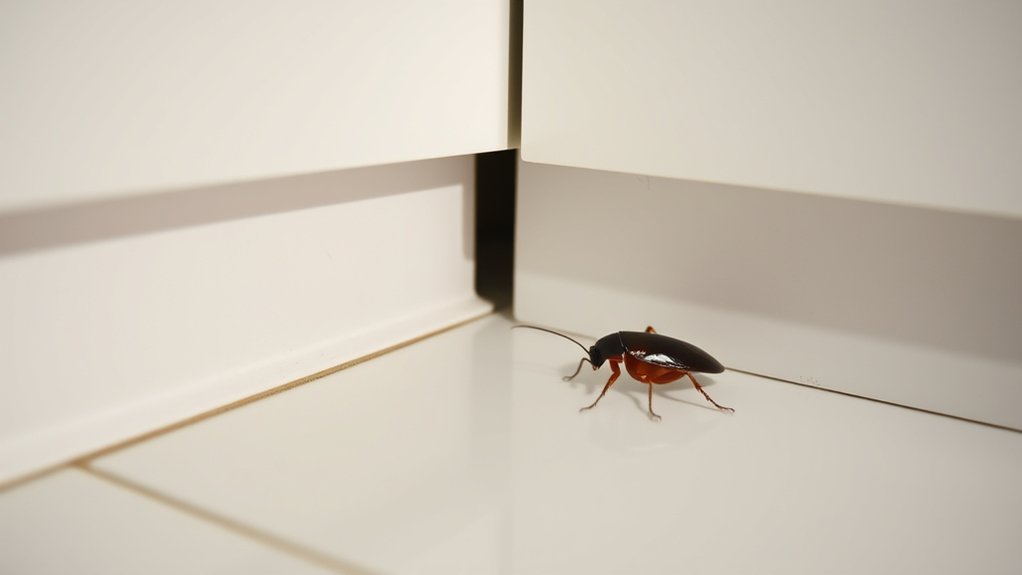
Before treating your kitchen, confirm that cockroaches are the problem. Look for live or dead insects near cabinets, appliances, wall gaps, and plumbing fixtures. German cockroaches are small, light brown, and often have two dark stripes behind the head. American cockroaches are larger, reddish-brown, and may appear around drains or warm utility areas.
Check for additional signs, including pepper-like droppings, brown smear marks, shed skins, egg cases, and a musty odor. Use a flashlight to inspect hidden corners, hinges, and cracks, especially at night when cockroaches become active.
Don’t mistake beetles, crickets, or silverfish for roaches. Compare clear photographs from a reliable extension service or pest-control authority.
Good kitchen cleanliness can make evidence easier to notice, but don’t assume a spotless room is pest-free. Careful pest identification helps you choose an effective treatment and reveals whether you’re dealing with one intruder or an established infestation.
If signs continue, contact a licensed professional for confirmation.
Remove Food and Water Now
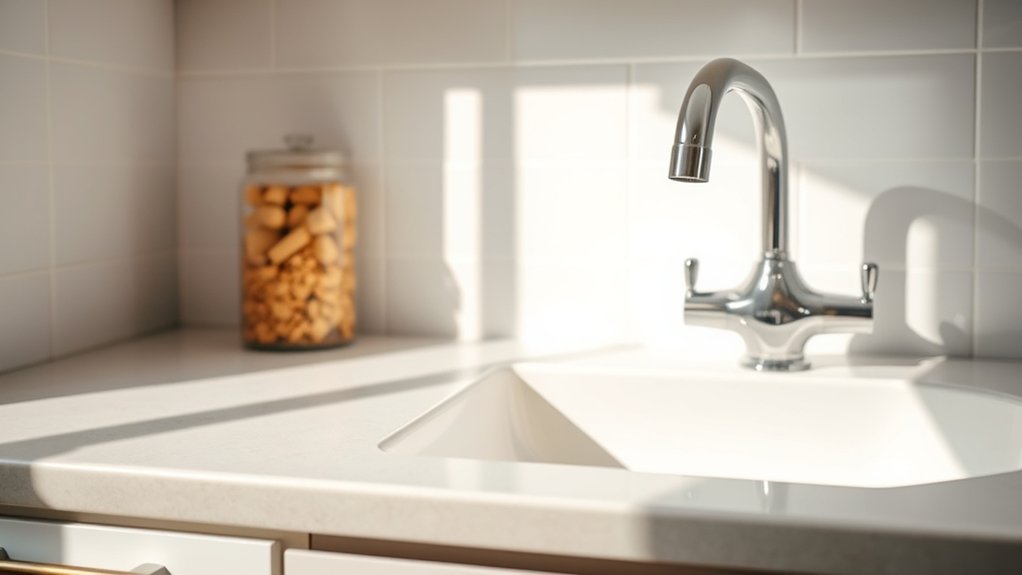
Remove any exposed food from counters, tables, and open containers, and store it in airtight containers. Clean up crumbs and spills promptly so roaches don’t have an easy meal.
Fix leaking faucets or pipes, and dry up any standing water to eliminate their water supply.
Eliminate Exposed Food
Start by cutting off the food and water cockroaches need to survive. Clear countertops, stovetops, and tables after every meal, and don’t leave crumbs, grease, or spills behind.
Store cereal, flour, sugar, pet food, and snacks in tightly sealed containers instead of open bags or cardboard boxes. Put ripe fruit in the refrigerator, and keep bread in a closed bread box or cabinet.
Rinse dishes immediately and load them into the dishwasher. Don’t leave plates soaking overnight.
Empty food scraps into a lidded trash can, then take the garbage outside regularly. Wipe cabinet shelves and sweep beneath appliances to remove hidden particles.
Good kitchen organization improves food safety while limiting feeding opportunities. Feed pets on a schedule, remove uneaten portions promptly, and keep their bowls clean and dry.
Fix Water Leaks
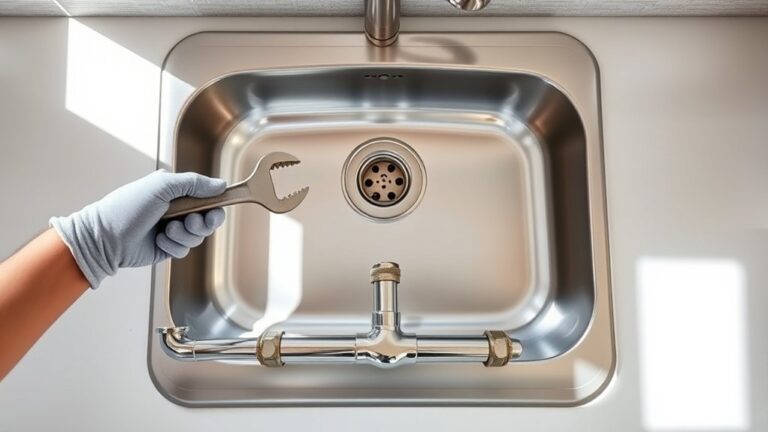
Cut off cockroaches’ water supply by repairing leaky faucets, pipes, and refrigerator lines as soon as you spot them. Don’t ignore damp cabinets, puddles under the sink, or moisture around your dishwasher.
Inspect connections regularly, tighten loose fittings, and replace worn washers or cracked hoses. If you can’t fix water leaks safely, call a licensed plumber promptly.
After repairs, dry every affected surface thoroughly. Wipe condensation from pipes, empty your dish-drying tray, and check beneath appliances for hidden moisture.
Use a dehumidifier or fan to improve airflow in persistently damp areas. These steps help prevent mold, which can create additional indoor air-quality problems.
At night, dry your sink and counters completely, and don’t leave wet sponges or dishcloths nearby. Eliminating moisture removes a crucial cockroach resource and makes your kitchen less inviting.
Keep Food and Dishes Roach-Free
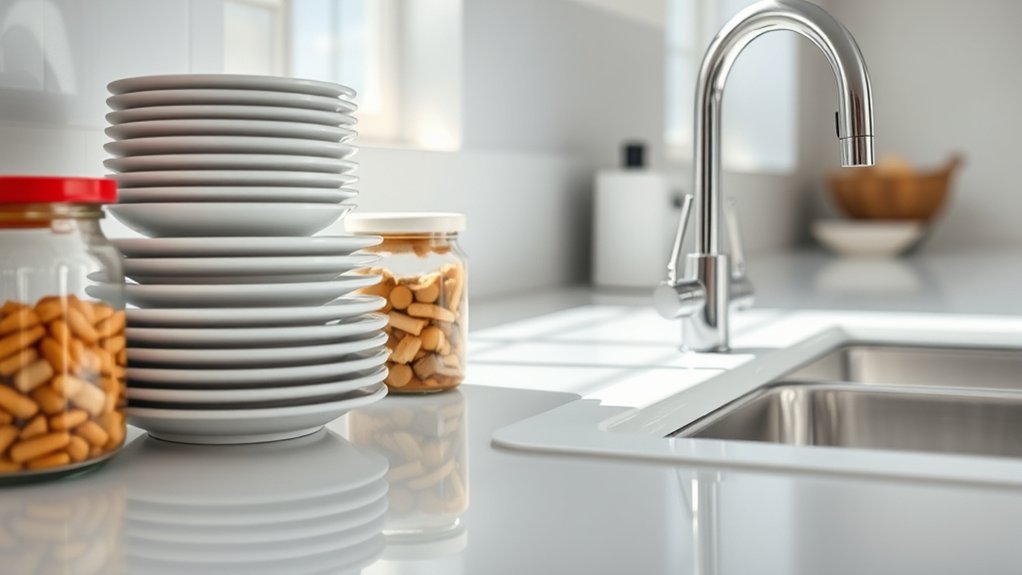
Keep food in sealed containers so cockroaches can’t get to it. Wash dishes promptly, and avoid leaving crumbs or dirty plates in the sink. These simple habits can help keep your kitchen clean and roach-free.
Store Food Securely
Store food in airtight containers or sealed bags, and don’t leave dishes, crumbs, or spills exposed overnight. Roaches can detect tiny food sources, so secure every ingredient, snack, and leftover before bedtime.
Choose sturdy storage containers with tight-fitting lids; glass or thick plastic works better than cardboard boxes and thin packaging. Transfer cereal, flour, sugar, pet food, and other dry goods into sealed containers as soon as you open them.
Keep food storage areas organized, and avoid overfilling cabinets where pests can hide unnoticed. Wipe crumbs and spills immediately, then store fruit, bread, and produce in covered containers or the refrigerator.
Keep dirty dishes covered if you can’t deal with them immediately, and don’t leave food on counters. Check packages for holes, and discard contaminated items in an outdoor bin.
Wash Dishes Promptly
Wash dishes promptly after meals so roaches can’t feed on grease, crumbs, or food residue left in the sink. Scrape plates into the trash, then rinse them before food hardens.
Use dish soap and a comfortable water temperature that cuts grease effectively. Don’t leave pans, utensils, or pet bowls soaking overnight; roaches can exploit even small leftovers.
- Load the dishwasher immediately, or wash dishes by hand.
- Wipe the sink, faucet, and surrounding counters after cleaning.
- Dry surfaces and empty the dish rack before bedtime.
Rinse sponges thoroughly, wring them out, and replace them regularly because damp, food-soiled sponges can attract pests.
Sweep crumbs from the floor, especially beneath the table and appliances. If you can’t wash dishes right away, seal dirty plates in the dishwasher and close its door.
A consistently clean, dry kitchen removes the easy meals that keep roaches returning.
Deep-Clean Roach Hiding Spots
Deep-clean the dark, damp areas where roaches hide, including cabinet corners, cracks, spaces behind appliances, and under the sink.
Remove crumbs, grease, cardboard, and moisture with a vacuum and degreasing cleaner. Wear gloves, pull appliances away from walls, and dry every surface completely.
For hidden crevices, use a narrow vacuum nozzle, old toothbrush, or cotton swab to reach seams.
Appliance interiors need cleaning too. Clean crumb trays, drip pans, door seals, and motor vents according to each manufacturer’s instructions.
| Area | Cleaning action | Prevention |
|---|---|---|
| Cabinets | Vacuum joints and wipe spills | Seal cracks |
| Sink cabinet | Remove clutter and dry pipes | Fix leaks |
| Appliances | Clean trays and vents | Keep gaps clear |
Pay special attention to hinges, drawer tracks, backsplash edges, and floor-wall joints.
Bag vacuum debris immediately and take it outside. Wash removable mats and launder nearby towels.
Don’t mix bleach with ammonia or other cleaners.
Repeat this deep cleaning weekly until you stop finding residue, droppings, or musty odors. Keep food sealed afterward.
Use Sticky Traps to Find Hotspots
Place sticky traps along cabinet edges, under the sink, behind appliances, and near wall-floor joints to reveal where roaches are most active. Choose flat, glue-coated traps that fit tight spaces, and avoid placing them where pets or children can reach them.
For reliable hotspot detection, set several traps at once instead of relying on a single location.
- Label each trap: Write its location and installation date on a small note.
- Check regularly: Inspect traps after 24 hours, then again over the next few days.
- Compare catches: Note which areas show the most insects, shed skins, or droppings.
Use a flashlight to inspect nearby cracks and corners without disturbing the traps. Replace dusty, wet, or full traps so they remain effective.
Record your findings on a simple kitchen map. Concentrated catches show travel routes and hiding zones.
Keep monitoring until catches decline, and seal accessible gaps during your cleanup routine. Don’t move traps too quickly, or you may miss useful activity patterns.
Place Roach Bait Near Activity
Once your traps reveal the busiest routes, set small amounts of roach bait beside those paths, near cracks, and under appliances. Focus placement where you’ve seen droppings, shed skins, or repeated activity.
Place small bait amounts along active roach routes, near cracks, beneath appliances, and wherever droppings or repeated activity appear.
Roaches often travel along edges, so position gel bait in tiny dots beside walls, cabinet corners, and plumbing fixtures. Keep each application fresh by following the product label, and replace it when it dries, disappears, or becomes contaminated.
For safer bait station strategies, choose enclosed stations if children or pets share your home. Place them behind appliances, inside cabinets, or along dark corners, but keep them accessible to roaches and away from food-preparation surfaces.
Don’t spray insecticide around bait. Repellent chemicals can drive roaches away before they feed. Check stations every few days, record where activity changes, and move inactive bait closer to newly identified routes.
Give the bait time to work, since poisoned roaches may take several days to die.
Seal Kitchen Cracks and Entry Points
Seal the cracks and gaps that give roaches easy access to your kitchen, especially around pipes, cabinets, baseboards, windows, and doors. Inspect these areas with a flashlight, then mark every opening you find. Even narrow spaces can become reliable pathways, so don’t overlook gaps behind appliances or beneath the sink.
- Fill small cracks with silicone caulk, smoothing the bead for a tight, clean seal.
- Pack larger holes around plumbing with copper mesh before applying caulk or expanding foam.
- Install door sweeps and repair damaged screens to block entry at floor-level and window openings.
Pay special attention to sealing drafts around window frames and utility penetrations. Weatherproofing windows with fresh caulk prevents both insects and outside air from slipping through.
Replace loose baseboard sections, tighten cabinet edges, and close gaps where walls meet floors. After repairs, check the kitchen weekly for new openings, peeling sealant, or disturbed mesh.
Maintaining these barriers helps keep roaches from returning and complements your sanitation efforts.
Use Roach Sprays Only When Needed
Use roach sprays only when necessary, and choose a product designed for the affected area. Follow the label directions carefully, including all safety precautions and application limits. This helps control roaches while reducing unnecessary exposure to chemicals.
Choose Targeted Sprays
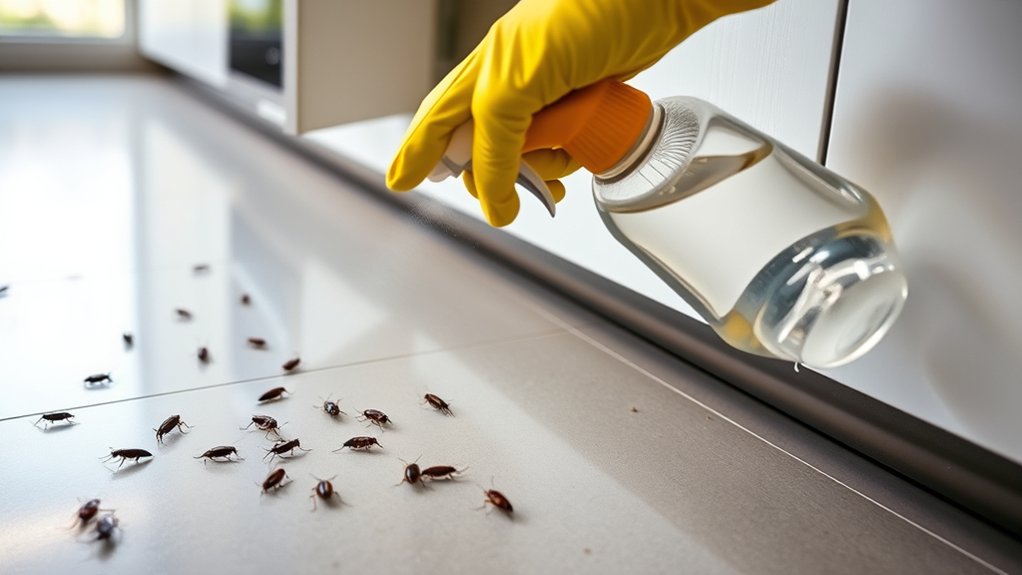
Targeted roach sprays can help eliminate pests that escape traps or bait, but they shouldn’t be your first line of defense. Choose a product designed for cockroaches and apply it only to cracks, crevices, and other places you’ve seen activity.
Avoid spraying broad surfaces, countertops, dishes, or food-preparation areas. Keep children and pets away while you treat the spot, and use ventilation to clear lingering fumes.
For a focused approach:
- Inspect dark gaps beneath sinks, behind appliances, and along cabinet edges.
- Select a spray that targets roaches without coating the entire kitchen.
- Treat only active hiding places after cleaning away crumbs and grease.
Natural remedies and DIY solutions may help discourage pests, but a targeted spray can address stubborn activity. Combine it with sanitation, sealed food, and traps for better control without unnecessary chemical use.
Follow Label Directions
If roach activity continues after cleaning, sealing food, and placing traps, read the spray label carefully before treating any area. Follow the label directions exactly, including the approved application sites, amount, and waiting period. Don’t spray countertops, dishes, utensils, or food-contact surfaces unless the product specifically permits it.
Remove food, pet bowls, and small appliances before application, and keep children and pets away until the label says it’s safe to return. Open windows or run exhaust fans if the instructions recommend ventilation.
Wear the listed protective gear, and never mix roach spray with bleach, cleaners, or another pesticide. Use only the amount you need. Extra spray won’t improve results and can increase exposure.
For chemical safety, store the container securely, keep it in its original packaging, and dispose of it as directed.
Know When to Call Pest Control
When cockroaches keep appearing despite thorough cleaning, baiting, and sealing, it’s time to call a licensed pest-control professional. You may have a hidden nest, multiple entry points, or an infestation that household products can’t control safely.
Contact Pest control promptly if you notice:
- Roaches during daylight, which can signal a large population.
- Droppings, egg cases, shed skins, or a persistent musty odor.
- Activity in several rooms, especially near appliances, plumbing, or wall voids.
A professional can identify the species, locate harborage areas, and choose targeted treatments appropriate for your household.
Tell the technician where and when you’ve seen activity, which products you’ve applied, and whether children or pets live there.
Ask about preparation steps, treatment limits, and follow-up inspections.
Don’t rely on repeated foggers or mix chemicals. Those choices can endanger you while leaving hidden roaches untouched.
Prompt expert attention supports infestation prevention by addressing the current problem thoroughly, rather than masking visible activity.
Stop Roaches From Returning
Prevent roaches from returning by keeping food sealed, wiping up spills promptly, fixing leaks, and taking out the trash regularly. Clean crumbs from counters, sweep beneath appliances, and rinse recyclable containers before storing them.
Don’t leave pet food or dirty dishes out overnight, and use tight lids on garbage and compost bins.
Inspect your kitchen weekly for droppings, egg cases, shed skins, and gaps around pipes or cabinets. Seal cracks with caulk, repair damaged screens, and install door sweeps where needed.
Reduce clutter so you can spot activity quickly and remove hiding places.
Understanding the Pest lifecycle helps you interrupt it. Roaches reproduce rapidly, so continue monitoring and cleaning after treatment instead of stopping when sightings decline.
In an Urban infestation, neighboring apartments may harbor roaches that travel through walls, drains, or utility openings. Tell your landlord or building manager about recurring activity, and coordinate professional treatment when necessary.
Keep monitoring traps in hidden areas, replace them regularly, and act immediately when you notice fresh signs.
Frequently Asked Questions
Are Cockroaches Dangerous to My Family’s Health?
Yes, cockroaches can endanger your family’s health. They can carry bacteria, contaminate food and surfaces, and trigger allergies or asthma, especially in children.
Cockroach breeding can quickly increase exposure, so don’t ignore droppings, egg cases, or a musty odor. Avoid pest control myths, such as believing one spray solves everything.
Store food securely, clean crumbs, seal cracks, reduce moisture, and contact a licensed professional when an infestation persists or appears extensive.
How Long Does Professional Cockroach Treatment Usually Take?
Professional cockroach treatment usually takes one to three visits over two to six weeks, depending on the infestation’s size, species, and nesting locations. Your technician may complete the first inspection and treatment within a few hours, then schedule follow-ups to target newly hatched roaches.
The pest lifecycle makes repeat visits important, while chemical resistance can require different products or methods. You’ll typically see major improvement within days, but complete control may take several weeks.
Can Cockroaches Survive in Kitchen Appliances?
Yes, cockroaches can survive in kitchen appliances, especially warm, dark spaces like motors, insulation, and drip trays. Think of these areas as hidden hotels where pests find shelter, moisture, and crumbs.
Appliance infestations can spread when you move or operate contaminated equipment. Unplug the appliance, avoid spraying inside it, and inspect nearby cracks.
Clean thoroughly to reduce kitchen contamination, then contact a licensed pest professional for safe treatment and advice.
Why Do Cockroaches Appear More Often at Night?
Cockroaches appear more often at night because they’re primarily nocturnal, meaning they avoid daylight and human activity. After dark, you’ll notice them leaving hiding spots to search for food, water, and mates.
Your quiet kitchen gives them safer access to crumbs, spills, pet food, and trash. Bright lights or sudden movement can send them quickly back beneath appliances, inside cabinets, or through wall cracks.
Seeing daytime roaches may indicate a larger infestation nearby.
Are Natural Cockroach Repellents Safe and Effective?
Natural cockroach repellents are generally safe when used correctly, but their effectiveness varies. Essential oils, bay leaves, and diatomaceous earth may discourage or kill some roaches, yet they rarely eliminate an infestation alone.
Keep products away from children, pets, food, and breathing areas. Combine these options with sanitation, sealing cracks, and traps.
If natural pest control methods fail, consider chemical alternatives carefully or contact a licensed professional for guidance.
Conclusion
Act fast, and you can make your kitchen less inviting to roaches today. Remove food, water, clutter, and accessible hiding places, then use traps to locate activity and seal every crack you find.
Don’t overuse sprays, especially near dishes or food. If roaches keep appearing, call a licensed pest professional before the problem grows into a plague of biblical proportions.
With consistent cleaning and prevention, you can get rid of cockroaches in your kitchen fast, protect your kitchen, and keep unwanted guests from returning.