Unclog Kitchen Sink Drain in 3 Simple Steps
A clogged kitchen sink can bring your routine to a frustrating halt, especially when dirty water refuses to drain. You’re not alone—many people struggle with stubborn blockages and want a quick, reliable solution.
To unclog your kitchen sink in three simple steps, first remove standing water, seal the overflow, and plunge firmly 10–15 times.
Next, place a bucket under the P-trap, loosen the slip nuts, and clear out debris.
Finally, feed a hand auger into the wall pipe, turn it clockwise, and retract it. Flush with hot water, then check for leaks and proper drainage.
You’ll also find helpful prevention tips and safety advice below.
Key Takeaways
- Remove standing water, seal the overflow, and plunge the drain firmly 10–15 times.
- Place a bucket beneath the P-trap, loosen the slip nuts, and clear any trapped debris.
- Feed a hand auger into the wall pipe, turn clockwise, then retract it to remove deeper clogs.
- Flush the drain with hot tap water and check all connections for leaks.
- Prevent future clogs by using a strainer and keeping grease, coffee grounds, and scraps out of the sink.
Gather Tools and Check the Clog
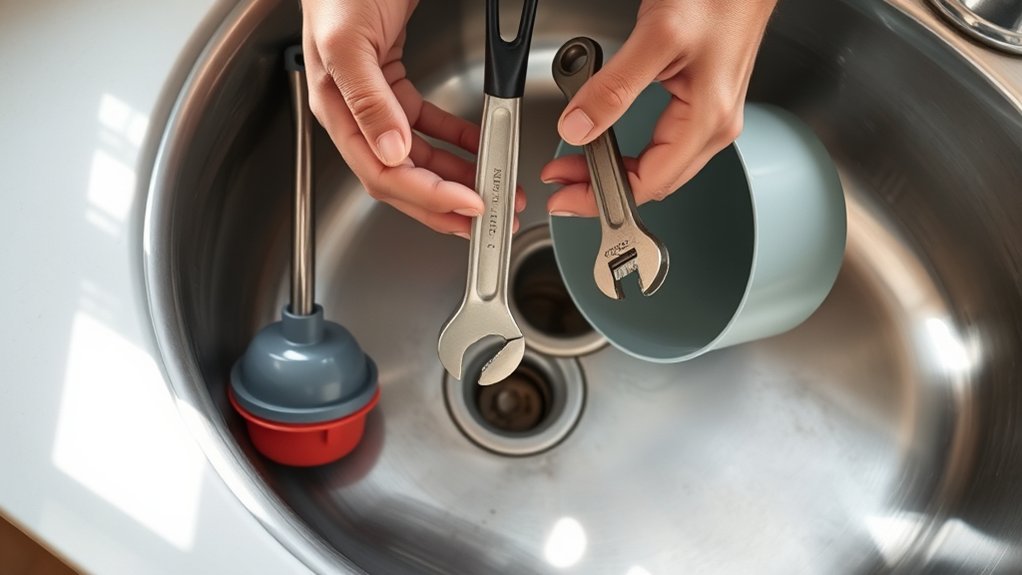
Before you start, gather a plunger, bucket, adjustable wrench, rubber gloves, and a flashlight. Put on the gloves, clear dishes and standing water from the sink, and place the bucket beneath the trap.
Keep the wrench nearby in case you need to examine a connection, but don’t loosen anything yet.
Keep the wrench within reach for inspecting connections, but wait to loosen fittings until the blockage’s location is clearer.
Begin your Drain inspection by checking the strainer, stopper, and visible opening for food scraps, grease, or other debris. Use the flashlight to look inside without pushing material farther down.
Notice whether water drains slowly, remains completely still, or backs up into the second basin. That information helps you identify where the blockage may sit.
Check nearby supply lines and the cabinet floor for leaks. Wipe away moisture so you can spot fresh drips during later work.
This quick preparation supports safe Pipe maintenance and prevents damage. Don’t pour chemical cleaner into the sink, especially before using a plunger.
Unclog Your Kitchen Sink Drain in Three Steps
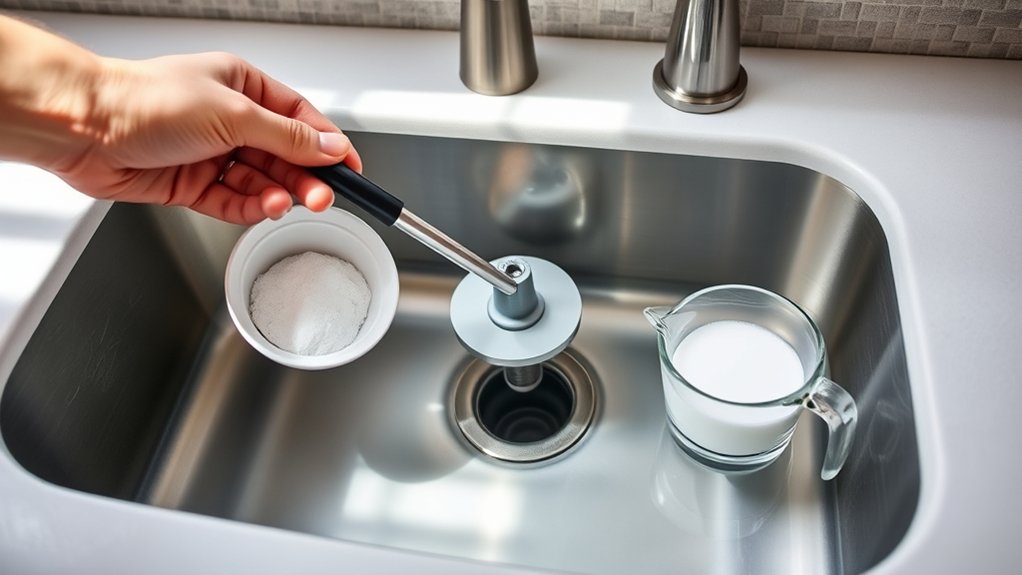
With your tools ready and the clog located, start with the least invasive method: plunge the drain. Remove standing water until it barely covers the sink’s drain opening. Seal the overflow opening with a damp cloth, then center a cup plunger over the drain. Pump firmly 10–15 times, keeping the seal intact. Lift the plunger and test the flow. Repeat if necessary.
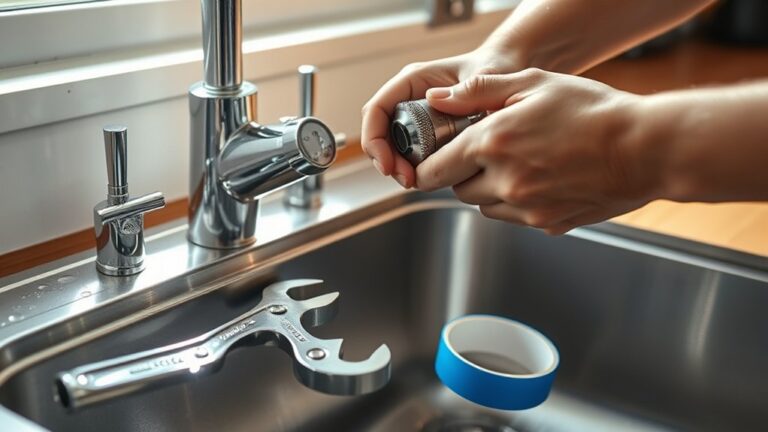
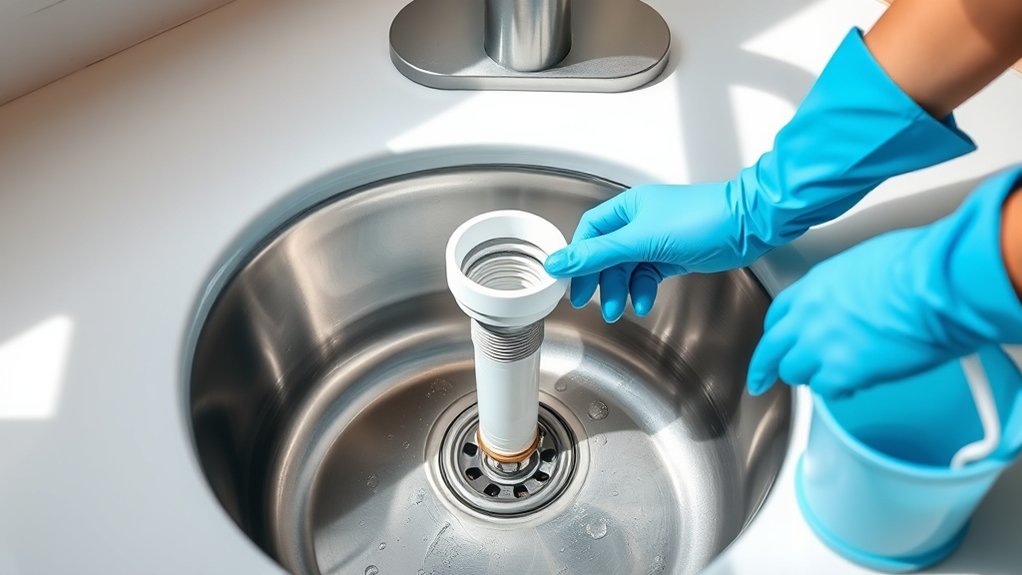
If plunging fails, place a bucket beneath the P-trap. Loosen the slip nuts, remove the trap, and empty its contents. Clean the pipe with a brush, check for obstructions, and reinstall it with the washers seated correctly. Run water slowly to check for leaks.
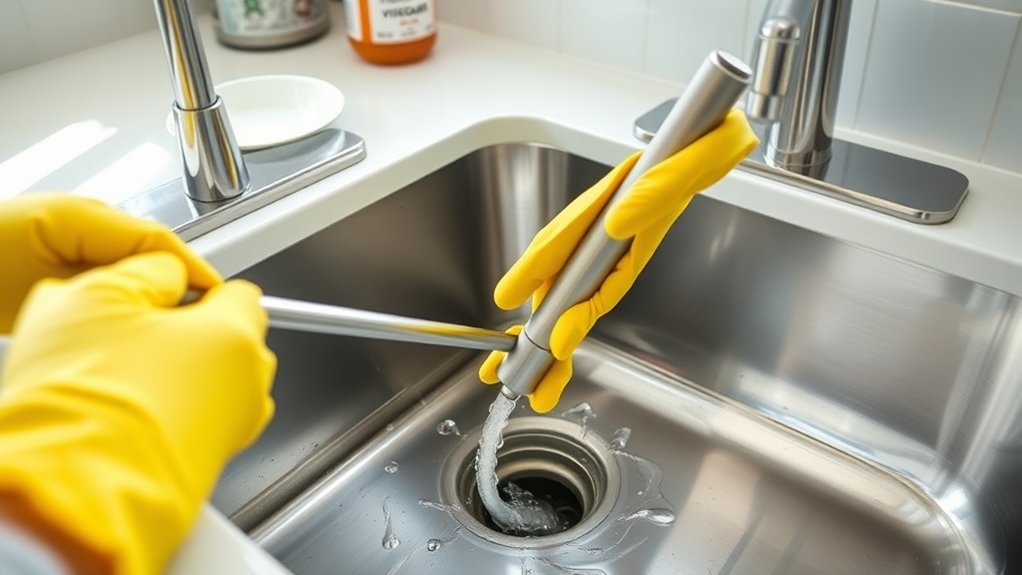
For the third step, feed a hand auger into the wall pipe. Turn the handle clockwise as you push, then retract it to pull out the blockage. Flush the drain with hot water, and inspect your work. Effective drain cleaning restores flow, while basic clog prevention starts with removing debris safely.
Prevent Future Kitchen Sink Clogs
Prevent future kitchen sink clogs by scraping plates into the trash or compost before washing them. Wipe greasy pans with a paper towel, too, because fat can cool, harden, and trap food inside your pipes. Use a sink strainer to catch scraps, and empty it after every meal instead of rinsing debris down the drain.
Run hot water for several seconds after washing dishes to help move soap and small particles through the line. However, don’t rely on boiling water to dissolve heavy grease, especially if you have plastic pipes. Once a week, flush the drain with hot tap water and a little dish soap.
Good Plumbing maintenance also includes checking for slow drainage, leaks, or unusual odors before they become serious problems. Schedule professional Drain cleaning when buildup returns despite these habits. Never pour cooking oil, coffee grounds, flour, or fibrous produce scraps into your sink. These simple practices keep water flowing and reduce repairs.
Frequently Asked Questions
Can Chemical Drain Cleaners Damage Kitchen Sink Pipes?
Yes, chemical drain cleaners can damage your kitchen sink pipes, especially with repeated use or incorrect application. Strong formulas may cause pipe corrosion, weaken seals, and harm older metal or plastic plumbing.
For better chemical safety, follow the label, never mix products, and wear protection. Try a plunger or drain snake first. If a clog persists, contact a plumber instead of pouring more chemicals down the drain.
When Should I Call a Professional Plumber for a Clogged Sink?
Call a professional plumber when DIY methods don’t clear the clog after one or two careful attempts. Like a stubborn knot in an old tale, a blockage that returns, causes standing water, or affects multiple drains may signal a deeper sewer-line problem.
You should also call immediately if you notice leaks, sewage odors, flooding, or pipe damage. Avoid chemical cleaners, and don’t force plumbing tools, since you could worsen hidden damage.
How Much Does Professional Kitchen Sink Drain Cleaning Usually Cost?
You’ll usually pay $100–$300 for professional kitchen sink drain cleaning, depending on your location, clog severity, and after-hours timing. A simple blockage may cost less, while deep buildup or damaged pipes can increase the bill.
Request a written estimate before work begins, and ask about a cost comparison between flat-rate and hourly pricing. Also check whether the plumber offers service warranties, which can protect you if the clog returns soon.
Can a Clogged Kitchen Sink Indicate a Problem With the Main Sewer Line?
A clogged kitchen sink can be a warning light, but it doesn’t always signal a Main sewer problem. You’re likely facing a local Drain blockage if only one fixture drains slowly.
However, suspect the Main sewer when multiple drains back up, toilets gurgle, sewage smells emerge, or water returns after plunging.
Stop using water and call a professional promptly. Delaying service could worsen backups, damage, and cleanup costs throughout your home.
Are Garbage Disposal Clogs Different From Standard Kitchen Sink Clogs?
Yes, a garbage disposal clog differs from a standard clog because food scraps often jam the disposal chamber or trap, while a standard clog usually develops farther inside the drainpipe.
You can safely switch off power before checking the disposal, then try its reset button or an appropriate wrench. For either blockage, avoid harsh chemicals.
If water backs up into multiple fixtures, call a plumber because you may have a main sewer-line problem.
Conclusion
With these three simple steps, you can send that stubborn kitchen sink clog packing and get your drain flowing like a river again. Once the water clears, rinse away lingering debris and avoid pouring grease, coffee grounds, or food scraps down the drain.
A little care now saves you from a bigger mess later. Keep these tips handy, and you’ll be ready to silence future kitchen sink drain clogs before they turn your kitchen into a watery battlefield.