How to Remove Smell From Kitchen Sink Quickly
A smelly kitchen sink can make your whole kitchen feel unpleasant, especially when you need a quick fix before guests arrive. You’re not alone—many people struggle with stubborn drain odors, but the right product can help freshen your sink fast.
To remove a kitchen sink smell quickly, flush the drain with the hottest tap water for several minutes. Scrub the stopper, drain opening, and overflow to remove trapped food and grime.
If you have a garbage disposal, turn off its power, clean the splash guard, then run cold water with ice or citrus peels.
For extra deodorizing, use baking soda and vinegar, then rinse thoroughly.
If the odor persists, the following steps can help you find the cause.
Key Takeaways
- Remove and scrub the drain stopper, then extract trapped food or grease with a plastic drain tool.
- Pour half a cup of baking soda followed by half a cup of vinegar into the drain.
- Cover the drain for 10 minutes, then flush thoroughly with hot tap water.
- For garbage disposals, clean the splash guard, remove debris with tongs, and grind ice or citrus peels.
- Prevent recurring odors by using a strainer, avoiding grease and coffee grounds, and cleaning the drain weekly.
Flush the Kitchen Sink Drain First
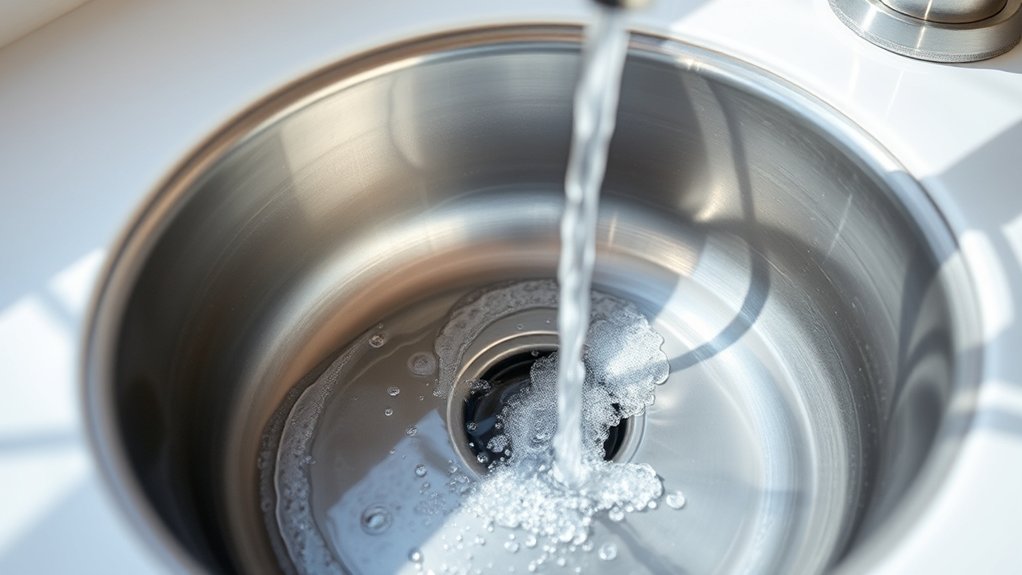
Flush the kitchen sink drain with hot water to wash away trapped food particles and grease that may be causing the odor. Turn on the hottest tap setting, let the water run for several minutes, and direct it straight into the drain.
Flush the kitchen sink drain with hot water for several minutes to loosen trapped food particles and grease causing unpleasant odors.
This simple step can soften residue, improve flow, and reduce smells without using harsh chemicals.
For routine drain maintenance, flush the drain after washing dishes and run water through it regularly, especially after periods of limited use.
Don’t pour cooking oil, coffee grounds, or thick sauces down the sink, since they can contribute to future odor problems.
If the smell remains after repeated hot-water flushing, check whether the drain empties slowly or gurgles. Those signs can point to a deeper issue that requires a plumbing inspection.
A licensed plumber can evaluate the trap, vent, and connected pipes safely.
Keep the surrounding sink dry and clean so you can identify whether the odor comes from the drain or another source.
Remove Food Buildup From the Drain
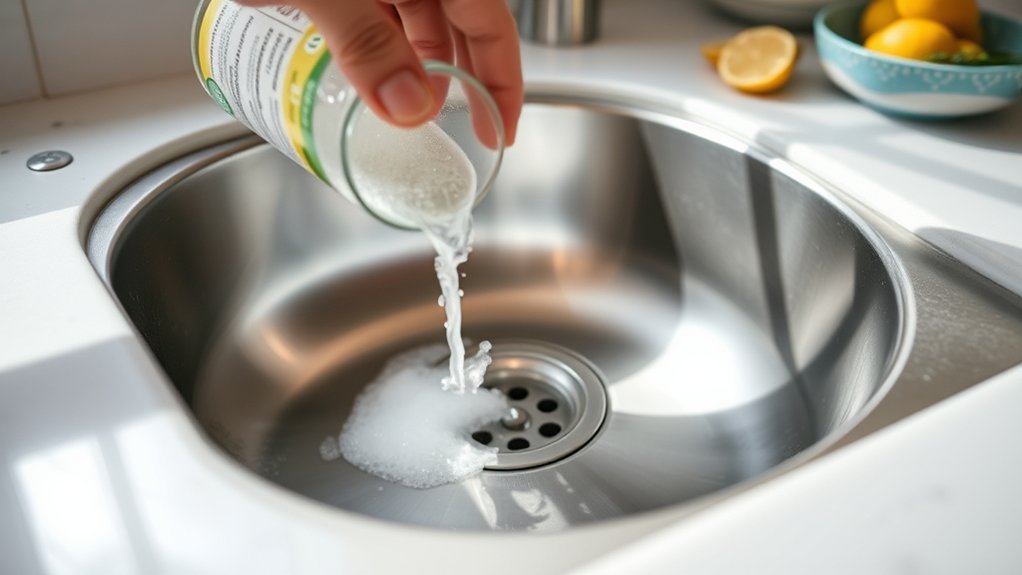
If hot water hasn’t removed the odor, clear food buildup from the drain opening and stopper. Put on gloves, remove the stopper, and scrub both sides with a small brush and dish soap.
Rinse the stopper under hot running water, then wipe the drain rim and visible basin walls to remove trapped Food residue. Use a flashlight to inspect the opening, but don’t push debris deeper into the pipe.
If buildup sits just below the opening, pull it out with a plastic drain tool or a bent wire. Work gently to avoid scratching the surface.
Never mix chemical cleaners, especially if you’ve used another product recently. For stubborn Drain clogs, place a plunger over the opening, add enough water to cover its cup, and plunge several times.
Lift the plunger and check whether water drains freely. Replace the stopper only after cleaning and rinsing it thoroughly, then run hot water briefly to carry away loosened particles.
Clean the Garbage Disposal Thoroughly
To clean a garbage disposal thoroughly, turn off its power, remove the rubber splash guard if possible, and scrub both the guard and the grinding chamber with dish soap and a small brush. Rinse the guard, then wipe reachable surfaces with a damp cloth.
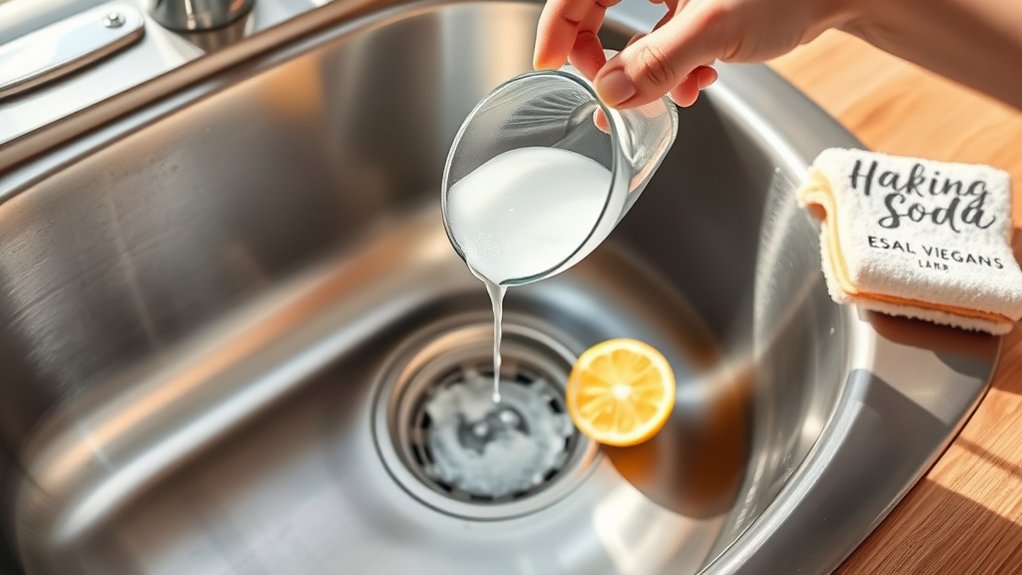
Never place your hand inside the disposal; use tongs to remove trapped debris. For stubborn residue, sprinkle half a cup of baking soda into the chamber, add a cup of white vinegar, and let the fizzing action work for several minutes.
Flush everything with cold water while running the disposal briefly. Grind a few ice cubes to loosen buildup, followed by citrus peels for a fresh scent, but don’t rely on peels alone to clean it.
Regular Garbage disposal maintenance prevents food particles from creating odors. Repeat this process as needed for effective Disposal odor removal, and check that the splash guard sits securely before restoring power.
If the smell remains, inspect the drain connection or call a plumber.
Scrub the Sink Overflow Opening
A sink’s overflow opening can trap food residue, soap scum, and bacteria that cause unpleasant odors. You’ll usually find this small opening near the upper inside wall of the basin, where water drains if the sink fills too high.
Start by wiping the area with a damp cloth to remove loose grime. Then, wrap a narrow bottle brush or flexible cleaning brush in a cloth and gently work it into the passage.
Wipe away loose grime, then gently clean inside the overflow passage with a cloth-wrapped narrow brush.
Rotate the brush to loosen buildup without scratching the finish. Rinse the brush frequently, and repeat until it comes out clean.
For effective overflow cleaning, wipe the opening’s rim, cover, and surrounding basin as well. Flush the passage with clean water, then dry the area with a towel.
Check the overflow cover for cracks or gaps that could harbor residue. Replace a damaged cover to support odor sealing and keep future smells from escaping into your kitchen.
Don’t force tools deeply, as you could damage hidden plumbing connections.
Use Baking Soda and Vinegar Safely
Baking soda and vinegar can loosen odor-causing residue, but use them carefully and never mix them with bleach or commercial drain cleaners. Remove standing water, then pour half a cup of baking soda into the drain.
Add half a cup of white vinegar, cover the opening, and wait 10 minutes. Flush with hot tap water, not boiling water if your plumbing manufacturer warns against it.
This approach supports Baking soda safety: wear gloves, ventilate the room, and avoid splashing your eyes. Don’t expect the reaction to disinfect a heavily contaminated drain.
| Step | What you need | Safe action |
|---|---|---|
| 1 | Baking soda | Add ½ cup |
| 2 | Vinegar | Add ½ cup, then cover |
| 3 | Hot water | Flush after 10 minutes |
If vinegar irritates you or you lack it, consider Vinegar alternatives such as warm water with mild dish soap. Never combine products, and stop if fumes, heat, or pressure develops.
For persistent odors, clean the removable stopper separately and inspect for a clog.
Freshen the Drain With Citrus
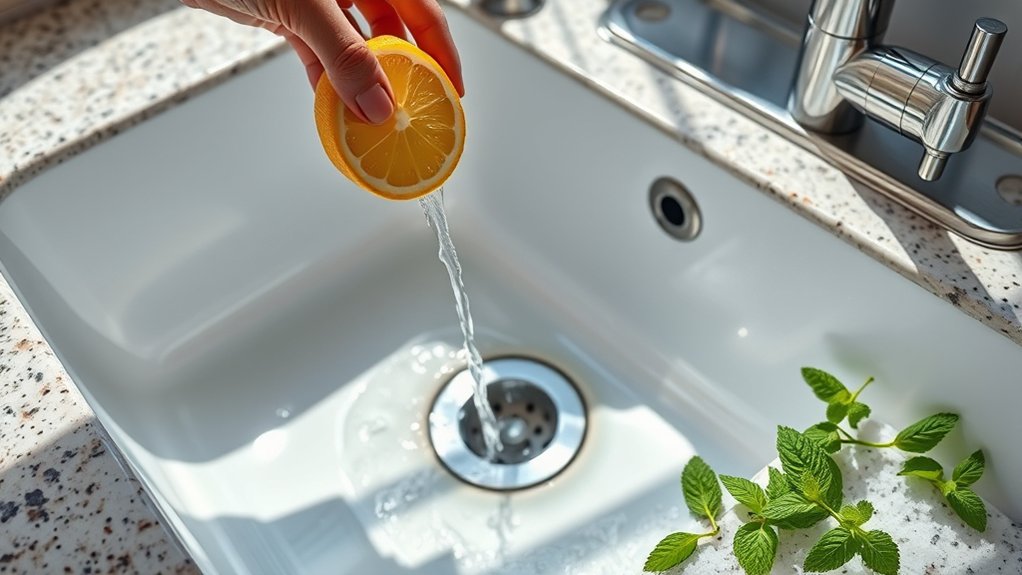
Fresh citrus can help freshen your kitchen sink drain with its bright, clean scent. Start by gathering a few citrus peels and pouring some citrus juice down the drain. Let the natural oils work for a moment, then rinse the drain with hot water to wash away residue and odors.
Gather Fresh Citrus Peels
Once you’ve gathered fresh lemon, lime, or orange peels, rinse them to remove any residue. Pat them dry with a clean towel, then cut them into small strips or pieces.
Smaller pieces release their natural oils more readily and fit easily into your drain opening. Choose brightly colored peels without mold, soft spots, or heavy waxy coatings.
Citrus benefits include a clean, invigorating aroma that can help replace stale sink odors. If you won’t use the peels immediately, store them in an airtight container in your refrigerator for up to several days.
For longer peel preservation, freeze the pieces in a sealed bag and thaw only what you need. Keep the prepared peels nearby, and ensure your sink drain is free of visible food debris before using them.
Pour Citrus Juice
Pour fresh lemon, lime, or orange juice directly into the drain to help neutralize stale odors and leave a clean citrus scent. Use about half a cup for a standard kitchen sink, adjusting the amount if the smell is especially strong.
Citrus benefits extend beyond fragrance: natural acids can help loosen light residue clinging inside the drain opening. Choose fresh fruit for the best aroma, and strain out seeds and pulp before pouring.
With simple juicing techniques, squeeze the fruit over a bowl, then transfer the liquid carefully into the drain. You can combine lemon and lime for a sharper scent or add orange juice for a sweeter note.
Let the juice sit briefly so its fresh aroma can work. Repeat this treatment weekly, or whenever unpleasant odors return, for a naturally fresher sink.
Rinse With Hot Water
After the citrus juice sits briefly, rinse the drain with a kettle or pot of hot water to wash away loosened residue and carry the scent through the pipes. Pour slowly, allowing the water to work through trapped grease and food particles instead of splashing back.
This hot water rinse helps release the citrus oils, which can leave your sink smelling cleaner and fresher. For effective drain flushing, divide the water into two or three pours, pausing briefly between each one.
Keep your face away from the opening, since steam and lingering odors may rise. Don’t use boiling water if your plumbing manufacturer warns against it; very hot tap water offers a safer option for some pipes.
Finish by running cold water for several seconds to clear remaining debris and cool the drain.
Clean the P-Trap Carefully
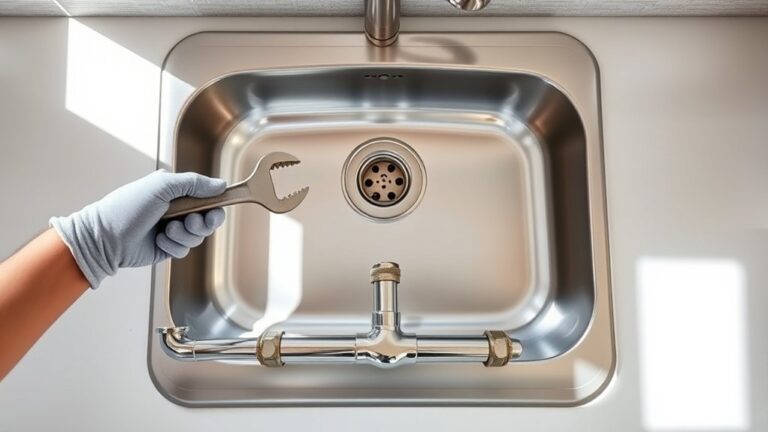
Remove and clean the P-trap, the curved pipe beneath your sink, to clear trapped food particles and foul-smelling buildup. Place a bucket beneath it, then loosen the slip nuts by hand or with adjustable pliers. Let the trapped water drain into the bucket.
Detach the P-trap carefully, keeping its washers in place. Empty its contents, and scrub the inside with a bottle brush and warm, soapy water. Rinse every section thoroughly until grease and debris disappear.
Carefully remove the P-trap, preserve its washers, and scrub away trapped debris with warm, soapy water.
Clean the exposed ends of the drainpipe, too, but don’t push residue farther into the plumbing.
During your P trap inspection, check for cracks, corrosion, or damaged washers. Replace any worn parts before reattaching the trap.
Position each washer correctly, then tighten the slip nuts firmly by hand. Avoid overtightening, which can damage the fittings.
Run water briefly and watch the connections for leaks. If necessary, adjust the washers and repeat the pipe sealing process until each joint stays dry.
Troubleshoot Persistent Sink Odors
If the odor remains after you’ve cleaned and reinstalled the P-trap, check the rest of the drain system for hidden buildup or plumbing problems.
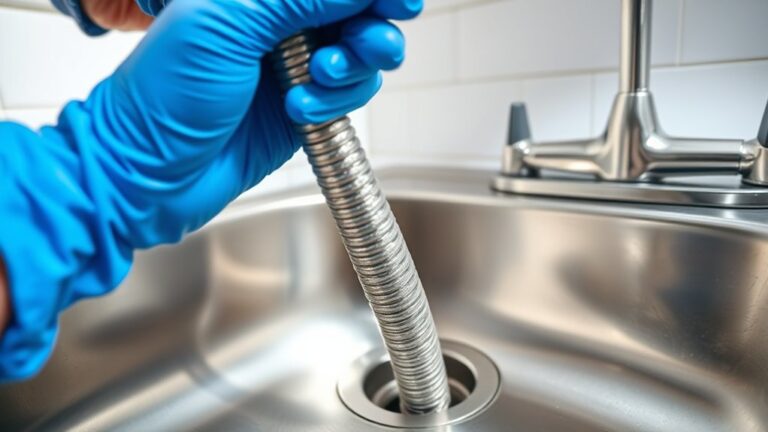
Shine a flashlight into the drain opening and inspect the visible walls for greasy residue, trapped food, or mold. If you see buildup, scrub it with a long, flexible drain brush, then flush the line with hot water.
Persistent smells may also signal a blocked vent, damaged pipe, loose connection, or sewer-gas leak.
Notice whether the odor gets stronger when you run water, use the dishwasher, or operate nearby fixtures. That pattern can help you identify a shared drain or vent issue.
Don’t rely on air freshening products or odor masking sprays. They only cover the smell temporarily.
If the odor returns quickly, water drains slowly, or you hear gurgling, call a licensed plumber.
Ask the plumber to inspect the drain line, vent stack, and seals for the source.
Avoid Common Sink-Cleaning Mistakes
To prevent sink odors from returning, don’t pour grease, harsh chemicals, or boiling water into the drain, and never mix cleaners. Grease coats pipes and traps food particles, while boiling water can damage certain seals or PVC components. Harsh products may corrode plumbing, irritate your lungs, and react dangerously when combined.
Don’t rely on bleach to solve every smell. It can mask odors briefly without removing trapped debris, and it may harm septic systems. Instead, choose eco-friendly cleaning methods, such as dish soap, warm water, baking soda, or diluted vinegar.
However, don’t combine baking soda and vinegar in a sealed drain, and never use vinegar after applying a commercial drain cleaner.
Avoid forcing sharp tools deep into the opening, since you could damage the trap or push buildup farther inside. Don’t neglect the stopper, strainer, or drain cover, where grime often collects.
For safer odor prevention, wear gloves, ventilate the room, follow product labels, and rinse thoroughly with water at an appropriate temperature.
Prevent Kitchen Sink Odors From Returning
To keep kitchen sink odors from coming back, clean your drain regularly to remove buildup. Avoid washing food scraps, grease, or coffee grounds down the drain. Instead, use a strainer and dispose of waste properly to help keep your sink smelling fresh.
Maintain Regular Drain Cleaning
Regular drain cleaning keeps food residue, grease, and bacteria from building up and causing new odors. For effective drain maintenance, flush your sink weekly with hot water, then use a safe enzymatic cleaner according to its label.
Monthly, scrub the stopper and drain walls with a brush to remove hidden buildup. Avoid mixing cleaning products, and don’t rely on harsh chemicals that may damage pipes. Consistent odor prevention takes only a few minutes when you follow a schedule.
| Task | Frequency | Benefit |
|---|---|---|
| Hot-water flush | Weekly | Loosens grease |
| Enzymatic cleaner | Weekly | Breaks down residue |
| Stopper scrubbing | Monthly | Removes buildup |
Set a calendar reminder so cleaning becomes routine. If odors persist despite regular care, check the trap and surrounding seals for trapped moisture or leaks.
Addressing those problems promptly keeps your kitchen sink fresher and helps prevent recurring smells.
Dispose Of Food Properly
After cleaning the drain, prevent new odors by disposing of food scraps properly. Scrape plates into the trash or compost bin before rinsing them.
Don’t push grease, coffee grounds, rice, pasta, or fibrous peels down the sink, because they can stick to pipes, trap bacteria, and create unpleasant smells.
Use a sink strainer to catch small particles, then empty it into the trash after each meal. Wipe oily pans with a paper towel before washing them, and seal food waste in a covered container if you can’t remove it immediately.
Good food storage also helps: keep leftovers sealed and discard spoiled items promptly. For better kitchen hygiene, rinse the basin with warm water after washing dishes and wipe away residue around the drain.
These habits keep odors from returning.
Frequently Asked Questions
Can Sink Odors Indicate a Serious Plumbing or Sewage Problem?
Yes, sink odors can indicate a serious plumbing or sewage problem, especially when smells persist after cleaning. You might have plumbing leaks, sewer blockages, a damaged trap, or a venting issue allowing sewer gas indoors.
Notice warning signs such as slow drainage, gurgling sounds, backups, wet cabinets, or multiple foul-smelling drains. Stop using affected fixtures, ventilate the area, and contact a licensed plumber promptly. Seek urgent help if you feel dizzy or nauseated.
How Often Should a Kitchen Sink Drain Be Professionally Inspected?
Schedule professional kitchen sink drain inspections every one to two years, or sooner if you notice recurring odors, slow drainage, gurgling, leaks, or backups. Regular Drain maintenance helps prevent buildup and catches developing blockages before they become expensive problems.
You should arrange Plumbing inspections annually if your home has older pipes, frequent clogs, or a septic system. A professional can also identify sewer-gas risks and recommend appropriate cleaning or repairs.
Are Commercial Enzymatic Drain Cleaners Safe for Septic Systems?
Yes, commercial enzymatic drain cleaners are generally safe for septic systems when you choose products labeled septic-safe and follow directions. For example, if your sink smells after weekend cooking, enzymatic cleaners can digest organic buildup without harsh chemicals that may disrupt beneficial septic bacteria.
Check ingredients, avoid products containing bleach, acids, or strong solvents, and never mix cleaners. Septic safety also depends on moderation; use treatments only as needed, not daily.
Can Sink Odor Removal Methods Damage Granite or Marble Countertops?
Yes, some sink-odor remedies can damage granite or marble countertops. Avoid spilling vinegar, lemon juice, bleach, or harsh commercial cleaners, because acids and chemicals may etch, dull, or discolor natural stone.
Protect the surface with a towel, apply treatments directly into the drain, and rinse splashes immediately with water. For safe Countertop cleaning, use a pH-neutral stone cleaner.
Follow Odor prevention tips by wiping spills, drying the area, and maintaining the drain.
Should Renters Contact Their Landlord About Recurring Kitchen Sink Smells?
Yes, you should contact your landlord when kitchen sink smells keep returning, especially after basic cleaning. Recurring odors may signal plumbing, drainage, or ventilation problems that require professional attention.
Check your rental agreement clauses for reporting procedures, maintenance duties, and response timelines. Landlord responsibilities often include repairing defective pipes, traps, or drains, while you should promptly report symptoms and avoid harsh chemicals.
Document dates, odors, and attempted remedies in writing.
Conclusion
A smelly kitchen sink is like a neglected doorway: what you leave behind eventually announces itself. Flush the drain, remove trapped food, clean the disposal and overflow, and carefully check the P-trap.
Use baking soda and vinegar safely, avoid harsh mistakes, and keep scraps, grease, and stagnant water from returning. When you care for this small passage each day, you’ll prevent bigger problems and enjoy a fresher, calmer kitchen.
These simple habits can help remove smell from your kitchen sink quickly and keep unpleasant odors from coming back.