10 Essential Tips to Prevent Kitchen Fires
Cooking should feel comfortable, not stressful, but kitchen fires can happen in seconds. You’re not alone—many people struggle to keep heat, oil, clutter, and distractions under control. These practical tips can help you prevent kitchen fires and create a safer cooking space every day.
Prevent kitchen fires by staying nearby while cooking, controlling heat, and using timers. Keep handles turned inward and remove towels, paper, packaging, and loose clothing from burners. Never leave heating oil unattended or use water on grease flames; smother them with a metal lid.
Clean grease buildup, store oils and chemicals away from heat, inspect cords, protect children, and test smoke alarms monthly. Learn the remaining steps below to make your kitchen safer every day.
Key Takeaways
- Stay in the kitchen while cooking, especially when frying, grilling, or broiling, and use timers for unattended cooking tasks.
- Keep flammable items, loose clothing, towels, packaging, and utensils away from burners and other heat sources.
- Prevent grease fires by controlling oil temperature, turning down heat when oil smokes, and never using water on flames.
- If a pan catches fire, turn off the burner, slide on a metal lid, and never move the pan.
- Maintain appliances, keep vents clear, inspect cords, and ensure smoke alarms work on every level of your home.
Prevent Kitchen Fires While Cooking
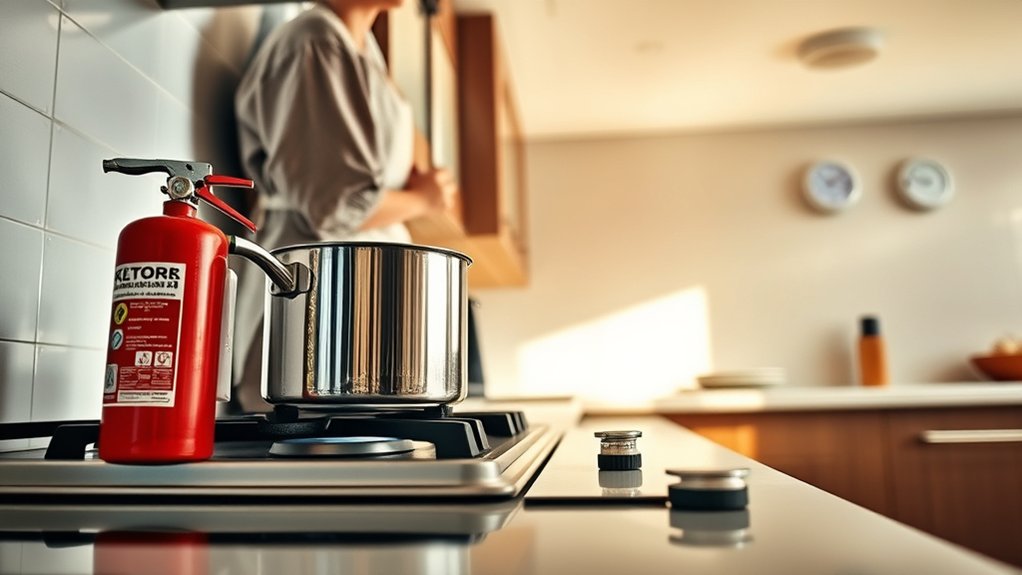
Stay in the kitchen while cooking, especially when frying, grilling, or broiling, because unattended food can quickly ignite. Keep your attention on the stove, and avoid distractions such as phones, television, or chores.
Never leave cooking unattended; stay focused on the stove and keep distractions away to prevent kitchen fires.
Turn pot handles inward so you won’t bump them, and wear snug clothing that can’t brush against burners. Maintain a clear area around your cooktop by moving towels, paper products, packaging, and wooden utensils away from heat.
Use timers whenever you simmer, bake, or roast, and check appliances regularly during operation. Keep children and pets away from hot surfaces, cords, and open oven doors.
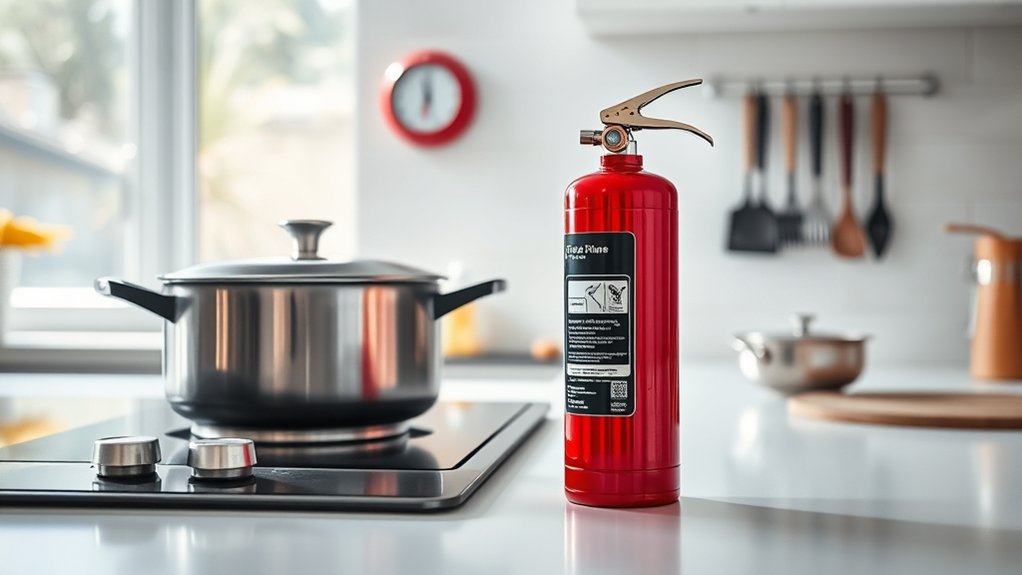
Know where your Kitchen fire extinguishers are located, and learn how to use them before an emergency occurs. Review your Fire safety plans with everyone in your household, including escape routes and emergency contacts.
When you finish cooking, switch off burners, unplug small appliances, and confirm that surfaces have cooled safely before leaving the kitchen.
Stop Grease Fires Before They Start
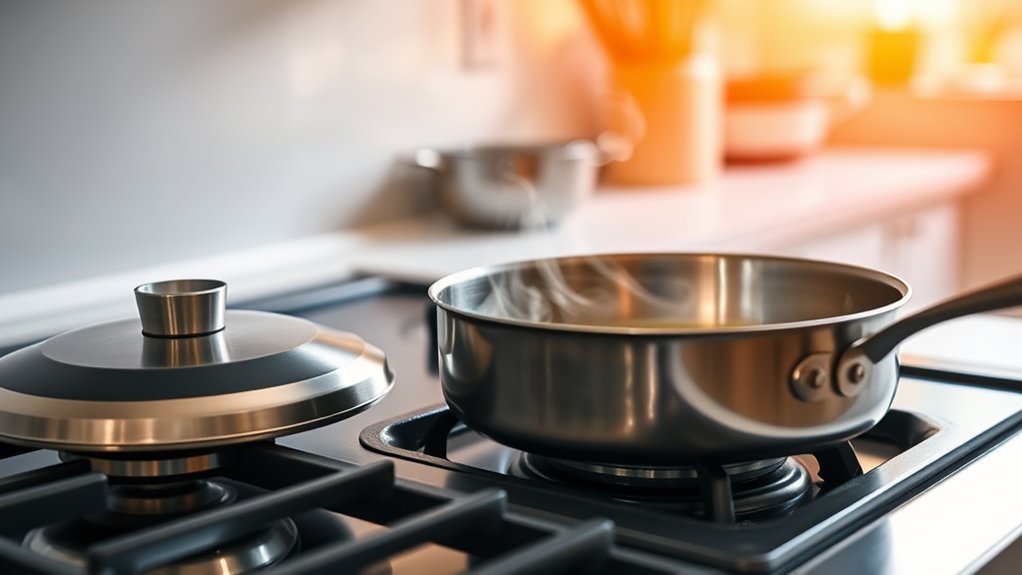
You can help prevent grease fires by keeping an eye on your cooking temperature and avoiding overheated oil. Whenever possible, cover grease to reduce splatters and keep it away from open flames. These simple habits can make cooking safer.
Control Cooking Temperatures
Control your cooking temperature from the start, because overheated oil can ignite without warning. Use a reliable thermometer to monitor oil and pan temperatures instead of guessing.
Cooking precision helps you recognize when oil reaches its smoke point, which signals that it’s breaking down and may catch fire. Choose the heat setting recommended for your recipe, then adjust it promptly if the oil begins smoking.
Temperature control also means staying nearby while you cook; never leave a heating pan unattended, even briefly.
If oil ignites, turn off the burner if you can do so safely, and slide a properly sized lid over the pan to smother the flames.
Don’t move the pan or use water, which can spread burning oil violently. Keep an appropriate fire extinguisher accessible for emergencies.
Keep Grease Covered
Covering grease while it cooks helps contain splatters and limits oxygen if flames appear. Practice Grease safety by choosing a lid that fits your pan, but don’t seal it tightly while hot oil releases steam. Use these Covering techniques to reduce risks:
- Keep a metal lid nearby before heating oil.
- Use a splatter screen to block droplets and protect your skin.
- Lower the heat if oil smokes, then move the pan off the burner.
- Never leave covered grease unattended, even briefly.
- Turn off the burner before uncovering, and lift the lid away from your face.
If flames ignite, slide the lid over the pan carefully, turn off the heat, and leave it covered until completely cool. Never use water; it can spread burning grease violently.
Keep pot handles turned inward, and store towels away from burners.
Keep Flammable Items Away From Heat
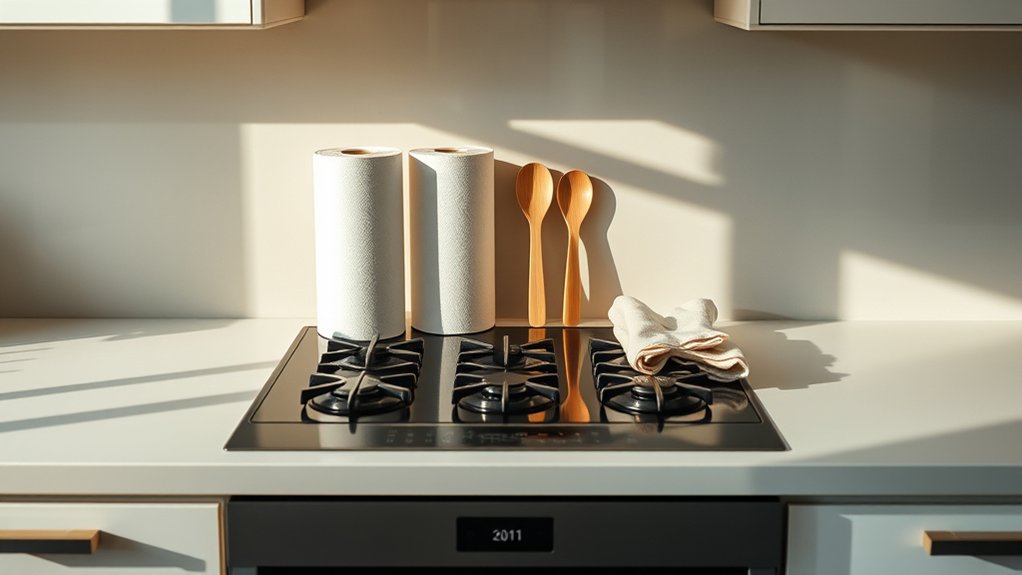
Keep dish towels, paper towels, oven mitts, and packaging away from stovetops, ovens, and other hot surfaces, since they can ignite in seconds. Store these items in drawers or cabinets, not on counters beside burners. Before you turn on a burner or preheat the oven, check that nothing combustible rests nearby.
Wear fitted clothing while cooking, and roll up loose sleeves. Flammable clothing can catch fire when it brushes a flame or hot element, so choose snug cotton garments instead of flowing synthetics.
Keep appliance cords, wooden utensils, cookbooks, and grocery bags away from heat sources, too. Create a clear zone around your range and oven, and teach everyone in your home to respect it.
Don’t leave mail, boxes, or plastic containers near warm appliances, even briefly. If an item starts smoking, turn off the heat if you can do so safely, and move away from the area. Never use a towel to handle hot cookware.
Clean Grease From Stovetops and Ovens
Regularly removing grease buildup from your stovetop helps reduce fire risks. Clean oven spills as soon as possible so they don’t smoke or ignite during cooking. These simple steps can help prevent dangerous grease fires.
Remove Grease Buildup
Grease buildup on stovetops and inside ovens can ignite when exposed to high heat, so clean these surfaces regularly. Let them cool first, then unplug appliances when possible and wear gloves. Use a degreasing cleaner suited to each surface, and never mix cleaning chemicals.
- Wipe stovetops after cooking, especially around burners and controls.
- Remove grates and wash them with hot, soapy water.
- Clean oven walls, racks, and doors according to the manufacturer’s instructions.
- Empty and wash your range hood’s grease trap before it overflows.
- Check kitchen ventilation filters, replacing or washing them as recommended.
Keep cloths, paper towels, and other combustibles away while you clean. Inspect hidden edges and seams where grease collects.
Schedule a deeper cleaning when residue feels sticky or looks dark. Regular maintenance reduces fuel for flames and helps your cooking area stay safer.
Clean Oven Spills
Even with regular degreasing, oven spills need prompt attention because baked-on food and fat can smoke or ignite at high temperatures. Once the oven cools completely, remove racks and wipe loose crumbs with a damp cloth. Apply an oven-safe cleaner according to its label, or use a paste of baking soda and water for light residue. Let the solution loosen buildup, then scrub gently with a nonabrasive pad. Wipe every surface with clean water to remove cleaner traces, and dry the interior before using the oven. Don’t coat heating elements, thermostats, or electrical parts.
For stovetops, lift grates and knobs as directed, then clean splatters promptly. Practice Spill prevention by using appropriately sized baking dishes, covering bubbling foods, and placing a lined sheet beneath messy dishes. Regular Oven cleaning keeps residue from accumulating.
Prevent Grease Fires
A clean stovetop and oven leave less fuel for a grease fire to ignite. Wipe splatters after cooking, once surfaces cool, and remove greasy crumbs from burners, racks, and oven floors.
For grease fire safety, never spray cleaner onto hot surfaces or leave oily towels nearby. Let spills cool, blot them, then wash with degreaser and a nonabrasive sponge.
Don’t line an oven floor with foil; it can trap grease and heat unevenly.
- Wipe stovetop spills after each meal.
- Clean oven racks and interior walls regularly.
- Empty grease from pans before washing.
- Store cooking oil away from heat.
- Keep baking soda and a lid accessible.
Good cooking oil management also prevents buildup. Measure oil carefully, avoid overfilling pans, and discard smoky or contaminated oil.
If grease ignites, turn off heat, cover the pan, and never use water. Call emergency services if flames spread.
Inspect Appliances and Replace Damaged Cords
Inspect kitchen appliances regularly for frayed cords, cracked plugs, loose connections, or signs of overheating. Appliance safety starts with noticing small problems before they become hazards.
Unplug any device with exposed wires, burn marks, melted insulation, sparks, or a persistent electrical smell. Don’t use tape as a permanent repair, and don’t pull a plug out by its cord.
Practice cord maintenance by keeping wires away from sinks, hot surfaces, sharp edges, and areas where they can be pinched. Replace damaged cords or appliances promptly, using manufacturer-approved parts and qualified repair services when needed.
Make sure replacement plugs fit outlets securely, and never overload outlets or power strips. You should also check that appliances sit on stable, dry surfaces and that their vents remain clear.
If an appliance trips a breaker repeatedly, stop using it and arrange an inspection. These habits reduce electrical risks and help protect your kitchen from preventable fires.
Use Ovens and Microwaves Without Starting Fires
Keep oven vents clear so heat can escape safely. In the microwave, use only microwave-safe containers. Stay nearby while food cooks, and set a timer to help prevent overheating or fires.
Clear Oven Ventilation
When oven vents or microwave openings are blocked, heat and grease can build up, increasing the risk of fire. Keep ventilation paths clear so appliances can release heat safely.
Effective ventilation maintenance supports safer cooking and better appliance performance. For airflow optimization, inspect surrounding areas regularly and remove anything that restricts circulation.
- Wipe grease from vent covers after appliances cool.
- Keep towels, paper, and utensils away from openings.
- Don’t store items on top of a microwave.
- Check that your oven’s rear and side vents remain unobstructed.
- Clean or replace removable filters according to the manufacturer’s instructions.
Never cover vents with foil or decorative materials. If you notice unusual heat, smoke, or a burning odor, turn the appliance off and let it cool.
Schedule professional service when built-in ventilation seems damaged or persistently ineffective. These simple habits reduce overheating risks and help your oven and microwave operate safely.
Microwave-Safe Containers
Choose containers labeled microwave-safe before reheating food, since unsuitable materials can melt, crack, or release harmful chemicals and ignite. For reliable Microwave safety, use glass, ceramic, or approved plastic marked for microwave use.
Check containers for cracks, chips, warping, or damage, because weakened materials can fail when heated. Don’t use metal, aluminum foil, metallic trim, or containers with hidden metal handles; they can spark and start a fire.
Avoid takeout packaging, foam trays, and single-use plastic unless the label specifically permits microwave use. Never microwave sealed jars, tightly closed containers, or eggs in their shells, since pressure can build and cause dangerous bursts.
Loosen lids and cover food with a vented microwave-safe cover. Choose suitable container materials, and transfer food from questionable packaging before heating.
Monitor Cooking Times
Safe containers help prevent sparks, but careful timing matters just as much. Use Cooking timers whenever you heat food, and never rely on memory. Set the timer for the recipe’s shortest suggested time, then check before adding more minutes.
During kitchen monitoring, stay nearby, especially when broiling, frying, or reheating greasy foods. Steam, smoke, unusual odors, or popping sounds require immediate attention.
If food ignites, keep the oven or microwave door closed, turn off the appliance, and disconnect power only if you can do so safely. Never leave heating food unattended, and keep children away from controls.
- Set Cooking timers before pressing Start.
- Check food halfway through heating.
- Keep flammable items away.
- Clean grease and spills promptly.
- Turn appliances off after use.
Use extra caution with older appliances, which may heat unevenly or lack reliable timers.
Store Oils and Chemicals Away From Heat
Keep cooking oils, aerosol sprays, cleaning products, and other flammable chemicals in a cool cabinet away from stoves, ovens, and other heat sources. Heat can ignite vapors, soften containers, or cause pressurized cans to burst, turning ordinary supplies into serious fire hazards.
Store flammable oils, aerosols, and cleaning chemicals in a cool cabinet away from heat to prevent fires and container failures.
For safe oil storage, choose a sturdy cabinet with a tightly closing door. Keep bottles upright, sealed, and away from sunlight, hot pipes, and appliances that produce heat.
Don’t place cooking oil beside the range, even if you use it often. Return it to the cabinet after each use, and wipe up spills promptly.
Practice chemical safety by storing cleaners and aerosols in their original, labeled containers. Never mix chemicals, and keep them separate from food, paper towels, and other combustible materials.
Check containers regularly for leaks, corrosion, or damage. Dispose of compromised products according to local guidelines.
If a product’s label lists special storage instructions, follow them carefully.
Protect Children From Kitchen Fires
Teach children to treat the kitchen as a no-play zone, especially when the stove, oven, or other appliances are in use. Explain that hot surfaces, boiling liquids, grease, and sharp tools can cause serious injuries.
Your consistent supervision and clear rules support Child safety and teach practical fire prevention techniques.
- Keep children at least three feet from cooking areas.
- Turn pot and pan handles inward so children can’t grab them.
- Use the back burners whenever possible.
- Don’t let children touch matches, lighters, or appliance controls.
- Teach them to leave the kitchen and alert you if they see smoke or flames.
Never hold a child while cooking, and avoid placing toys or snacks near the stove. Store tempting items, such as cookies, away from countertops and hot appliances.
Give older children age-appropriate lessons, including how to stop, move away, and call for help. Practice these steps calmly so they’ll remember them during an emergency.
Set a firm example by staying attentive and keeping clutter off cooking surfaces.
Install and Test Smoke Alarms
Install smoke alarms on every level of your home, especially near the kitchen and sleeping areas, and test them monthly to confirm they’re working. Choose alarms with photoelectric or dual sensors for reliable detection, and follow the manufacturer’s instructions for installation and sensor maintenance.
Pay attention to alarm placement. Keep alarms outside sleeping areas, at least 10 feet from cooking appliances to reduce false alerts, and away from windows, doors, vents, and ceiling fans that can disperse smoke.
Mount each unit on the ceiling or high on a wall, following local safety codes. Press the test button monthly, and replace batteries immediately when the unit chirps.
Replace alarms according to the manufacturer’s schedule, typically every 10 years, even if they appear functional. Clean them gently with a vacuum to remove dust, and never paint over an alarm.
Consider interconnected alarms, so every unit sounds when one detects smoke. Record testing dates and replace batteries during seasonal reminders.
Know What to Do During a Kitchen Fire
If a kitchen fire starts, stay calm, alert everyone, and leave immediately if the flames spread beyond the pan or you can’t control them safely. Don’t move a burning pan or throw water on grease or electrical fires.
Turn off the heat only if you can reach the controls without passing through flames. Smother a small grease fire with a metal lid, then leave it covered until completely cool.
Know your fire extinguisher locations, and use a Class B or multipurpose extinguisher only with a clear exit behind you.
- Shout “Fire!” so everyone responds quickly.
- Activate the alarm and call emergency services outside.
- Close doors as you leave to slow smoke and flames.
- Follow your emergency escape plans and use the nearest safe exit.
- Never reenter the home for belongings or pets.
Stay low beneath smoke, test doors for heat, and meet at your designated outdoor location. Wait for firefighters, describe the fire’s location, and never return inside until officials declare the building safe.
Frequently Asked Questions
How Often Should Kitchen Fire Extinguishers Be Inspected or Replaced?
You should inspect your kitchen fire extinguisher monthly, checking its pressure gauge, pin, hose, seal, and visible damage. Arrange professional fire extinguisher maintenance annually, or follow your local requirements and manufacturer’s instructions.
Replace the unit immediately after any discharge, significant damage, corrosion, or failed inspection. Most extinguishers last 10–15 years, but don’t rely solely on age.
Keep a written safety inspection schedule, and contact a certified technician whenever you’re unsure.
Which Type of Fire Extinguisher Is Best for a Home Kitchen?
Choose a multipurpose ABC fire extinguisher for most home kitchens; it handles ordinary combustibles, grease, and electrical fires. Think of it as a seat belt: you hope you never need it, but it can protect you instantly.
For cooking safety, keep a Class K extinguisher nearby if you frequently deep-fry, since it’s designed for hot-oil fires. Include regular checks among your fire prevention techniques, and don’t use water on burning grease.
Should Renters Notify Landlords About Kitchen Fire Safety Concerns?
Yes, you should notify your landlord about kitchen fire safety concerns, especially faulty wiring, broken smoke alarms, blocked exits, gas odors, or missing extinguishers. Report issues promptly through the lease’s notification procedures, preferably in writing, and keep copies of messages and photos.
Understanding landlord responsibilities helps you know what repairs they must address. If an urgent danger exists, leave immediately, call emergency services, and then inform your landlord when it’s safe.
Can Kitchen Fire Safety Equipment Be Included in a Home Emergency Plan?
Yes, you can include kitchen fire safety equipment in your home emergency plan. List your fire extinguisher, fire blanket, smoke alarms, and carbon monoxide detector, and note their locations.
Check expiration dates, replace batteries, and make sure everyone knows how to use each item safely. Include cooking safety steps and fire prevention techniques, such as turning off appliances, keeping exits clear, and never leaving cooking unattended.
Practice your escape plan regularly.
Where Should Important Emergency Contact Numbers Be Displayed in the Kitchen?
Display important emergency contact numbers beside your kitchen phone, on the refrigerator, or near an exit where you can spot them quickly. Use clear, waterproof Emergency signage with large, readable print, including local emergency services, poison control, utility companies, and trusted contacts.
Keep the list updated and place a copy near your home emergency supplies. Good Contact accessibility helps you act quickly without searching during a stressful situation.
Conclusion
Kitchen fires can start in seconds, but you can stop many before they happen. Stay nearby while cooking, keep flammables and children away from heat, clean grease regularly, and replace damaged appliances or cords.
Store oils and chemicals safely, and test your smoke alarms often. If flames appear, stay calm: turn off the heat if safe, cover small grease fires with a lid, and never use water.
Remember, preventing kitchen fires is always better than trying to control them afterward.