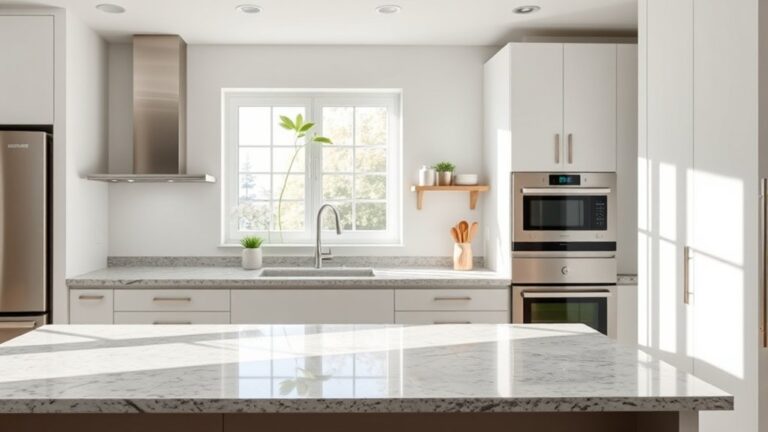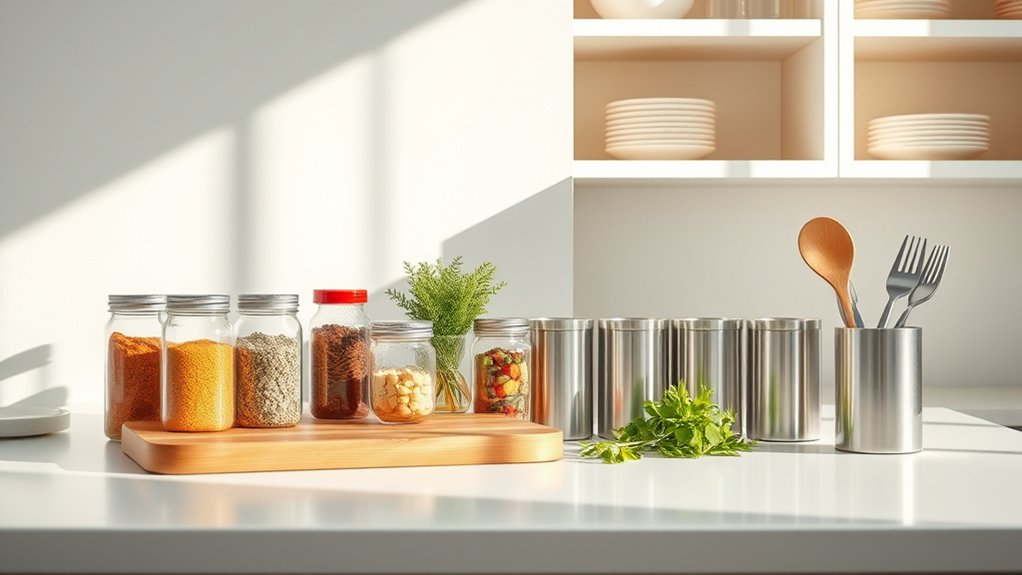
5 Easy Tips to Organize Your Kitchen
A cluttered kitchen can make even simple meals feel stressful, and you’re not alone—many people struggle to keep counters, cabinets, and drawers organized. These practical tips for organizing your kitchen can help you create a cleaner, more functional space without a major remodel.
To organize your kitchen, declutter counters and cabinets by removing duplicates, expired food, and damaged tools. Group items by task, such as prep, cooking, baking, and serving, then keep frequently used supplies within easy reach.
Add simple storage with risers, hooks, drawer dividers, or a slim cart without remodeling.
Finally, spend five minutes after meals returning items, loading the dishwasher, wiping surfaces, and sweeping crumbs.
These practical steps make the rest of the process even easier to follow.
Key Takeaways
- Declutter counters and cabinets by removing duplicates, damaged items, expired food, and rarely used tools.
- Group kitchen items by task, such as prepping, cooking, baking, serving, and making coffee.
- Use stackable shelves, drawer dividers, adhesive hooks, and slim carts to maximize storage without renovations.
- Keep frequently used dishes, utensils, and appliances in easily accessible cabinets and drawers.
- Spend five minutes after meals returning items, loading the dishwasher, wiping surfaces, and sweeping crumbs.
Declutter Counters and Kitchen Cabinets
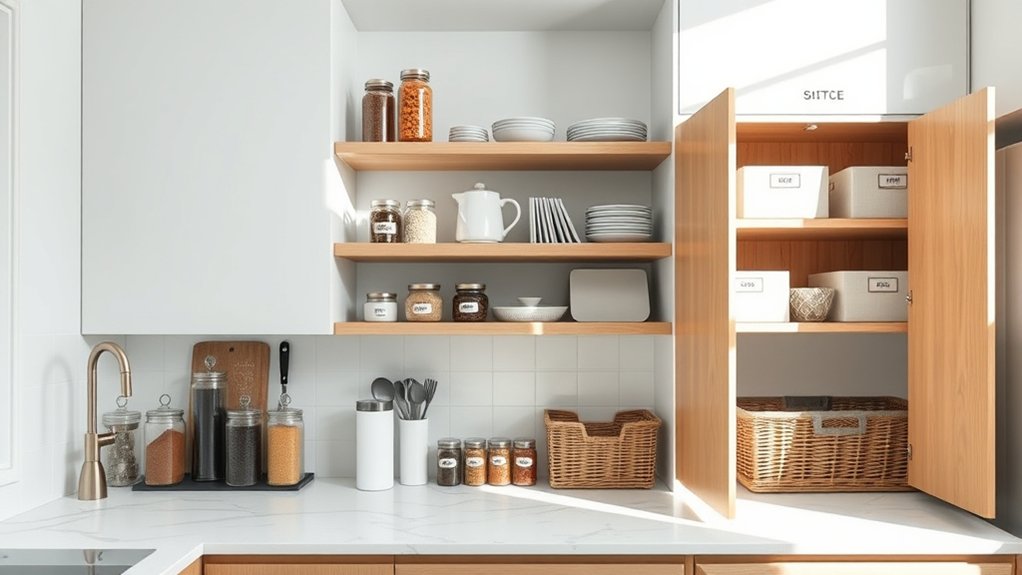
Start by clearing everything from your counters and cabinets so you can see what you actually use. Wipe each surface, then inspect every item before returning it. Keep daily essentials accessible, but remove duplicates, damaged tools, expired food, and anything you never reach for. Place donations and trash in separate bags so they leave your kitchen immediately.
For effective pantry organization, empty one shelf at a time and check dates as you go. Consolidate opened packages, discard stale products, and move rarely used ingredients to higher shelves. Don’t buy storage containers until you know what remains. Otherwise, you’ll create more clutter.
During utensil sorting, gather tools from drawers, counters, and containers. Keep one reliable version of each everyday utensil, and relocate extras to a labeled backup area or donate them. Return items only after cleaning their storage spaces.
Leave counters mostly clear, keeping out just the appliances and tools you use frequently. Your kitchen will feel calmer and easier to maintain.
Group Kitchen Items by How You Use Them
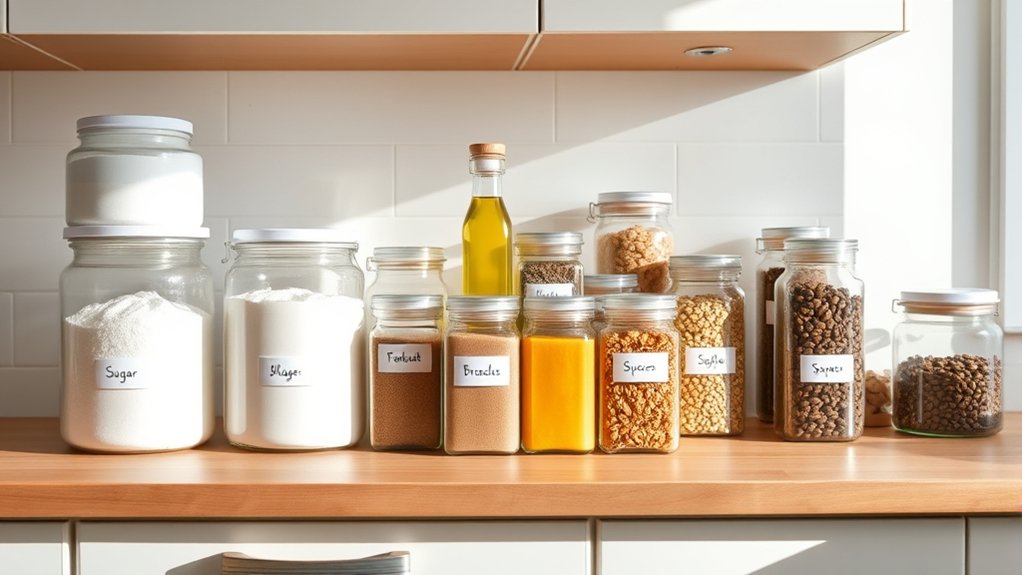
Once you’ve removed the clutter, arrange the items you kept according to how you use them. Keep everyday cooking tools near your main preparation area, baking supplies together, and serving pieces close to the dining space.
Grouping by task saves time because you won’t search through unrelated items.
| Task | Items to group |
|---|---|
| Prep | Knives, peelers, cutting boards |
| Cook | Pans, spatulas, oven mitts |
| Bake | Measuring cups, flour, mixers |
| Serve | Plates, bowls, serving spoons |
Use simple organizational tools, such as trays, bowls, or drawer dividers, to keep each category contained.
Place frequently used groups at eye level or within easy reach, while reserving less-used items for higher or farther locations.
Apply clear labeling strategies to containers holding loose ingredients or small accessories. Labels help you return items to their proper groups and quickly spot what you need.
Keep categories flexible. If you prepare coffee daily, create a coffee station. If you rarely bake, combine those supplies carefully.
Review each group occasionally and adjust it as your routines change. This system keeps your kitchen functional without adding unnecessary complexity.
Add Kitchen Storage Without Remodeling
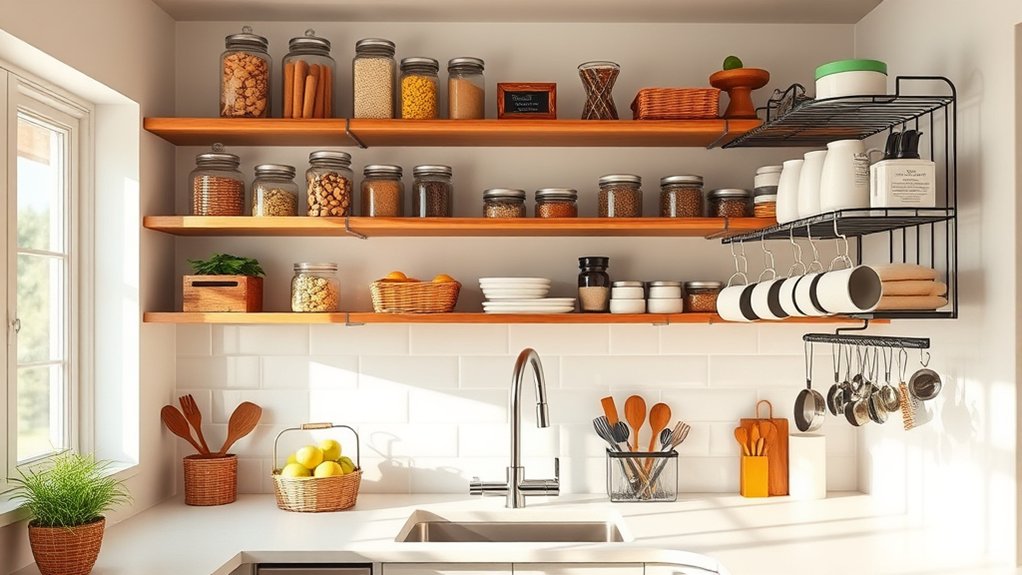
You can add useful kitchen storage without remodeling by making better use of the space you already have. Install adhesive hooks inside cabinet doors for measuring cups, pot lids, or cleaning brushes. Add a tension rod beneath the sink to hang spray bottles, freeing the cabinet floor for other supplies.
Stackable shelves can double your cabinet capacity, while risers let you store plates or bowls in separate layers. Use slim rolling carts between appliances or cabinets to create a movable pantry for cans, baking supplies, or linens.
A magnetic strip can provide efficient utensil storage on a wall or backsplash, keeping drawers less crowded. For pantry organization, group containers by size and add labeled bins to contain loose packets.
Choose clear containers so you can see what you have without removing everything. Use shelf baskets in deep cabinets to make hidden corners accessible. These small additions expand storage quickly, and you won’t need construction, special tools, or expensive renovations.
Keep Everyday Kitchen Essentials Handy
Keep the items you use every day, such as mugs, plates, cooking utensils, and coffee supplies, in the easiest-to-reach cabinets and drawers. You’ll save time when you don’t have to bend, stretch, or move other items first. Reserve prime shelf space for the dishes, glasses, pans, and tools you reach for most.
Group essentials by task to make meal prep smoother. Store measuring cups, mixing bowls, and frequently used ingredients near your main work area. Keep coffee filters, mugs, and sweeteners together so your morning routine stays simple. Place cooking oils, spices, and pot holders within easy reach of the stove, but away from heat.
Use drawer dividers or containers to improve utensil storage and prevent tools from shifting. Put larger utensils in a crock beside the counter if drawers feel crowded. Label shelves only when needed, and avoid filling convenient spaces with rarely used gadgets. Your kitchen will feel more efficient when everyday essentials remain visible, accessible, and orderly.
Build a Five-Minute Kitchen Reset
A five-minute kitchen reset keeps small messes from becoming overwhelming. Set a timer after dinner or meal prep, then move with purpose.
Start by clearing counters and returning each item to its home. Load dirty dishes into the dishwasher, or wash only what you’ll need tomorrow.
Wipe the main work surfaces and sweep visible crumbs from the floor.
Next, check your utensil organization. Return spatulas, knives, and measuring tools to their assigned spots instead of leaving them in a drawer pile.
Toss food scraps, seal leftovers, and place ingredients back in the pantry or refrigerator. If you notice a bigger task, write it on a list rather than tackling it now.
Finish by resetting one frequently used station, such as the coffee area or prep zone. A consistent reset makes your kitchen feel ready each morning.
You won’t need perfection. You’ll need a repeatable routine that fits your schedule and keeps clutter from gaining momentum.
Frequently Asked Questions
How Often Should I Deep-Clean My Kitchen Appliances?
Deep-clean your kitchen appliances every three to six months, depending on how often you use them. Clean ovens, refrigerators, dishwashers, and microwaves more frequently if you notice odors, spills, grease, or reduced performance.
Include smaller appliances in your cleaning schedule, especially coffee makers and toasters. Regular appliance maintenance prevents buildup, improves efficiency, and extends each machine’s life.
Always follow the manufacturer’s instructions, unplug appliances before cleaning, and address spills promptly to prevent stubborn stains.
What Kitchen Organization Products Work Best for Renters?
For renters, choose rental-friendly storage that won’t damage walls or cabinets. Use tension shelves, adhesive hooks, over-the-door racks, and magnetic organizers to add space without drilling.
Stackable bins and slim rolling carts maximize cabinets, counters, and narrow gaps. Portable organization solutions, such as tiered shelves, utensil trays, and labeled containers, move easily when you relocate.
Prioritize removable adhesives, adjustable designs, and lightweight materials so you can reorganize quickly and avoid losing your security deposit.
How Can I Organize a Small Pantry Efficiently?
Use vertical space first by adding adjustable shelves, risers, and stackable bins. Group similar items together, keeping frequently used foods at eye level and backups higher or lower.
Choose clear containers for grains, snacks, and baking supplies so you can see what you have. Add pantry labels to every bin and container.
Try jar storage solutions, such as tiered racks or door-mounted shelves, to keep jars accessible without wasting valuable shelf space.
What Is the Best Way to Store Knives Safely?
Think of knife storage as giving each blade its own safe harbor: use a wall-mounted magnetic strip or an in-drawer knife block to keep edges protected and handles accessible. For maximum safety, choose a sturdy block with individual slots, placing blades point-down or handles facing outward.
Your safety tips should include keeping knives dry, securing storage away from children, and never tossing loose knives into a drawer, where they can cause accidental cuts.
Create clear zones for cookware, food, appliances, and cleaning supplies so everyone knows where items belong. Label shelves or containers, and keep frequently used tools within easy reach.
Use a shared space for communal staples, while assigning small personal areas for specialty items. Post a chore chart that rotates cleaning duties fairly.
Set simple rules for replacing supplies, wiping counters, and reporting shortages. Review the system together monthly and adjust it as needed.
Conclusion
With these five simple habits, you can turn kitchen chaos into calm. Clear your counters, group supplies by purpose, add clever storage, keep daily essentials within reach, and finish with a five-minute reset.
Think of each step as sweeping a little clutter out of your path, so cooking feels less like a chore and more like a welcome ritual. Stay consistent, and your kitchen will keep working smoothly with these easy kitchen organization tips.