How to Get Rid of Gnats in Your Kitchen Fast
Kitchen gnats can be incredibly frustrating, especially when they keep hovering around your food, sink, and countertops. You’re not alone—many people struggle to stop these tiny pests from coming back.
In this roundup, we’ll help you find the best solutions for how to get rid of gnats in your kitchen fast.
To get rid of gnats fast, identify them first: fruit flies have red eyes and hover near produce, while drain flies look fuzzy and mothlike.
Discard overripe food, wipe spills, empty trash, and seal compost.
Scrub drains and flush them with hot water, then dry sinks, sponges, dish racks, and leaks.
Set apple-cider-vinegar traps with dish soap or use sticky traps.
Keep food sealed and surfaces dry, and uncover what else stops gnats from returning.
Key Takeaways
- Identify whether you have fruit flies near produce or drain flies around damp drains and surfaces.
- Remove overripe fruit, spoiled food, spills, dirty dishes, and damp trash immediately.
- Scrub drains and garbage disposals, then flush them with boiling or hot water to eliminate breeding residue.
- Set apple-cider-vinegar and dish-soap traps near fruit bowls, trash cans, and drains.
- Fix leaks, dry wet areas, seal food and waste, and contact pest control if gnats persist.
Tell Fruit Flies From Drain Flies
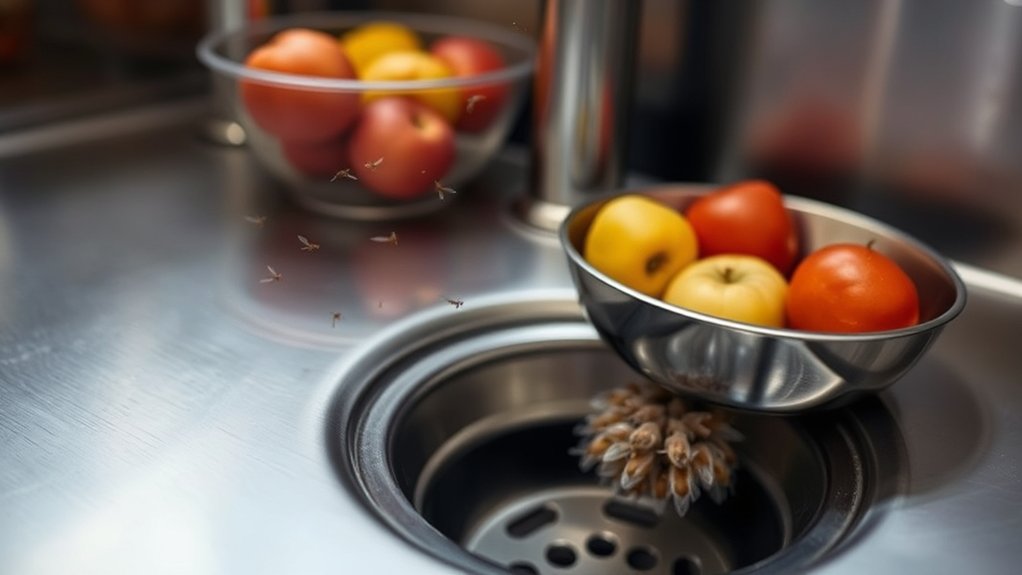
Fruit flies are tiny, tan or brown insects with rounded bodies and red eyes, and they usually hover around ripe fruit, spills, or trash. For fruit fly identification, look for their smooth wings, compact shape, and quick, darting flight.
Fruit fly identification is easiest by their tiny rounded bodies, red eyes, smooth wings, and darting flight near ripe fruit or spills.
You’ll often see them circling in open spaces or gathering near one another. They’re small enough to resemble specks, but their red eyes can help you distinguish them from other kitchen gnats.
Drain flies look different. They’re usually gray, fuzzy, and mothlike, with broad, heart-shaped wings. Their flight is weak and fluttery, so you may notice them resting on walls or nearby surfaces instead of flying continuously.
Drain fly behavior often includes short hops and sudden bursts when you approach. Their fuzzy appearance becomes clearer under bright light or through a phone camera’s zoom. Identifying the insect correctly helps you choose the right response and avoid treating the wrong pest.
Check Food, Drains, and Moisture

Start by checking places that provide food and moisture, such as overripe produce, sticky spills, trash, and recycling bins. Inspect Kitchen storage, including cabinet corners, pantry shelves, and containers with loose lids.
Gnats can find tiny food traces and damp areas you might overlook.
| Area | What to check |
|---|---|
| Drains | Slime, standing water, and slow flow |
| Moisture | Leaks beneath sinks, wet sponges, and towels |
Flush suspicious drains with boiling water, then scrub the stopper and inner rim to disrupt breeding sites.
Check beneath appliances and around pipe joints for condensation or leaks. Empty and dry dish racks, mop heads, and pet-water areas regularly.
Cover sink drains overnight. If gnats gather there by morning, the drain may support their Gnat lifecycle.
Use a flashlight to locate movement, and place traps nearby to confirm the source. Keep notes on where you see adults, since repeated activity reveals hidden moisture.
Address these conditions promptly before the population expands, while saving detailed food removal for the next step.
Remove Overripe Food and Spills
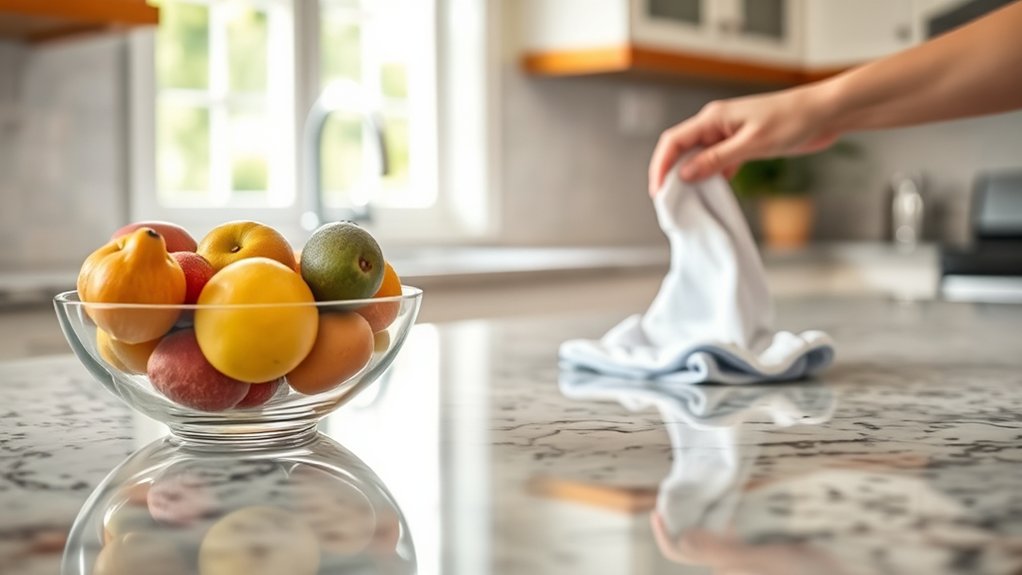
Remove overripe produce promptly, since it can attract gnats. Also, wipe up sticky spills and crumbs, then empty food scraps into a sealed bin. These simple steps help keep your kitchen clean and make it less inviting to pests.
Discard Overripe Produce
Overripe produce and sticky spills can quickly attract gnats and give them places to breed. Start by checking fruit bowls, countertops, and pantry corners for food that’s soft, leaking, or visibly moldy.
Don’t leave questionable items for later; seal them in a bag and take them to your outdoor trash bin. This removes breeding material and reduces kitchen odors that signal food is available.
- Inspect bananas, peaches, tomatoes, and melons daily.
- Discard fruit with fermented smells or broken skin.
- Empty produce bags that contain juice or scraps.
- Keep fresh produce in the refrigerator when appropriate.
- Check onions and potatoes for hidden rot.
Also examine forgotten lunch containers and pet-food leftovers, then throw away anything spoiled. Keep your trash covered and remove it promptly, especially during warm weather.
A quick daily inspection can stop a small gnat problem from growing.
Clean Sticky Spills
Sticky spills from juice, soda, syrup, or ripening produce can feed gnats and leave behind odors that attract more of them. Wipe counters, cabinet shelves, and floors immediately with warm, soapy water.
Pay attention to seams, corners, and areas beneath appliances where residue can dry unnoticed. For stubborn syrup, loosen it with a damp cloth before scrubbing, then rinse and dry the surface completely.
Clean splashes around fruit bowls and containers, too, since even a thin film can sustain gnats. Good spill management removes their food source and helps prevent recurring activity.
Support fruit preservation by storing ripe produce in the refrigerator or sealed containers, checking it daily for leaks. Keep cloths and sponges clean, because they can spread sugary residue instead of removing it.
Don’t leave damp surfaces overnight.
Empty Food Scraps
Empty food scraps promptly, especially overripe fruit, vegetable trimmings, and damp leftovers that can attract gnats. Tie your trash bag tightly, take it outside daily, and rinse the bin to remove lingering odors.
Don’t leave plates, peels, or crumbs on counters overnight. Wipe spills immediately, then dry the area thoroughly.
- Store ripe produce in the refrigerator or sealed containers.
- Keep bananas and tomatoes in covered bowls away from sinks.
- Scrape plates into a lidded compost or trash container.
- Wash cutting boards after preparing fruit or vegetables.
- Clean your garbage disposal and drain weekly.
Good food storage habits reduce feeding spots and support better kitchen sanitation. Check forgotten items in drawers and pantry corners, where leaks or mold can develop.
Replace saturated sponges and dishcloths, since gnats may gather around moist organic residue. A consistently dry, crumb-free kitchen leaves fewer places for gnats to feed and multiply.
Clean Drains Where Gnats Breed
Clean your kitchen drains regularly because fruit flies can breed in the organic residue trapped inside them. For effective drain maintenance, flush each drain with boiling water to loosen grime and wash away food particles.
Then, scrub the drain opening and removable stopper with a stiff brush and dish soap. Don’t forget the underside of the stopper, where slimy buildup often collects.
For deeper cleaning, pour a half cup of baking soda into the drain, followed by a cup of white vinegar. Let the fizzing mixture work for 10 to 15 minutes, then rinse thoroughly with hot water.
Repeat this process several nights in a row if you notice ongoing gnat breeding.
You can also cover the drain overnight with clear tape, sticky-side down, to confirm activity. If gnats remain, clean the drain trap or call a plumber to remove hidden buildup.
Keep drain openings free of residue, and inspect them weekly to prevent another infestation.
Dry Sponges, Soil, and Wet Surfaces
- Hang dishcloths instead of tossing them in a heap.
- Squeegee water from sink rims and backsplashes.
- Dry mop heads completely before storing them.
- Fix dripping faucets or loose supply lines.
- Keep produce scraps and damp paper towels off counters.
Repeat these steps daily until surfaces stay dry and gnat activity declines. Good ventilation, prompt cleanup, and controlled watering remove the conditions these pests need.
Set an Apple Cider Vinegar Trap
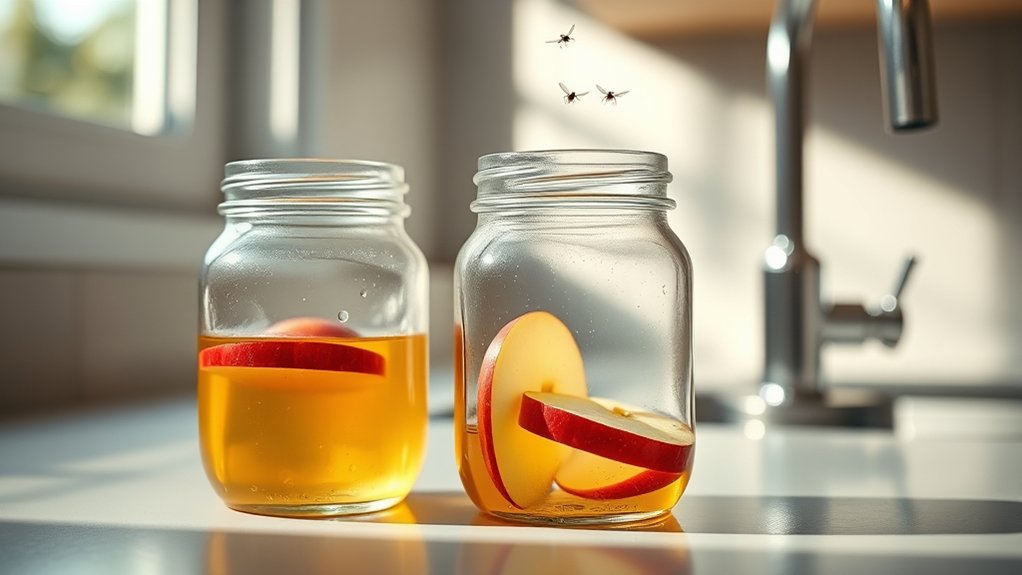
Once damp areas are under control, set an apple cider vinegar trap to catch adult gnats. Pour about half an inch of apple cider vinegar into a shallow bowl or jar.
Add a drop or two of liquid dish soap, then swirl gently. The vinegar’s fermented scent attracts gnats, while the soap breaks the surface tension, causing insects to sink when they land.
For stronger results, cover the container with plastic wrap and secure it with a rubber band. Poke several small holes across the top with a toothpick.
Gnats can enter through the openings but have difficulty escaping. Place the trap near fruit bowls, trash cans, drains, or other areas where you’ve noticed activity.
Refresh the mixture every few days or whenever it fills with insects. You can also use several small gnat traps around the kitchen instead of one large container.
Keep traps away from children and pets, and remove overripe produce to reduce competing food sources.
Use Sticky Traps for Remaining Gnats
For gnats that remain after you’ve set the vinegar trap, place yellow sticky traps near plants, windows, sinks, or other active areas. Their bright color attracts adult gnats, while the adhesive catches them before they reproduce.
This simple step strengthens your DIY pest control routine without sprays or complicated equipment.
For the best results:
- Position traps at plant-pot height, where gnats often fly.
- Place one beside the sink, but keep it away from water splashes.
- Cut larger cards into smaller pieces for discreet placement.
- Replace each trap when its surface fills with insects or dust.
- Check traps daily so you can track activity and adjust placement.
Use traps alongside natural remedies, such as the vinegar lure, to target gnats at different points in the room. Don’t place sticky cards where children or pets can touch them.
If activity continues, move traps closer to observed flight paths and add another card near the strongest concentration. Keep monitoring until you stop seeing new captures for several days.
Seal Trash, Compost, and Food
Seal every food source that could attract gnats, including trash, compost, fruit, and leftovers. Put scraps in a tightly closed bin, and empty it before odors or liquids build up.
If you compost, use a lidded container with secure container seals, and transfer material outdoors regularly. Don’t leave ripe fruit, cut produce, pet food, or leftovers exposed.
Store fruit in the refrigerator when possible, and place other foods in airtight containers. Wipe spills immediately and keep damp packaging from collecting near food.
Moisture control matters because gnats thrive around wet organic material. Line your trash can, tie bags securely, and check for leaks beneath the liner.
Rinse bottles and cans before recycling them, then use a covered recycling container. Keep drains, counters, and floors free of food residue, and repair dripping faucets or plumbing leaks promptly.
A sealed, dry kitchen removes breeding opportunities and helps sticky traps catch the remaining adult gnats.
Prevent Kitchen Gnats With Daily Cleaning
You can prevent kitchen gnats by wiping down your counters each day to remove crumbs and spills. Also, empty your trash regularly, since food waste can attract them. Finally, rinse your drains thoroughly to remove residue where gnats may breed.
Clean Counters Daily
Wipe your kitchen counters daily to remove crumbs, spills, and food residue that attract gnats. Use warm, soapy water, then dry every surface thoroughly, because moisture gives these pests another reason to linger.
Pay attention to seams, corners, and the area beneath small appliances.
- Sweep crumbs into your hand instead of leaving them overnight.
- Clean sticky drink rings as soon as you notice them.
- Practice countertop organization so food stays sealed and surfaces stay accessible.
- Wash cutting boards after each use.
- Include utensil maintenance by cleaning sticky handles and drying tools completely.
Keep fruit, bread, and opened packages in sealed containers. Wipe backsplash areas and inspect counter edges during your routine.
A few minutes of consistent cleaning removes the smells and residue gnats follow. Don’t let dirty dishes, damp cloths, or reusable sponges sit beside freshly cleaned counters, since they can reintroduce moisture and food particles.
Empty Trash Regularly
How often should you empty the trash to prevent kitchen gnats? Take out your kitchen garbage daily, especially when it contains fruit peels, food scraps, coffee grounds, or other damp waste. These materials quickly ferment and attract gnats, so don’t let a full bag sit overnight.
Tie the bag securely, remove it promptly, and place it in an outdoor bin with a tight-fitting lid. Clean the indoor can regularly, too. Wipe away spills, wash the lid, and replace the liner if juices leak.
Review your composting habits if gnats keep appearing. Use a sealed countertop container, empty it every day, and avoid adding heavily decomposed produce.
Managing kitchen clutter also helps. Keep discarded packaging, bottles, and unused containers from piling around the trash can, where gnats can hide and breed.
Rinse Drains Thoroughly
Rinse kitchen drains daily with hot water to flush away food particles and the slimy residue that attracts gnats. Run the tap for several minutes, then scrub the drain opening and stopper with a stiff brush.
This simple drain maintenance habit removes breeding material before adult gnats multiply. Never leave standing water in the sink, and wipe nearby surfaces dry after washing dishes.
- Flush each drain after cooking.
- Brush away buildup under the stopper.
- Clean garbage-disposal baffles weekly.
- Pour enzyme cleaner down drains regularly.
- Schedule a plumbing inspection for persistent odors or slow flow.
Don’t rely on boiling water alone if gnats keep returning. Hidden buildup may sit deeper in the pipe.
Use an enzyme-based cleaner according to its label, and avoid mixing products. If drainage remains slow, ask a professional to inspect the line and correct leaks or trapped organic debris.
Call Pest Control for Persistent Gnats
If gnats persist after you’ve removed food sources, cleaned drains, and sealed entry points, call a licensed pest control professional. A trained technician can identify breeding sites you may have missed, such as hidden leaks, damp wall voids, garbage disposals, or plumbing traps.
They’ll also determine whether you’re dealing with fruit flies, drain flies, or another pest, since each species may require a different treatment.
Ask the company about its inspection process, treatment methods, costs, and follow-up visits before work begins. Choose licensed, insured professionals who use products approved for indoor kitchen areas.
Ask about inspection, treatment, costs, and follow-up care—and choose licensed, insured professionals using kitchen-approved products.
Tell the technician about children, pets, allergies, and any food-preparation concerns so they can recommend safer steps.
Professional extermination can eliminate an established infestation faster than repeated home remedies. After treatment, follow every sanitation instruction and repair moisture problems promptly.
Continue storing produce properly, emptying trash, and cleaning drains to prevent gnats from returning. If activity continues, schedule the recommended follow-up inspection rather than increasing pesticide use yourself.
Frequently Asked Questions
Are Kitchen Gnats Harmful to People or Pets?
Kitchen gnats usually aren’t harmful to you or your pets, but they can contaminate food and surfaces with bacteria. You should still address an infestation promptly, especially if anyone has allergies or sensitivities.
Eliminate moisture, discard overripe produce, and clean drains to interrupt gnat breeding. Effective pest control techniques include traps, sealed food containers, and repairing leaks.
Don’t use insecticides near food or animals unless you follow the label carefully and guarantee proper ventilation.
How Long Does It Take to Eliminate a Kitchen Gnat Infestation?
You can usually eliminate a kitchen gnat infestation within one to two weeks, like clearing a small traffic jam with steady effort. Remove breeding sources, clean drains, discard overripe produce, and keep surfaces dry.
Natural repellents, such as vinegar traps, may reduce adult gnats, but they won’t destroy eggs. Use pest control methods consistently, and inspect plants, trash, and plumbing.
If gnats persist beyond two weeks, contact a licensed professional for targeted treatment.
Can Kitchen Gnats Damage Houseplants or Stored Foods?
Yes, kitchen gnats can damage houseplants and contaminate stored foods. Fungus gnats may weaken plants by feeding on roots, especially in consistently damp soil. Fruit flies and drain flies generally don’t harm plants, but they can spread microbes onto uncovered produce, grains, and other foods.
Discard infested items, seal containers, and refrigerate ripe fruit. Use natural repellents and DIY traps while reducing soil moisture and cleaning spills promptly.
Why Do Gnats Keep Returning After Cleaning?
Gnats keep returning because cleaning often removes adults without eliminating hidden larvae or eggs. Fruit fly behavior leads them toward fermenting produce, sugary spills, drains, recycling bins, and damp cloths.
Check these Gnat breeding sites carefully, then scrub and dry them thoroughly. Seal ripe food, empty trash, rinse bottles, and clean drain interiors.
You’ll also need to repair leaks and replace overwatered plant soil, or new adults may continue emerging.
What Is the Difference Between Gnats and Mosquitoes?
You can tell gnats and mosquitoes apart by size, appearance, and behavior. “Don’t judge a book by its cover,” but gnats usually look like tiny flies, swarm around plants or food, and rarely bite.
Mosquitoes have slender bodies, long legs, and piercing mouthparts; females bite to drink blood. Gnat behavior often involves moisture and decaying material, while mosquito breeding requires standing water, where larvae develop before adults emerge and fly.
Conclusion
With a few quick changes, you can get rid of kitchen gnats before they take over. Remove ripe food, clean your drains, dry damp surfaces, and use sticky traps to catch stragglers.
The same daily habits that keep your counters clean, such as sealing trash, wiping spills, and rinsing produce, also help prevent new infestations.
If gnats keep returning despite your efforts, don’t wait. A pest-control professional can find hidden breeding spots and help you get rid of gnats in your kitchen fast.