How to Organize a Small Kitchen With 3 Simple Tips
Small kitchens can feel cluttered fast, especially when counters disappear under appliances and cabinets are difficult to navigate. You’re not alone—many people struggle to make the most of limited space. The right storage solutions can help create a more functional, organized kitchen without a major renovation.
Organize your small kitchen with three simple tips. First, declutter counters by keeping only daily-use appliances and moving, donating, or discarding everything else.
Next, arrange cabinets around your routine, placing everyday dishes, cookware, and breakfast items within easy reach while storing seasonal pieces higher up.
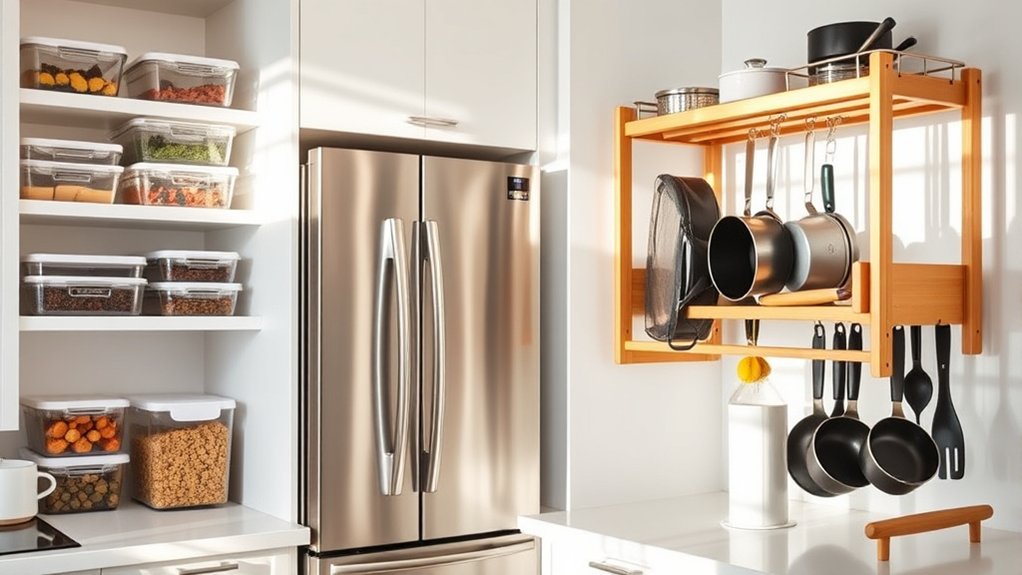
Finally, use vertical and hidden storage, such as wall racks, cabinet-door hooks, magnetic strips, and slim carts. These changes create more usable space, and the following ideas can help you maintain it.
Key Takeaways
- Declutter counters and cabinets, keeping only useful, frequently used items.
- Group everyday dishes, cookware, and appliances by task for easier access.
- Use trays to contain oils, seasonings, and other frequently used countertop items.
- Add vertical storage with wall racks, magnetic strips, hooks, and cabinet-door organizers.
- Store seasonal items in labeled bins on high shelves, using a step stool safely.
Declutter Your Small Kitchen Counters
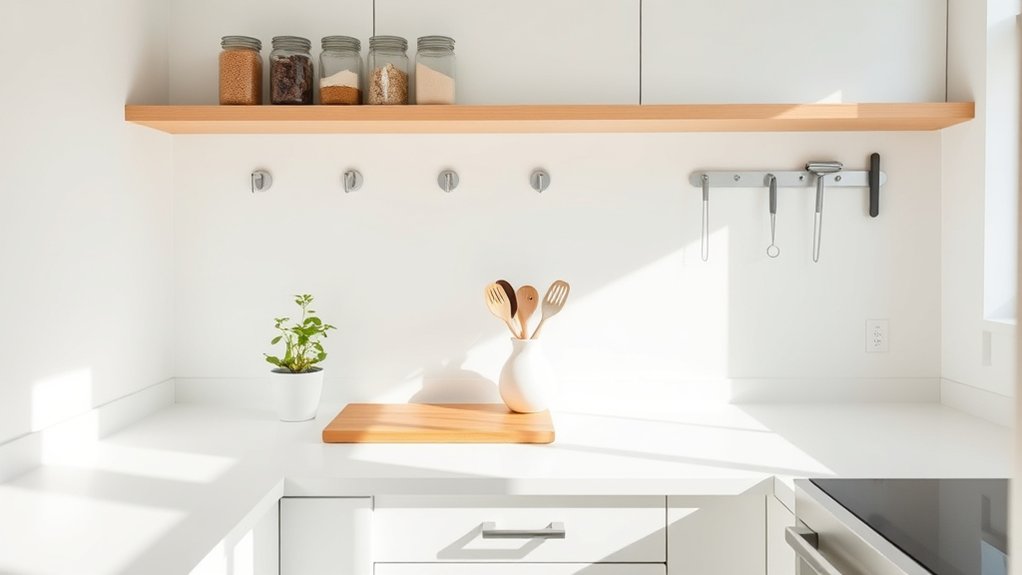
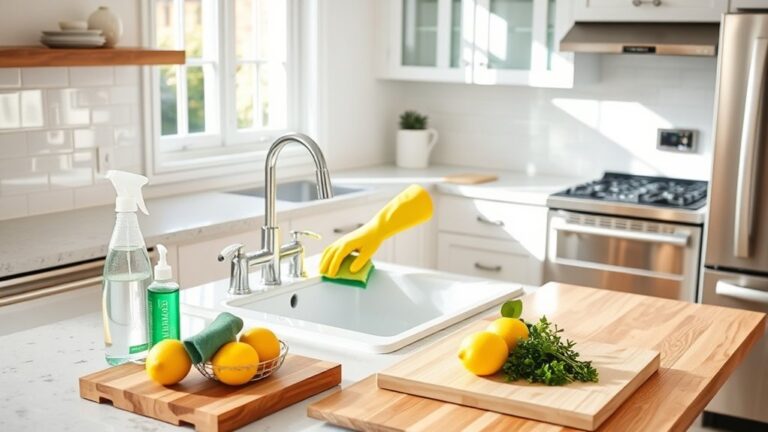
Start by clearing everything from your counters and sorting each item into three groups: keep, relocate, or discard. Wipe the empty surfaces so you can see how much usable space you have.
Return only items you use daily, such as a coffee maker, toaster, or knife block. Move occasional appliances to a designated appliance storage area, where they’ll stay accessible without crowding your work zones.
Discard expired food, broken tools, duplicates, and anything you haven’t used in months. Relocate mail, dishes, and miscellaneous objects to their proper homes outside the kitchen.
Limit countertop decor to one or two purposeful pieces, such as a small plant or attractive canister. Choose items that add warmth without blocking drawers, outlets, or prep space.
Use a tray to contain frequently used oils or seasonings, keeping them neat and easy to move. Finally, adopt a simple reset: after cooking, return every item, wipe the counters, and leave them clear for tomorrow.
Organize Cabinets Around Daily Use
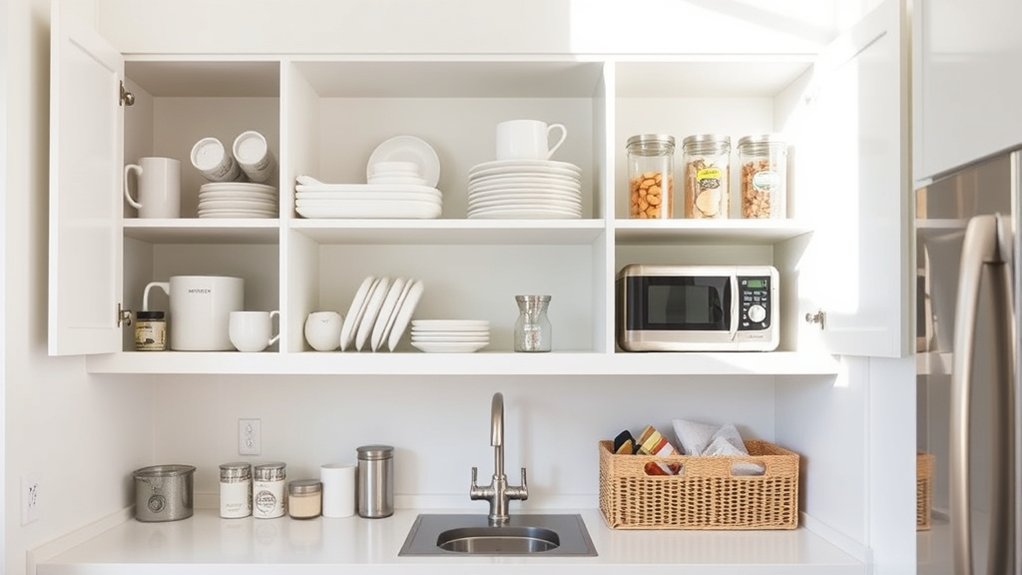
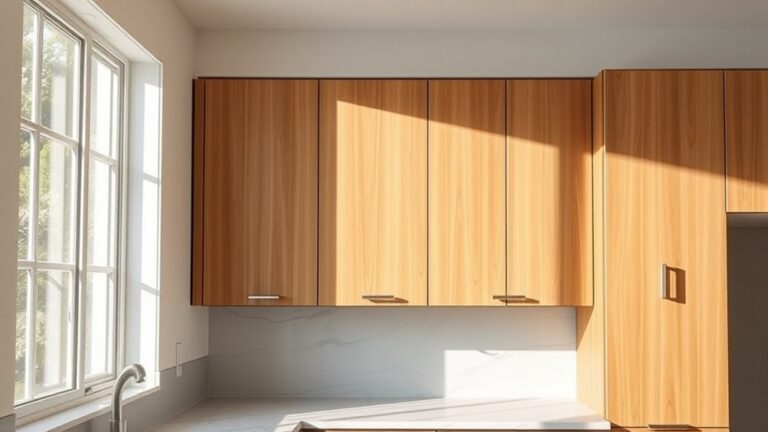
Arrange your cabinets according to how often you use each item, keeping everyday dishes, glasses, cookware, and utensils on the easiest-to-reach shelves. Place breakfast bowls near the coffee maker and keep pans close to your main prep area. Group items by task so you can move smoothly through meal prep without opening several doors.
> Keep frequently used dishes and cookware within easy reach, grouped by task for smoother meal prep.
Reserve higher or less convenient cabinets for serving platters, specialty appliances, and seasonal dishes. You’ll save time when frequently used tools stay together, while occasional items remain out of your way.
Use one drawer for utensil storage, sorting forks, spoons, knives, and cooking tools by purpose. Return each item to its assigned spot after washing it, so your system stays easy to maintain.
Review your cabinets every few months. If you reach for something daily, move it closer; if you rarely use it, shift it farther away. This simple arrangement reduces clutter, shortens routine tasks, and helps your small kitchen work more efficiently.
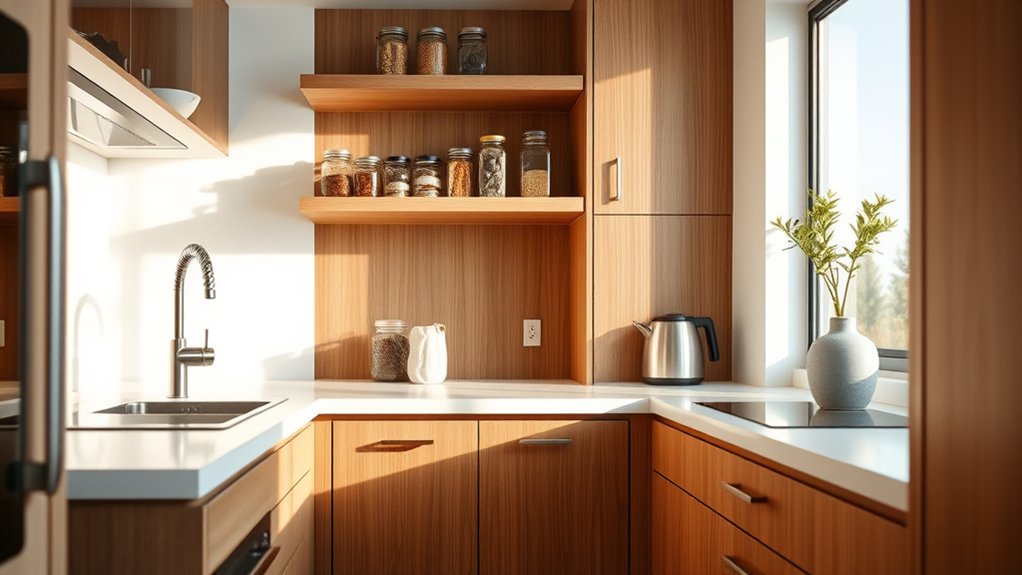
When counter and cabinet space is tight, use your walls, cabinet doors, and overlooked gaps for storage. Install wall mounted racks for spices, utensils, or cutting boards, keeping frequently used items within easy reach. Choose a slim rail with hooks to hold measuring cups, mugs, or towels without crowding your work surfaces.
Add a magnetic strip to your backsplash for knives and metal tools, but mount it securely and away from children. Use the inside of cabinet doors for shallow shelves, racks, or adhesive hooks.
You can also place a narrow rolling cart beside the refrigerator or slide a tiered organizer between appliances. These options make use of small gaps without taking up valuable counter space.
Look for hidden compartments in toe kicks, benches, or unused space above cabinets. A toe-kick drawer can store baking sheets, linens, or rarely used tools.
Store seasonal items in labeled bins on high shelves, and use a sturdy step stool to retrieve them safely. Keep each vertical zone tidy so your kitchen stays easy to use.
Frequently Asked Questions
How Can I Organize My Refrigerator Efficiently?
Organize your refrigerator efficiently by grouping similar foods together and assigning each shelf a purpose. Keep dairy on the middle shelf, raw meat in a sealed container on the bottom, and ready-to-eat foods above it. Use clear bins for snacks, produce, and Meal prep ingredients. Label leftovers with dates, and place older items in front. Don’t overcrowd shelves, since cold air needs room to circulate. Improve food storage by cleaning spills weekly.
What Cleaning Routine Keeps a Small Kitchen Sanitary?
You can keep a small kitchen sanitary by wiping counters, handles, and appliance surfaces daily with disinfectant, sweeping floors, and washing dishes promptly. Follow simple Cleaning schedules: clean spills immediately, scrub the sink nightly, mop weekly, and deep-clean your refrigerator monthly.
Apply sanitation tips by separating raw and cooked foods, washing hands for twenty seconds, replacing sponges regularly, and emptying trash before odors develop. Don’t overlook cabinet pulls, faucets, and frequently touched switches.
Which Kitchen Appliances Are Most Useful for Limited Spaces?
Choose a compact refrigerator, two-burner induction cooktop, and microwave-convection oven first. Like a well-packed toolbox, each should earn its space.
A multicooker handles pressure cooking, slow cooking, steaming, and sautéing, while a blender with a food-processor attachment replaces several bulky gadgets.
Prioritize Compact storage designs, such as nesting cookware and foldable accessories. Select Multi functional appliances you’ll use weekly, and skip single-purpose devices that crowd your counters and cabinets.
How Can I Make a Small Kitchen Feel More Spacious?
Use light Color schemes to make your small kitchen feel brighter and more open. Choose white, cream, or soft gray for walls, cabinets, and backsplashes, then add reflective surfaces to bounce light.
Keep counters clear by using vertical Storage solutions, such as wall-mounted shelves, pegboards, and magnetic strips. Select slim appliances and store rarely used items elsewhere.
Finally, improve visibility with under-cabinet lighting and avoid bulky, dark furnishings that visually crowd the room.
What Safety Precautions Should I Follow in a Compact Kitchen?
You need clear paths and careful habits. A compact kitchen saves space, yet it can magnify hazards. Practice Cooking safety by keeping pot handles turned inward, storing knives securely, and using back burners when possible.
For Hazard prevention, wipe spills immediately, keep towels away from flames, and don’t overload outlets. Install a smoke alarm, check appliance cords, and keep a small fire extinguisher accessible.
Never leave cooking unattended, even briefly, in tight quarters.
Conclusion
With a few thoughtful changes, your small kitchen can feel less like a crowded puzzle and more like a well-tuned workspace. Clear counters give your meal prep room to breathe, while cabinets arranged around daily habits keep essentials within easy reach.
Use walls, doors, and tucked-away corners as extra shelves in disguise. You don’t need more square footage, just smarter pathways. Start small, and you’ll turn kitchen clutter into calm with these simple tips for organizing a small kitchen.