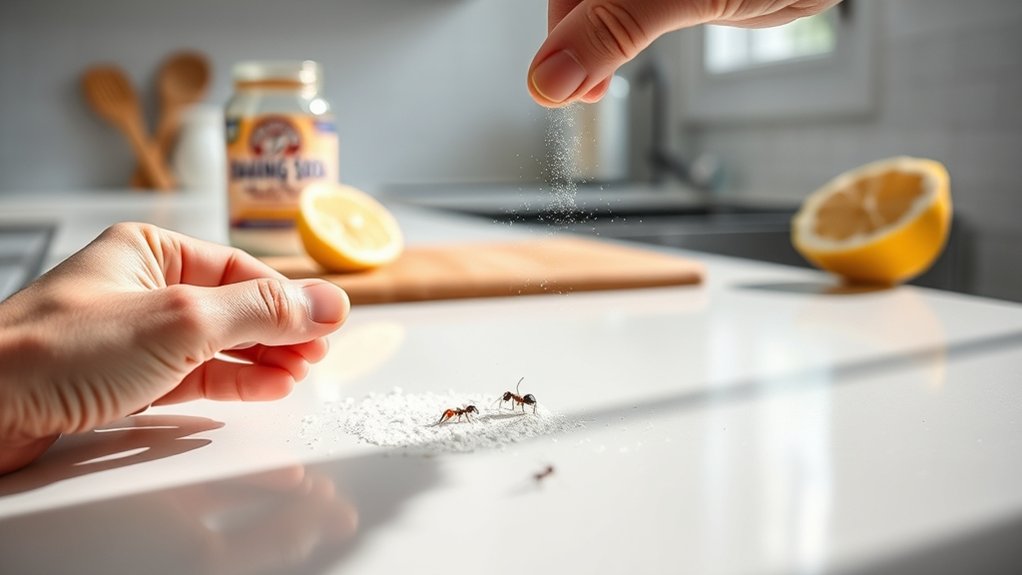
How to Get Rid of Ants in the Kitchen Step by Step
Kitchen ants can be frustrating, especially when they keep coming back no matter how often you clean. You’re not alone—many people struggle to find effective solutions that protect their food and keep their kitchen pest-free.
This guide to the best ant-control products can help you get rid of ants in the kitchen step by step.
To get rid of kitchen ants, follow their trail to entry points, then inspect cabinets, pantries, and appliances for food or moisture. Store ingredients in airtight containers, clean spills, dry sinks, and fix leaks.
Wipe trails with warm, soapy water, then place enclosed ant bait along active routes. Don’t spray insecticide near bait.
After activity drops, seal cracks and gaps. Monitor sightings for two weeks, and you’ll find additional prevention tips below.
Key Takeaways
- Trace ant trails to locate entry points, then seal cracks around windows, doors, pipes, cabinets, and baseboards.
- Store food in airtight containers, clean crumbs and spills promptly, empty trash, and eliminate standing water or leaks.
- Wipe ant trails with soapy water to remove scent markers, avoiding damage to wood, electrical outlets, and delicate surfaces.
- Place enclosed ant bait stations along active trails, and avoid spraying insecticides nearby so ants can carry bait to the colony.
- Monitor activity weekly, maintain cleanliness and seals, and contact pest professionals if ants persist despite treatment.
Find Where Kitchen Ants Enter
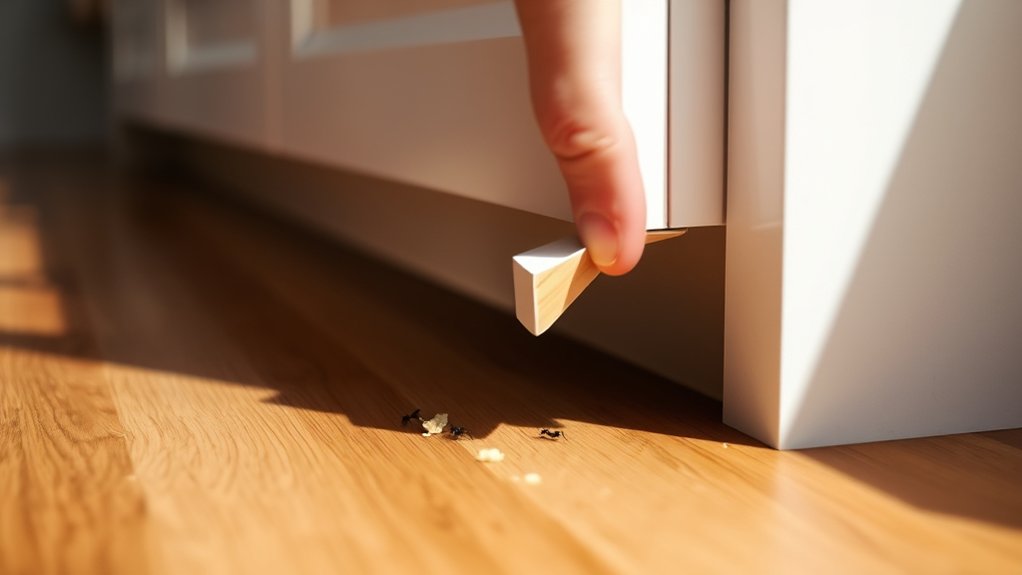
Start by tracing ants to their entry point, such as gaps around windows, doors, pipes, baseboards, or cracks in the foundation. Watch their movement without disturbing them, then follow the line backward from where you notice activity.
Trace ants back to gaps around windows, doors, pipes, baseboards, and foundation cracks to locate their entry point.
Ants often use the same route repeatedly, leaving faint trail markers that guide others to food and water. Check window frames, door thresholds, wall joints, plumbing openings, and floor edges with a flashlight.
Look for tiny gaps, loose caulk, debris, or clusters of ants disappearing beneath trim. You can place a small piece of tape near suspected entry points and observe whether ants cross it.
Note each location before cleaning or sealing anything, because you’ll need to confirm the source first. Don’t rely on visible ants alone; inspect nearby exterior walls and foundation surfaces for cracks or vegetation touching the structure.
Identifying every route helps you target prevention effectively and keeps ants from returning through overlooked openings.
Inspect Cabinets, Pantries, and Appliances
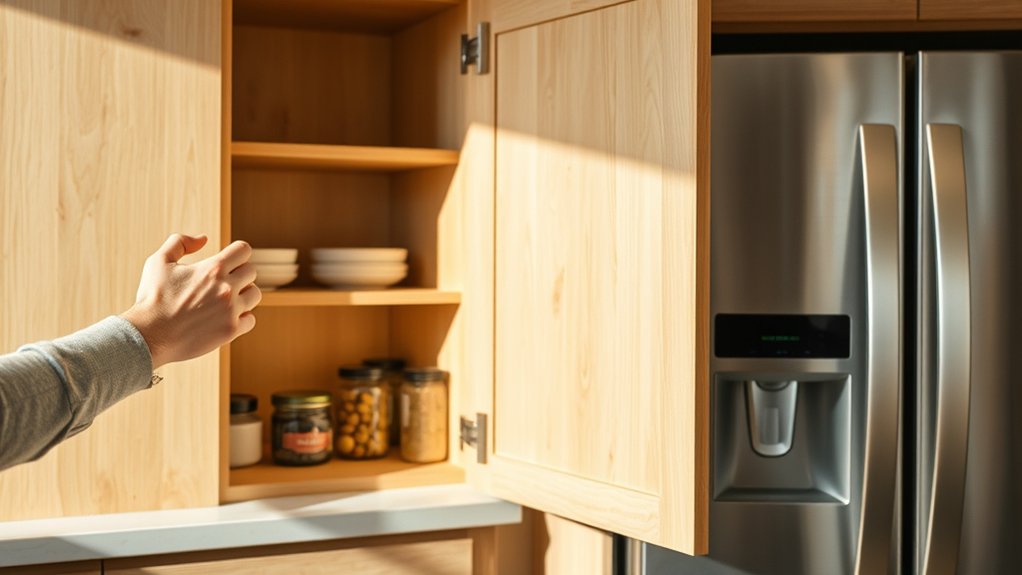
After noting where ants enter, inspect nearby cabinets, pantries, and appliances for food residue, moisture, and hidden trails. Use a flashlight to examine shelf corners, hinge gaps, drawer tracks, and wall seams. Look beneath liners, around cabinet feet, and behind appliances where ants may travel unseen.
Check cardboard packages, jar rims, and loose seals for tiny openings or clustered insects. Follow any trail to learn whether it leads behind a refrigerator, under a dishwasher, or into a cupboard.
Don’t dismantle appliances or disturb electrical connections. Instead, inspect accessible edges and consult a professional if ants disappear inside equipment.
Improve kitchen organization as you inspect. Group similar items, keep packages elevated from cabinet walls, and replace damaged packaging with pest proof containers.
Mark locations where you notice trails, droppings, or damp spots so you can monitor them later. Avoid spraying insecticide inside food-storage areas during inspection, since residues can contaminate surfaces and make later treatment less safe.
Remove Food and Water Sources
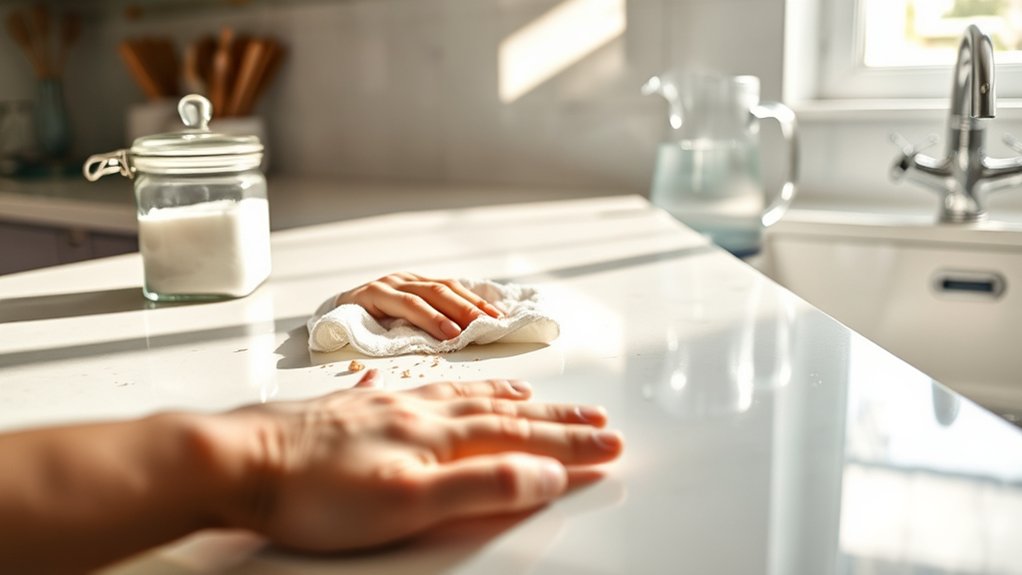
Once you’ve found the trails, remove the food and water drawing ants into your kitchen. Start with food storage: transfer sugar, flour, cereal, pet food, and snacks into airtight containers.
Eliminate food sources by storing sugar, flour, cereal, pet food, and snacks in airtight containers.
Wipe crumbs from counters, sweep beneath appliances, and clean spills immediately. Don’t leave ripe fruit, dirty dishes, or uncovered leftovers on the counter overnight.
Empty your trash regularly, and use a tightly closed bin, especially if it contains sweet or greasy waste.
Next, focus on water elimination. Dry the sink, counters, and dish rack after use. Repair dripping faucets, leaking pipes, and damp cabinet areas.
Check beneath the refrigerator, dishwasher, and sink for moisture, then dry those spaces thoroughly. Keep pet-water bowls away from walls and clean them daily.
During humid weather, run ventilation or a dehumidifier to reduce dampness. Store produce properly, rinse recyclable containers, and keep pantry shelves tidy.
These changes remove the resources ants need, making your kitchen far less attractive before you address their trails. Recheck hidden corners daily until activity stops.
Erase Ant Trails With Soapy Water
Soapy water removes the scent trails ants use to guide others to food. Understanding ant behavior helps you target this invisible route instead of simply wiping away visible insects. Mix warm water with a few drops of dish soap in a spray bottle or bowl.
Spray the solution along countertops, cabinet edges, windowsills, baseboards, and any path where you’ve seen ants. Let it sit briefly, then wipe the area thoroughly with a clean cloth.
Repeat the cleaning process daily while ants remain active, especially after spills or crumbs appear. Wash the cloth afterward so it doesn’t carry scent residue to another surface.
For stronger soapy water effectiveness, clean nearby corners, cracks, and entry points rather than treating only the trail’s center. Check behind appliances and under containers, where residue can linger.
Don’t soak wood, electrical outlets, or delicate finishes. Apply the solution to your cloth instead. Keep surfaces dry afterward, because moisture can attract ants and undermine your cleanup.
Choose the Right Ant Bait Safely
Choose a bait labeled for indoor ant control, and match it to the ants’ feeding habits when possible. Read the active ingredient, directions, and safety warnings before buying.
Enclosed gel or bait stations reduce contact with children and pets, while loose granules may spill easily. Don’t use outdoor pesticides in your kitchen, and never mix products.
| Bait type | Best use | Safety note |
|---|---|---|
| Gel | Protein- or sugar-seeking ants | Keep away from food surfaces |
| Station | Homes with pets or children | Use sealed, tamper-resistant units |
| Granules | Limited indoor use | Avoid spills and open containers |
Follow the label’s quantity and replacement schedule; more bait isn’t better. Store unused bait in its original container, away from heat and food.
Natural remedies, such as vinegar or essential oils, may mask trails but usually won’t eliminate colonies. DIY traps can attract ants, yet homemade mixtures may expose your household to borax.
Choose a registered product instead, and discard it according to local guidance.
Place Bait Along Active Ant Trails
Place bait directly beside active ant trails, near entry points, or along baseboards where you’ve seen steady activity. Choose locations ants already use instead of placing bait randomly. Their established routes help workers find the bait quickly and carry it back to the colony. Keep each station level, stable, and out of children’s and pets’ reach.
Before positioning bait, inspect the trail carefully. Note where ants enter, which direction they travel, and whether several routes connect. This observation supports accurate Pest identification and helps you target the most productive spots. Don’t block the trail with containers or clutter. Ants need clear access to the station.
Maintain tidy Food storage nearby by sealing packages and cleaning crumbs, so the bait remains the most accessible food source. Check stations according to the product label and replace them when they’re empty, dirty, or dried out. Keep bait near active paths until you no longer see regular traffic, then remove unused stations.
Stop Spraying Near Ant Bait
Once you’ve placed bait along active trails, stop spraying insecticide or household cleaners around those stations. Chemical sprays can kill foraging ants before they carry bait back to the colony, reducing the treatment’s reach. Cleaners may also erase scent trails, forcing ants to search elsewhere.
| Action | Why it matters | Better choice |
|---|---|---|
| Spray near bait | Scares or kills ants | Leave stations undisturbed |
| Wipe the trail | Removes their route | Clean distant surfaces |
| Use Natural repellents | Redirects foragers | Wait until bait works |
Don’t combine bait with vinegar, essential oils, or other Natural repellents nearby. Their strong odors can discourage ants from approaching, while aerosol residue may contaminate the bait.
Keep children and pets away from treated areas, and follow the bait label’s safety directions. Check activity daily without moving the station.
You may see more ants at first; that often means workers are feeding. Resist the urge to interfere.
Replace dried or empty bait according to the label, but avoid adding competing products until activity clearly declines.
Seal Cracks After Ant Activity Drops
After ant activity drops, seal the cracks and gaps they used to enter so new workers can’t follow the same routes. Check where countertops meet walls, around pipes, beneath cabinets, and along baseboards.
Wipe each area clean, then let it dry completely before you begin sealing cracks.
Use silicone caulk for narrow openings and expandable foam for larger gaps around plumbing or utility lines. Apply a thin, even bead, smooth it with a damp finger or tool, and remove excess before it cures.
Don’t block vents or create openings that could trap moisture.
Inspect windows and doors, too. Replace worn weather stripping, repair damaged screens, and add a door sweep where daylight shows beneath the door.
These steps support pest proofing doors and reduce entry points without relying on repeated sprays. Keep food, water, and bait areas undisturbed while the sealant sets.
Follow the product’s curing instructions, and wash your hands after finishing the repairs.
Track Ant Activity for Two Weeks
For two weeks, record every ant sighting, including the date, location, and number of ants. Use removable tape to mark their travel routes, and note when activity peaks. These records will help you target any remaining trails and entry points.
Record Ant Sightings
Track every ant sighting for two weeks, noting the date, time, location, number of ants, and where they’re traveling. Use a notebook or phone note so you can update it immediately.
Record whether you see ants near sinks, cabinets, windows, appliances, pet bowls, or food containers. Include weather conditions, recent cleaning, spills, and food preparation, since these details may explain sudden activity.
Note the ants’ size, color, speed, and whether they carry food. Don’t rely on memory; small observations can reveal useful ant behavior.
Review your notes daily and compare sightings by time and location. Look for trail patterns, such as increased activity after dark or repeated appearances near moisture.
Keep the record factual and consistent. This two-week log will help you recognize routines before choosing your next control step.
Mark Travel Routes
Mark each ant route with removable painter’s tape or small sticky notes, placing a marker at the trail’s starting point, turns, and destination. Don’t block the ants or disturb their movement.
Use different tape colors for separate Travel routes, such as paths along the counter, under appliances, or beside baseboards. Add a brief label describing where each trail begins and ends.
Check the markers daily for two weeks, replacing any that loosen or fall. Record whether a route remains active, disappears, splits, or joins another path.
You’ll create a clear map of ant navigation without relying on memory. Keep the map near your sighting log, and update it whenever you spot a new trail.
This record will help you trace entry points and identify connected pathways later.
Note Peak Activity
Note when ants appear most often over the next two weeks, recording the time, location, weather, and approximate number you see. Use a notebook or phone note to log each observation consistently.
Include where you find trails, such as near the sink, pantry, trash can, or windows. Note whether food or moisture is nearby.
Review your records after fourteen days to identify patterns in ant activity. You may uncover peak hours in the morning, evening, or after cooking.
Compare busy periods with weather changes, since rain or heat can drive ants indoors. Watch whether numbers increase, decrease, or shift locations.
This information helps you target cleaning, sealing, and bait placement when ants are most active. Don’t spray trails before documenting them, because you could disrupt useful clues about the colony’s route.
Prevent Ants From Returning
To keep ants from returning, seal cracks around windows, doors, and baseboards, and repair leaking faucets or pipes. Store sugar, cereal, pet food, and other attractants in airtight containers. Wipe counters after meals, sweep crumbs promptly, and empty the trash regularly. Don’t leave standing water in sinks or dishes overnight.
- Remove scent trails: Clean ant paths with soapy water or diluted vinegar. This erases pheromones that guide other ants into your kitchen.
- Use natural repellents: Place cinnamon, peppermint oil, or citrus peels near entry points. Replace these regularly, since their scents fade.
- Maintain DIY traps: Set bait traps where you’ve seen activity, then avoid killing ants immediately. Workers must carry bait back to the colony for lasting results.
Inspect your kitchen weekly for new gaps, moisture, or food residue. Trim branches touching your home, because ants can use them as bridges.
If activity continues despite these steps, contact a pest professional to locate hidden nests and recommend safe treatment. Keep monitoring for several weeks after you stop seeing ants.
Frequently Asked Questions
Can Kitchen Ants Damage Electrical Appliances or Wiring?
Yes, kitchen ants can damage electrical appliances or wiring, especially when they nest inside warm, protected spaces. They may chew insulation, bridge contacts, or leave debris that causes shorts and malfunctions.
This electrical damage and wiring harm can create shock or fire risks, although serious incidents remain uncommon. You shouldn’t spray liquid insecticide into an appliance.
Instead, unplug it, avoid touching exposed wires, and call a qualified technician or pest professional for safe inspection.
Are Kitchen Ants Dangerous to Children or Pets?
Kitchen ants usually aren’t dangerous to your children or pets. Most species don’t bite or sting, though some may cause minor irritation if disturbed.
Ant health generally poses little disease risk, but ants can contaminate food and surfaces as they forage. Ant behavior may attract them to spills, pet bowls, and crumbs.
Keep food sealed, clean trails, and supervise curious children or pets. Contact a professional if you notice aggressive, stinging, or numerous ants.
How Quickly Can a Professional Exterminator Eliminate a Kitchen Ant Infestation?
A professional exterminator can often reduce visible ants within 24 hours, while complete elimination typically takes one to three weeks. About 80% of an ant colony may remain hidden, so understanding ant behavior matters.
Your technician will inspect entry points, identify the species, and apply targeted pest control techniques, including baiting and barrier treatments. You’ll usually see steady improvement after several days, but follow-up visits may prove necessary for stubborn infestations or inaccessible nests.
Why Do Ants Sometimes Appear After Heavy Rain?
Heavy rain can flood ant nests, forcing colonies to seek higher, drier ground, including your kitchen. Rain also washes away food trails, so scouting ants may enter through cracks while searching for new resources.
Ant behavior changes quickly when moisture disrupts shelter and supplies. You’ll often notice more activity soon after storms, especially near sinks, doors, windows, and foundations.
Seal entry points, dry damp areas, and remove food sources to discourage returning ants.
Can Different Ant Species Require Different Treatment Methods?
Yes, different ant species can require different treatment methods. Start with pest identification, since carpenter ants, odorous house ants, and pavement ants may nest and feed differently.
Observe their size, color, trails, and preferred foods to narrow down the species. Understanding pest behavior helps you choose bait, sealing, or professional control more effectively.
Don’t spray randomly, because some products can scatter colonies or prevent workers from carrying bait back to the nest.
Conclusion
With a little patience, you can turn your kitchen from an ant highway into a closed road. Follow the trail, remove tempting crumbs and moisture, clean scent signals, and place bait where ants can carry it home.
Once activity fades, seal every crack and keep monitoring for two weeks. Stay consistent, and these tiny invaders will lose their foothold.
Soon, your counters will feel like a fortress again: clean, calm, and ant-free. By following these steps, you’ll know how to get rid of ants in the kitchen and keep them from coming back.