How to Clean Kitchen Sink in 3 Easy Steps
A clean kitchen sink can make your whole kitchen feel fresher, but keeping it spotless isn’t always easy. Many people struggle with stubborn stains, water spots, and buildup, so you’re not alone. The right cleaning products can make the job faster and help protect your sink’s finish.
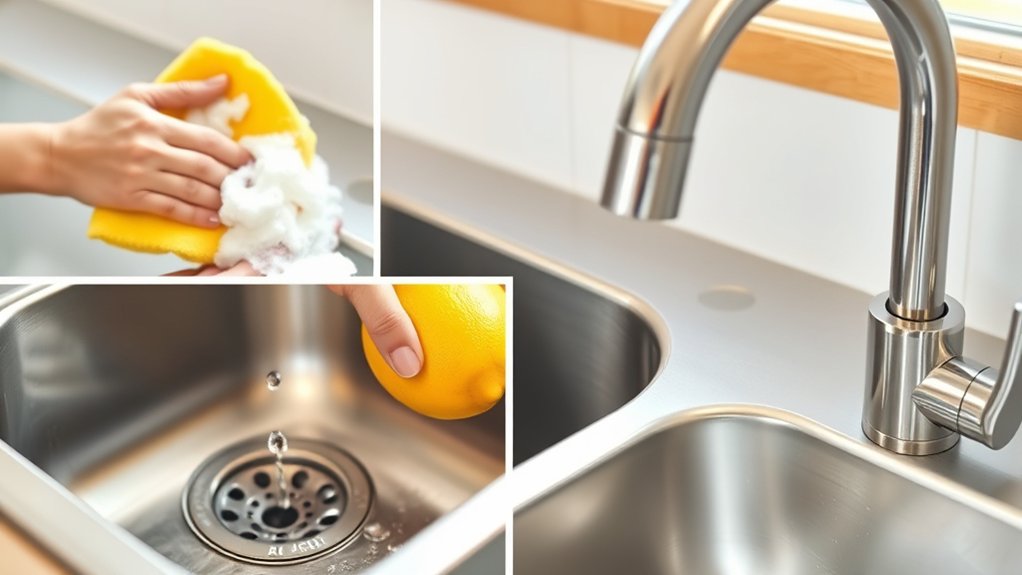
To clean your kitchen sink in three easy steps, first remove dishes and scrub the basin, faucet, and drain with dish soap and a soft sponge.
For stubborn stains, apply a gentle baking soda paste, avoiding harsh abrasives. Next, rinse every surface thoroughly with warm water to remove residue.
Finally, dry the sink and faucet with a microfiber cloth to prevent water spots and buildup. Keep going for extra tips on protecting your sink’s finish and preventing stains.
How to Clean Kitchen Sink Key Takeaways
- Remove dishes, racks, and debris, then wet the sink and apply dish soap with a soft sponge.
- Scrub the basin, faucet, drain, and corners gently using circular motions and a soft brush or toothbrush.
- Treat stubborn stains with a baking soda paste; use diluted vinegar only if compatible with your sink material.
- Rinse thoroughly with warm water, removing all cleaner residue from seams, corners, and the drain.
- Dry the sink and faucet with a microfiber cloth, then wipe nightly to prevent stains, odors, and mineral buildup.
Gather Supplies to Clean the Kitchen Sink
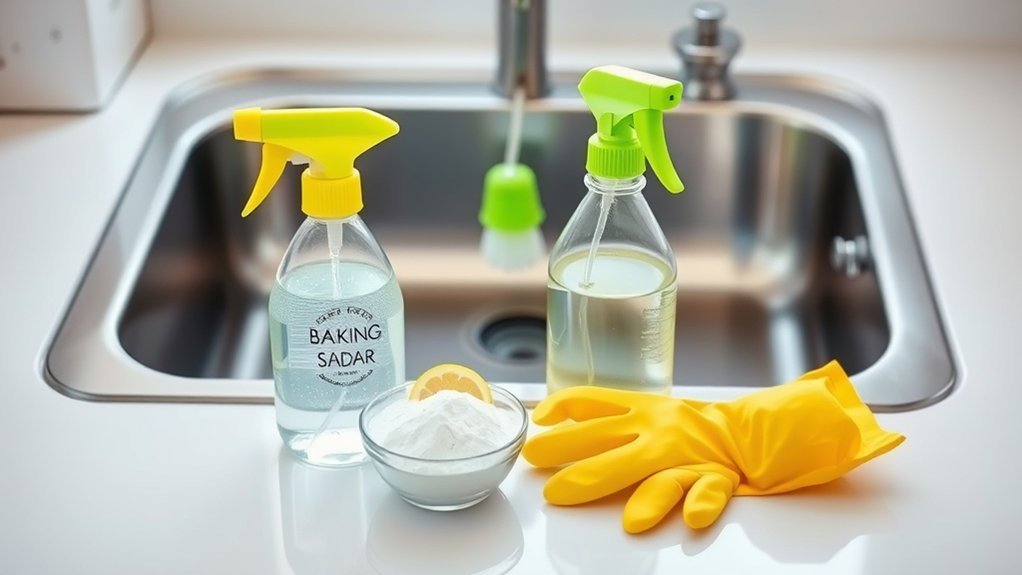
Before you begin, gather dish soap, a soft sponge, a scrub brush, baking soda, white vinegar, a microfiber cloth, and an old toothbrush. These supplies help you prepare for cleaning without interrupting your work to search for tools.
Start by checking your sink’s material. Choosing cleaning products suited to stainless steel, porcelain, composite, or another finish helps you avoid unsuitable formulas.
Keep gloves nearby if your skin reacts to cleaners, and open a window for ventilation when using vinegar or other strong-smelling products. Don’t mix vinegar with bleach or any cleaner containing ammonia.
You’ll also need a small bowl or bucket for rinsing tools and a trash bag for Disposing debris. Remove dishes, utensils, racks, and drain accessories from the basin, then place them aside for separate cleaning.
Keep a dry towel available to protect nearby counters and wipe spills. Arrange everything within reach, but leave enough workspace around the sink to move comfortably and safely.
Scrub Grime and Stains Without Damage
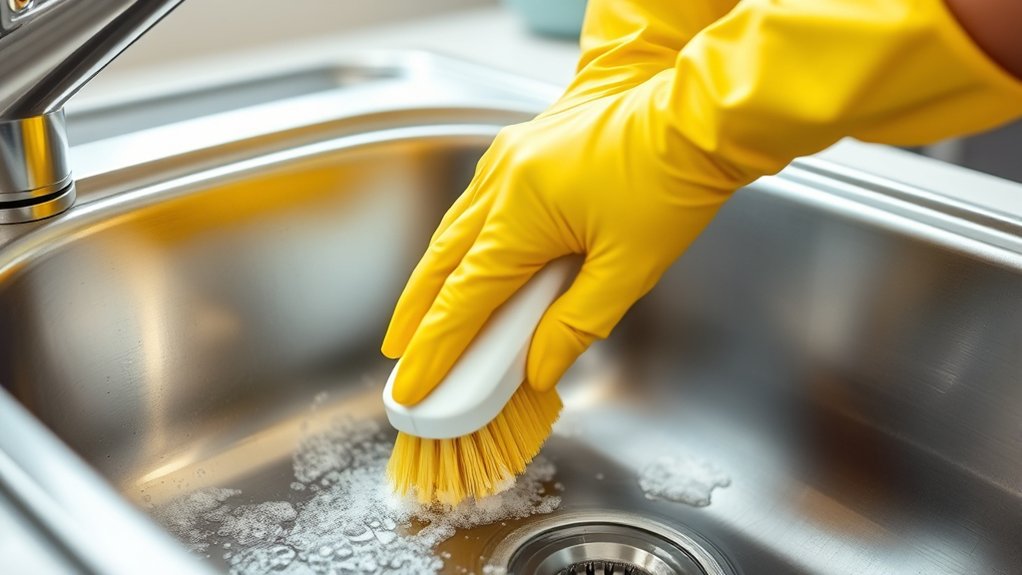
With your supplies ready and the sink cleared, wet the basin and apply a small amount of dish soap to a soft sponge. Work in small circles across the walls, floor, faucet base, and drain area, using gentle pressure to loosen grease and food residue.
Choose cleaning tools that match your sink’s finish: use a nonabrasive sponge for stainless steel, enamel, or porcelain, and reserve a soft brush for seams and crevices. Don’t use steel wool, harsh scouring powders, or metal scrapers, since they can create scratches and dull the surface.
Match your tools to the sink’s finish, choosing gentle materials that clean effectively without scratching or dulling the surface.
For stubborn spots, cover them with a paste of baking soda and water, then let it sit briefly before scrubbing gently. Tackle stain removal with diluted white vinegar only when your sink’s manufacturer permits it, and never mix vinegar with bleach or other cleaners.
Lift grime patiently rather than forcing it, especially around fixtures and protective coatings.
Rinse, Dry, and Prevent New Stains
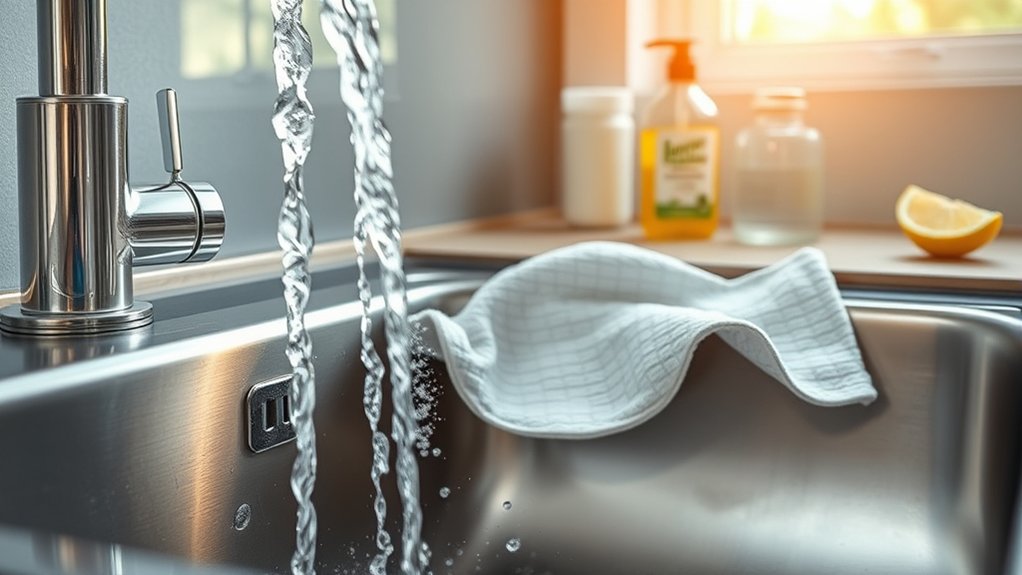
Rinse the sink thoroughly with warm water, washing away loosened grime and any cleaner residue from the basin, faucet, and drain. Check the corners, seams, and area around the faucet, where residue often hides.
Don’t leave soap or food particles behind, because they can attract stains and odors.
Dry every surface with a clean microfiber cloth. Wipe the faucet, handles, basin, and drain cover, then wring the cloth as needed.
Removing standing water helps prevent mineral deposits, especially if you have hard water. Your drying method should suit your Kitchen sink materials: stainless steel benefits from a gentle wipe along the grain, while porcelain needs careful handling to avoid chips and scratches.
For Eco friendly cleaning, use a soft cloth and diluted white vinegar only when your sink’s manufacturer allows it. Never mix vinegar with bleach.
Finally, rinse after washing dishes, remove debris promptly, and wipe the sink nightly to keep new stains from forming.
Frequently Asked Questions
Can I Use Bleach to Clean My Kitchen Sink Safely?
Yes, you can use bleach to clean your kitchen sink safely, but follow Bleach safety guidelines. Dilute it according to the label, wear gloves, ventilate the area, and never mix bleach with vinegar, ammonia, or other cleaners.
Rinse the sink thoroughly afterward, especially before preparing food. Avoid bleach on delicate, colored, or metal surfaces unless the manufacturer approves it.
For routine cleaning, Cleaning alternatives like dish soap, baking soda, or diluted vinegar may work better.
How Often Should I Deep-Clean My Kitchen Sink?
Deep-clean your kitchen sink once a week, though you should adjust your cleaning schedule for heavy use. In the days of powdered wigs, cleanliness still mattered; today, you can make sink maintenance easier with modern products.
Scrub the basin, drain, faucet, handles, and surrounding counter, then rinse and dry everything thoroughly. Wipe daily to prevent buildup, and disinfect after handling raw meat. Never mix bleach with vinegar or ammonia.
What Should I Do About a Clogged Kitchen Sink Drain?
Start by removing standing water and clearing visible debris from the drain. Pour boiling water slowly, then use a plunger with enough water to cover its cup.
If the clog remains, try a drain snake. Avoid harsh chemical cleaners that can damage pipes.
Practice regular Drain maintenance by flushing buildup and using a strainer. If water backs up repeatedly, schedule a professional Plumbing inspection to identify deeper blockages or damaged pipes before they worsen.
Can I Clean a Garbage Disposal While Cleaning the Sink?
Yes, you can clean your garbage disposal while cleaning the sink. Start by turning off its power, then remove visible debris with tongs—never your hands.
Scrub the rubber splash guard with dish soap and rinse it. Sprinkle baking soda inside, add vinegar, wait a few minutes, and flush with cold water while running the disposal briefly.
These Garbage disposal maintenance habits complement effective Sink cleaning techniques and help prevent odors, buildup, and clogs.
How Do I Remove Odors Coming From My Kitchen Sink?
Think of sink odors like uninvited guests: they linger until you remove their source. Flush your drain with hot water, then pour in half a cup of baking soda followed by one cup of vinegar. Wait 10 minutes and rinse again.
Scrub the drain opening, strainer, and garbage disposal splash guard, where food hides. Skip air fresheners, which only mask smells.
For odor prevention, remove scraps daily, run cold water, and clean weekly.
Conclusion
With the right supplies, you can clean your kitchen sink quickly and safely. Gather your cleaner, sponge, and cloth; scrub away grime without scratching.
Then, rinse thoroughly and dry every surface. You’ll remove stains, restore shine, and prevent new buildup with one simple routine.
Clean regularly, wipe spills promptly, and don’t let residue linger. By following these three easy steps, you’ll keep your sink fresh, bright, and ready for whatever comes next in your kitchen.
For guidance on selecting safer cleaners for kitchen use, see the EPA Safer Choice program.