How to Hang Kitchen Towels: 3 Easy Tips
Kitchen towels can quickly become damp, messy, and difficult to store, especially in a busy kitchen. If you’re wondering how to hang kitchen towels neatly while keeping them dry and within reach, you’re not alone—many people struggle with this everyday problem.
Hang kitchen towels in three easy ways. First, fold each towel lengthwise and drape it evenly over the oven handle, keeping it away from burners and hot surfaces.
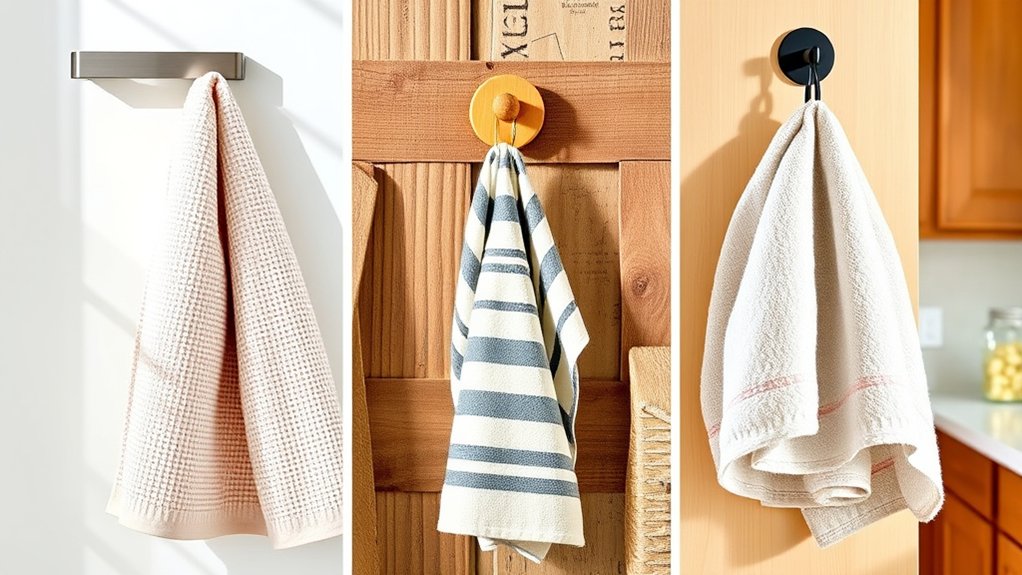
Next, install adhesive hooks, cabinet rings, magnetic clips, or a short rail near the sink, prep area, or stove.
Finally, hang towels fully open so they dry quickly, leave space between them, and use separate towels for hands, dishes, and counters.
Rotate damp or smelly towels daily for better hygiene, with more helpful tips below.
Key Takeaways
- Fold towels lengthwise and drape them evenly over the oven handle, keeping them away from burners and hot surfaces.
- Install adhesive hooks, screw-in hooks, or rings near the sink, prep area, or stove for convenient access.
- Use magnetic clips on refrigerators or shelf edges when wall or cabinet installation is unsuitable.
- Leave space between towels so they dry fully, and avoid hanging them near raw meat or dirty surfaces.
- Assign separate towels for hands, dishes, and counters. Rotate and wash them frequently to prevent cross-contamination.
Fold Kitchen Towels Over Oven Handles
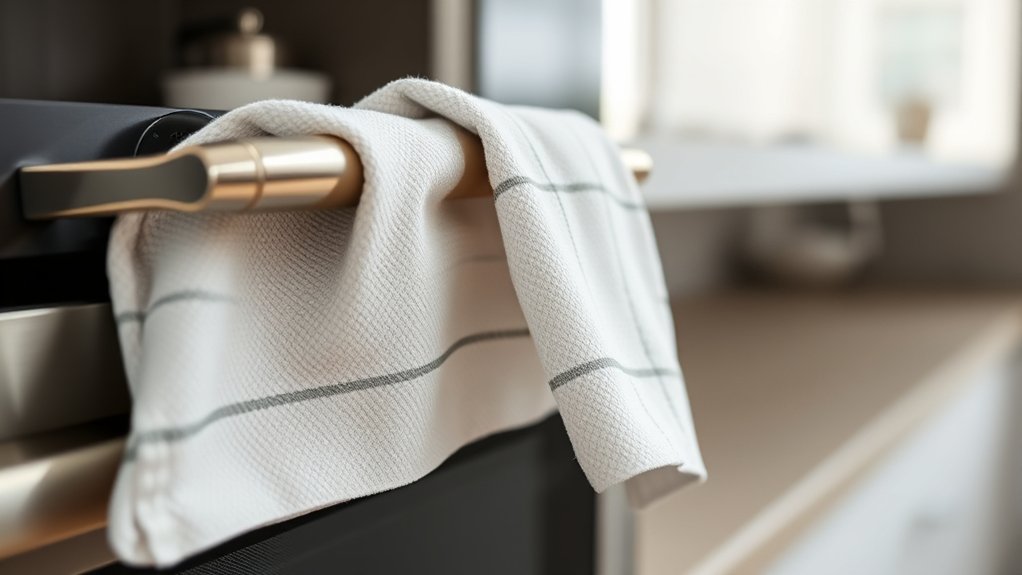
Fold a kitchen towel lengthwise and drape it over the oven handle so both sides hang evenly. Smooth the fabric, then center the fold for a balanced, tidy appearance.
This method keeps your towel within reach while you cook, wipe spills, or dry your hands. Choose kitchen towel materials that suit your routine.
Cotton absorbs moisture well, linen dries quickly, and microfiber offers efficient cleaning. For decorative towel displays, coordinate the towel’s color or pattern with your kitchen’s palette.
You can layer a thinner towel over a thicker one, but avoid excessive bulk, which may make the handle difficult to use. Check that the towel stays clear of burners, flames, and hot surfaces to prevent scorching.
Replace it regularly when it becomes damp or soiled. Before opening the oven, move the towel aside if it could touch the door, heat, or food.
A neatly folded towel adds function without cluttering your kitchen.
Add Hooks, Rings, or Clips for Towels
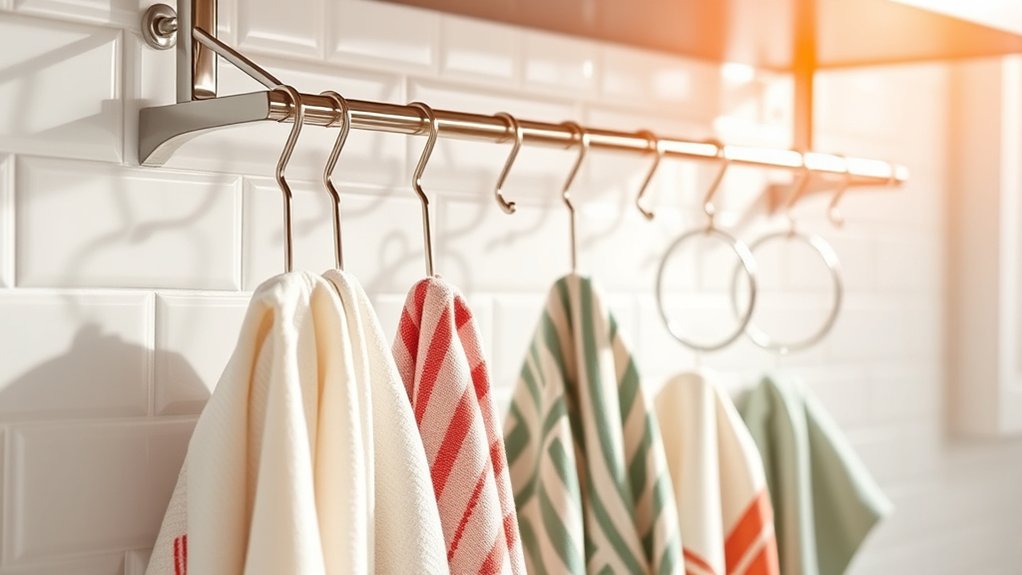
If an oven handle isn’t convenient, add hooks, rings, or clips to place towels where you need them. Choose a spot near your sink, prep area, or stove, then match the holder to your kitchen’s layout and style.
Adhesive hooks work well for renters, while screw-in hooks provide dependable support for heavier towels. For flexible towel storage, try a clip-on ring over a cabinet door or a magnetic clip on your refrigerator.
| Holder | Best placement |
|---|---|
| Adhesive hook | Backsplash or cabinet side |
| Ring | Cabinet door or drawer |
| Clip | Refrigerator or shelf edge |
Before wall mounting, check that the surface is clean, dry, and suitable for the hardware. Space multiple holders several inches apart so each towel hangs freely.
Pick a height you can reach comfortably without stretching. You can also install a short rail with sliding rings, giving you room to organize several towels while keeping the counter clear.
Choose finishes that complement your cabinet hardware for a polished look.
Prevent Slips, Odors, and Cross-Contamination
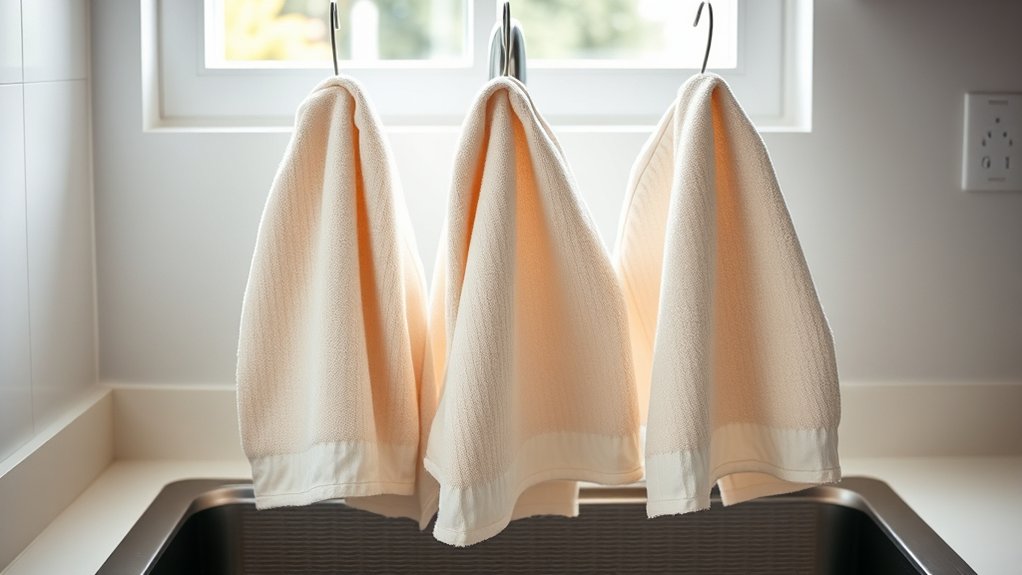
Hang each towel so it dries fully between uses, keeping it off the floor and away from raw meat, dirty dishes, and damp surfaces. Choose a sturdy hook or bar that grips securely, rather than a slippery handle where towels can fall.
Leave space between towels so air can circulate and moisture won’t create odors. Breathable cotton dries faster than dense microfiber blends. Thick towels need more airflow and may require separate hooks.
Use one towel for hands, another for dishes, and a dedicated cloth for wiping counters. Don’t use the same towel near raw meat and ready-to-eat foods.
Wash towels frequently in hot water with detergent, and replace them when they stay damp or smell musty. After washing, hang each towel immediately instead of leaving it in a heap.
Clean hooks and rails regularly, since grease and residue can transfer back to freshly laundered towels. Rotate your towels daily for extra freshness.
Frequently Asked Questions
How Often Should Kitchen Towels Be Replaced?
Replace kitchen towels every one to two years, or sooner if they develop persistent odors, stains, thinning fabric, frayed edges, or reduced absorbency. Your cleaning frequency affects their lifespan, so wash them after each day of heavy use and immediately after handling raw meat.
Follow these replacement guidelines: keep several towels in rotation, inspect them monthly, and discard any towel that remains musty after washing. You’ll maintain better hygiene and performance this way.
What Fabrics Are Best for Absorbent Kitchen Towels?
Choose cotton, linen, or a cotton-linen blend when you want absorbent kitchen towels. Cotton offers strong everyday absorbency, while linen dries faster and resists odors.
A blended towel balances softness, durability, and quick drying. For a useful absorbency comparison, terry cotton absorbs the most but may stay damp longer.
Flat-weave cotton and linen absorb well and dry quickly. Consider fabric durability, washing frequency, and your kitchen’s needs when selecting towels.
Can Kitchen Towels Be Safely Washed With Other Laundry?
Yes, you can wash kitchen towels with other laundry, but safety comes first. “Better safe than sorry” applies to laundry safety: separate towels from clothing when they’re heavily soiled, greasy, or used with raw meat.
Wash them with similar colors and durable fabrics, using hot water and detergent when the care label allows. For proper fabric care, avoid mixing towels with delicate items, don’t overload the machine, and dry them thoroughly to prevent odors and bacteria.
How Many Kitchen Towels Should a Household Keep?
Keep 7–14 kitchen towels, depending on your household’s size, cooking habits, and laundry schedule. Aim for one or two fresh towels daily, plus extras for spills, drying dishes, and cleaning surfaces.
A smaller household may manage with seven, while frequent cooks should keep closer to fourteen. Use practical towel storage solutions to prevent clutter, and rotate clean towels regularly.
You can also create decorative towel displays while keeping replacements easily accessible.
What Colors Coordinate Best With Different Kitchen Styles?
You’ll find the best color matching by echoing your kitchen’s existing tones. For white kitchens, choose navy, sage, or terracotta towels for contrast.
Pair gray cabinetry with mustard, teal, or blush. Warm wood styles suit cream, olive, and rust, while modern black kitchens look striking with white, red, or emerald.
In farmhouse spaces, use muted blue or gingham. For style coordination, repeat one accent color in towels, rugs, or dishes.
Conclusion
Hanging kitchen towels neatly isn’t just about appearance. It helps you grab them quickly and keep them cleaner. Fold one securely over your oven handle, or use hooks, rings, or clips wherever you need convenient access.
Test the theory yourself by comparing a loose towel with a secured one. You’ll see that proper hanging reduces falls, odors, and cross-contamination. Choose washable, fast-drying towels, replace them often, and you’ll create a tidier, more hygienic kitchen with minimal effort.
These simple tips show you how to hang kitchen towels neatly and keep your kitchen cleaner.