How to Remove Grease From Kitchen Cabinets in 5 Easy Steps
Greasy kitchen cabinets can make your whole kitchen feel less clean, and many people struggle to remove buildup without damaging the finish. You’re not alone—finding a safe, effective method can be frustrating.
To remove grease from kitchen cabinets, mix mild dish soap with warm water and test it on a hidden spot. Wipe lightly soiled areas with a damp microfiber cloth, following the wood grain, then rinse and dry immediately.
For stubborn buildup, apply a tested baking soda paste with a soft cloth or toothbrush. Don’t soak seams, hinges, or unfinished wood.
Buff away streaks and follow the manufacturer’s care instructions. The steps below will help you clean thoroughly without harming the finish.
Key Takeaways
- Gather mild dish soap, warm water, microfiber cloths, gloves, and a bowl. Avoid bleach, ammonia, and abrasive cleaners.
- Test diluted soap on a hidden area to ensure it does not damage or discolor the cabinet finish.
- Wipe greasy surfaces with a nearly dry, soapy cloth, following the wood grain. Focus on handles and edges.
- For stubborn grease, test and gently apply a baking-soda paste with a soft cloth or toothbrush.
- Rinse with a lightly damp cloth, then dry immediately to prevent streaks, moisture damage, and residue.
Gather Dish Soap, Cloths, and Warm Water

Start by gathering a few drops of mild dish soap, clean microfiber cloths, and a bowl of warm water. Choose a gentle soap without bleach, ammonia, or abrasive additives, since harsh ingredients can dull cabinet finishes. Fill the bowl with warm, not scalding, water, then add only a small amount of soap. Too much creates excess suds and leaves a sticky film behind.
Collect at least two microfiber cloths: reserve one for washing and another for drying. Microfiber traps grease effectively without scratching painted, wood, laminate, or metal surfaces. Keep a clean spoon or measuring dropper nearby so you can control the soap quantity.
These basic Cleaning tools are enough for most light grease buildup. As useful Kitchen tips, place your supplies on a towel, wear gloves if your skin is sensitive, and keep a separate dry cloth ready for spills. Avoid paper towels, rough sponges, and soaking-wet cloths, which can shed fibers or damage cabinet edges.

Before cleaning visible areas, test the diluted dish-soap solution on a hidden cabinet spot, such as an inside corner or the bottom edge of a door. Dip a clean, soft cloth into the solution, wring it out thoroughly, and wipe a small section gently.
Wait several minutes, then inspect the area for discoloration, dullness, swelling, or a changed finish. Testing solutions in an inconspicuous location helps you identify problems before they affect noticeable surfaces.
If the finish looks unchanged and the spot feels normal, you can use the solution with confidence. If you notice damage, stop using it and choose a milder option, such as plain warm water, after testing that alternative on another hidden spot.
Don’t saturate the cabinet or leave moisture sitting on the surface during this check. Use a separate, clean cloth for each product you test, and label unfamiliar cleaners so you won’t confuse them or accidentally mix products.
Remove Light Grease From Cabinet Doors
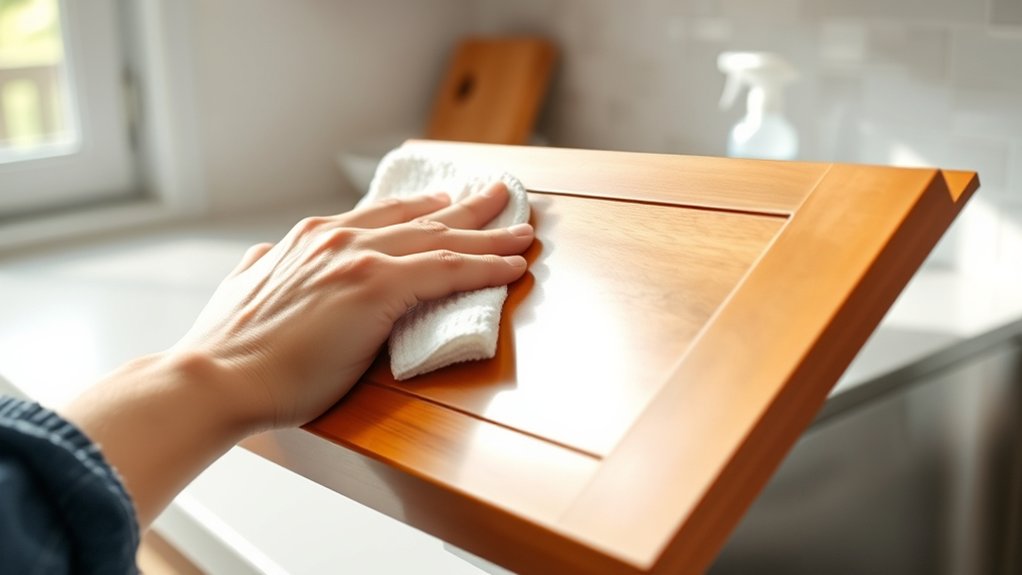
For light grease, wipe cabinet doors with a soft cloth dampened with the tested dish-soap solution. Work in small sections, moving with the wood grain or cabinet finish. Use gentle pressure to lift cooking residue without soaking the surface.
Rinse the cloth in clean water, wring it nearly dry, and wipe away soap film. Follow with a dry microfiber cloth to prevent streaks and moisture damage.
Pay attention to door edges, handles, and the area beneath the knobs, where fingerprints and splatters collect. If grease remains, repeat the solution rather than scrubbing harder.
Keep water away from seams, unfinished edges, and decorative grooves. Remove items near the cabinets so you can clean safely and see missed spots.
As part of cabinet hinge maintenance, wipe exposed hinge plates with a barely damp cloth and dry them immediately. Apply Kitchen ventilation tips by running your range hood while cooking and opening a window when practical.
Regular wiping keeps light buildup from becoming harder to remove.
Soften Stubborn Grease With a Mild Paste
When dish soap alone doesn’t lift hardened residue, make a mild paste with baking soda and a small amount of water. This gentle mixture adds light scrubbing power without relying on harsh chemicals, making it one of the simplest natural cleaning solutions for cabinets.
Before applying it, test an inconspicuous spot to check how the finish reacts.
- Stir baking soda and water until the paste reaches a spreadable, toothpaste-like consistency.
- Dip a soft, damp cloth into the mixture, then apply it directly to the greasy area.
- Let the paste sit for several minutes so it can soften the buildup, but don’t allow it to dry completely.
- Work in small circles with light pressure, adding more paste only when needed.
Use a soft toothbrush for grease trapped around trim, hinges, or cabinet edges. Avoid abrasive pads, aggressive scraping, and excessive pressure, which can dull or scratch the finish.
These practical grease removal techniques help loosen stubborn residue while preserving your cabinet’s surface.
Rinse, Dry, and Protect the Finish
Once the grease is gone, rinse the cabinet with a clean, lightly damp cloth to remove any soap or baking soda residue. Work in small sections, and rinse the cloth often so you don’t spread loosened grime across the surface. Avoid soaking the doors, edges, or seams, because excess water can swell wood and damage joints.
Dry each area immediately with a soft, absorbent towel. Pay special attention to corners, around hinges, and beneath handles, where moisture can linger. Let the cabinets air-dry briefly before replacing items or closing the doors completely.
Choose gentle cleaning tools, such as microfiber cloths, rather than abrasive pads that can scratch the finish. Once the surface feels dry, inspect it under good light.
If you notice dullness or streaks, buff gently with a clean cloth. For lasting protection, follow the manufacturer’s care instructions and use only products compatible with your cabinet’s protective finishes.
Never apply wax, polish, or oil unless the finish specifically allows it.
Frequently Asked Questions
Can I Use Vinegar to Remove Grease From Wooden Kitchen Cabinets?
Yes, you can use diluted vinegar on finished wooden cabinets, but don’t apply it undiluted. Mix equal parts white vinegar and water, dampen a soft cloth, and wipe gently.
Never soak the wood, scrub aggressively, or leave moisture standing. Dry the surface immediately to support Wooden surface protection, then test an inconspicuous spot first.
For delicate, waxed, or unfinished cabinets, choose mild dish soap or other Vinegar alternatives instead.
How Often Should I Clean Greasy Kitchen Cabinets?
For cleaning frequency, wipe greasy kitchen cabinets weekly, especially near the stove and handles. A quick wipe keeps buildup from becoming a stubborn mess and supports easier kitchen maintenance.
Deep-clean cabinet surfaces monthly, or sooner if you cook frequently, fry foods, or notice sticky residue. Use a mild cleaner suitable for your cabinet’s finish, and dry the wood promptly.
Don’t let grease sit. Regular care protects the finish and keeps your kitchen looking fresh.
Are Cabinet-Cleaning Wipes Safe for Painted or Laminate Surfaces?
Yes, cabinet-cleaning wipes can be safe for painted or laminate surfaces, but you should check the label first. Choose wipes labeled for cabinetry, avoid bleach, ammonia, alcohol, and abrasive ingredients, and test an inconspicuous spot.
Don’t let moisture sit on seams or edges; wipe the surface dry afterward. For better surface safety, follow the manufacturer’s care instructions.
Regular cabinet cleaning prevents buildup without damaging your finish.
How Do I Remove Grease From Cabinet Hinges and Hardware?
Grease loves cabinet hardware—the smaller the hinge, the bigger the mess. Remove knobs, pulls, and hinges when possible, then soak metal pieces in warm water with dish soap for 10–15 minutes.
Scrub buildup with a soft toothbrush, rinse, and dry completely. Wipe installed hinges carefully without flooding them. Avoid abrasive cleaners on finishes.
After drying, apply a tiny amount of Hinge lubrication to moving joints, then finish with gentle Hardware polishing using a microfiber cloth.
When Should I Replace Cabinets Damaged by Years of Grease Buildup?
Replace cabinets when grease has deeply penetrated the wood, caused swelling, warped doors, weakened joints, or created persistent odors and mold.
You can often save solid, structurally sound cabinets with thorough cleaning, sanding, and Cabinet refinishing. However, if particleboard crumbles, veneers peel extensively, or hinges no longer hold, replacement usually costs less than repeated repairs.
Consider Professional restoration when damage appears widespread but the cabinet boxes remain sturdy and worth preserving.
Conclusion
Now that you’ve cleaned your cabinets, you may notice something surprising: the same dish soap in your kitchen can also freshen greasy handles and drawer pulls. Coincidentally, your cabinets’ best protection is already within reach—a dry cloth.
Wipe surfaces after cooking, and buildup won’t have time to settle. With gentle cleaning, careful rinsing, and regular upkeep, you’ll keep the finish looking beautiful.
By following these tips for how to remove grease from kitchen cabinets, your kitchen will feel brighter, cleaner, and easier to maintain.