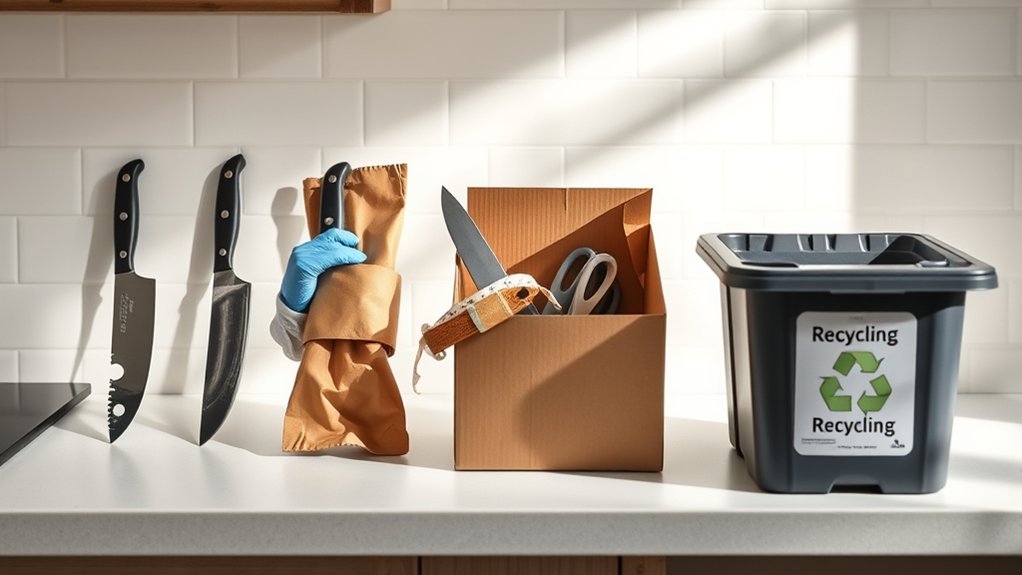
How to Dispose of Kitchen Knives in 5 Easy Steps
Wondering how to dispose of kitchen knives safely without risking cuts, damaged trash bags, or harm to sanitation workers? You’re not alone—many people struggle to find the right option, especially when local disposal rules vary. This guide makes the process simple.
To dispose of kitchen knives in five easy steps, first check your local waste authority’s rules for trash, recycling, or drop-off options. Wash and dry each knife, then wrap every blade and tip separately in thick cardboard or paper.
Secure the wrapping with tape and label the package “Sharp.” Donate usable knives when possible, or use trash only if local guidance permits. Place the sealed package in a rigid container for transport.
Keep going for more safety tips and disposal details.
Key Takeaways
- Check your local waste authority’s rules to determine whether knives belong in trash, recycling, hazardous-waste programs, or specialized drop-off sites.
- Wash and dry knives, inspect for damage, and handle them carefully with blades pointed away.
- Wrap each knife individually in thick cardboard, paper, or bubble wrap, securing the covering with tape.
- Donate usable knives to community kitchens, charities, or culinary schools. Dispose of broken knives only where locally permitted.
- Place wrapped knives in a rigid, taped container labeled “Sharp,” and transport them securely to the approved location.
Check Local Kitchen Knife Disposal Rules
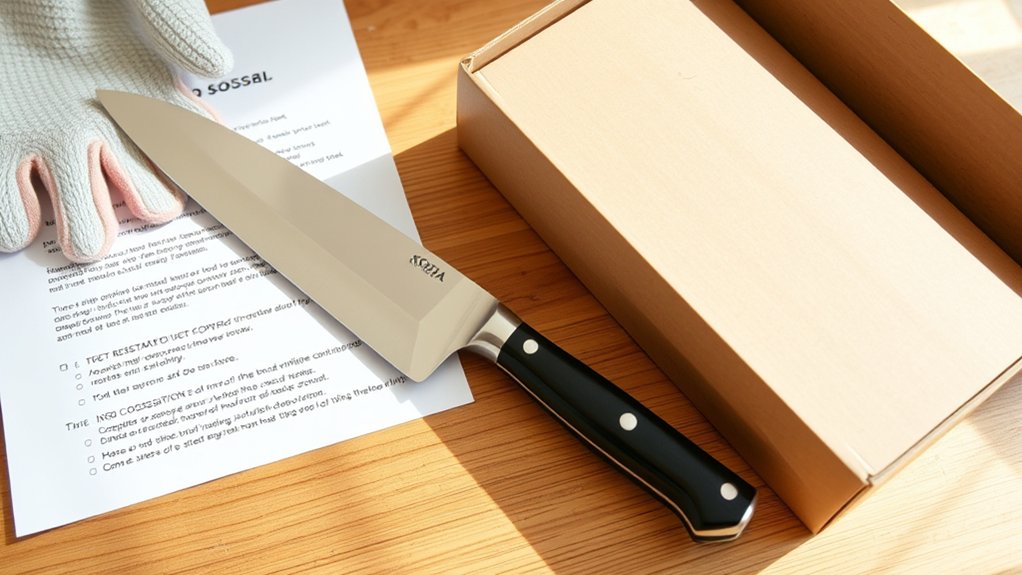
Before disposing of a kitchen knife, check your local waste-management rules, because requirements vary by city and region. Visit your city’s sanitation website or call its waste department to find approved options.
Check local waste-management rules before disposing of a kitchen knife, as approved options vary by city and region.
Some communities accept knives in designated household hazardous-waste programs, while others direct you to scrap-metal collection, transfer stations, or specialized drop-off sites. Don’t assume regular recycling or curbside trash service will accept a loose blade.
Check whether your area lists rules for kitchen knives, chef’s knives, or metal cutlery under separate categories. You may also find instructions from apartment managers, waste haulers, or local recycling centers.
If you’re unsure, describe the knife’s material, size, and condition when you ask. Rules may differ from guidance for knife sharpening businesses or knife storage products, so focus on disposal instructions.
Follow the current local guidance rather than relying on general advice. Note any required drop-off hours, fees, or quantity limits before you proceed.
Clean and Bundle Knives Before Wrapping
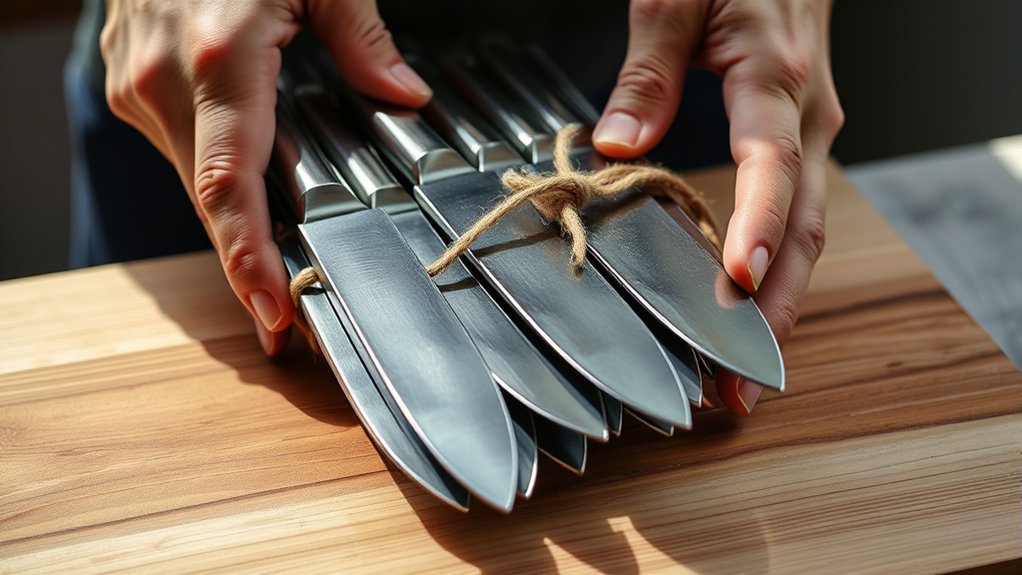
Once you’ve confirmed your area’s requirements, clean each knife and bundle it securely along with wrapping. Wash away food residue with warm, soapy water, then dry every blade and handle completely.
Don’t attempt Knife sharpening; a sharper edge increases handling risks during disposal. Instead, inspect each knife for loose handles, chips, or rust, and keep damaged pieces separate if local guidance requires it.
For Blade safety, hold knives by their handles, point edges away from you, and keep your fingers clear of the cutting edge.
| Preparation step | Why it matters |
|---|---|
| Wash and dry | Prevents residue, odors, and slipping |
| Inspect condition | Identifies damage and loose parts |
| Group carefully | Keeps knives along with controlled handling |
Place knives along with their handles aligned and their blades facing the same direction. Use a sturdy band, cord, or tape to keep the group stable, but don’t cover or wrap the bundle yet.
Keep it away from children, pets, food areas, and high-traffic spaces until you’re ready for the next step.
Wrap Each Kitchen Knife Securely
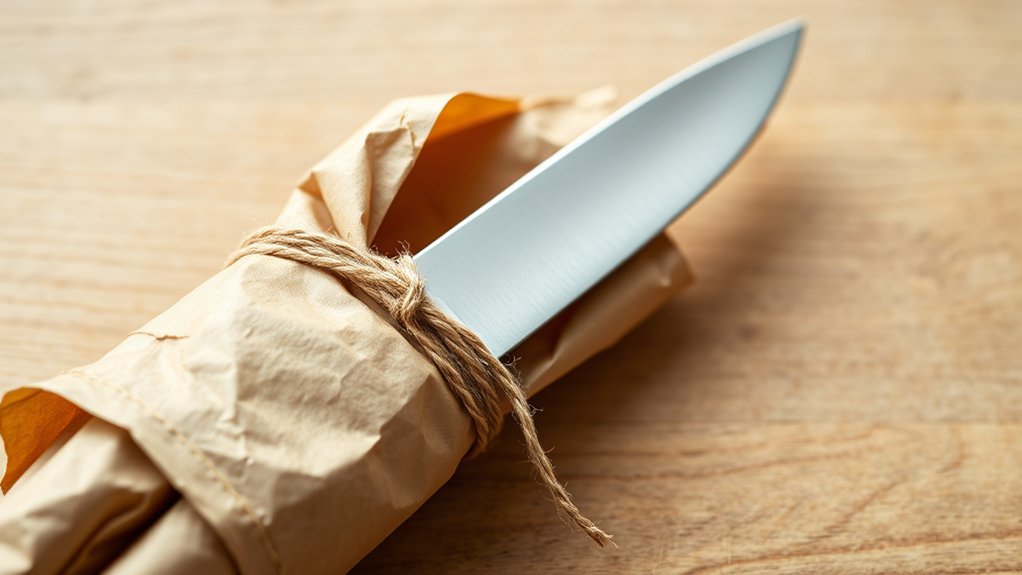
Wrap each knife individually in several layers of thick paper, cardboard, or bubble wrap, covering the blade and tip completely while leaving the handle easy to identify. Keep the wrapping snug, but don’t press directly against the edge, which could tear the material. Fold or tape every seam securely so the blade can’t slide out during handling.
Wrap each knife securely, fully covering the blade and tip while keeping the handle visible and seams firmly sealed.
Add extra padding around pointed tips and sharp corners. If you’re using cardboard, place the knife between two pieces and tape them together, creating a rigid sleeve.
Avoid wrapping multiple knives in one bundle; their edges could contact each other and weaken the covering. Mark the handle end clearly without exposing any part of the blade.
Even if you recently practiced Knife sharpening or completed blade maintenance, treat every knife as dangerously sharp. Don’t rely on a dull edge for safety.
Check the finished package by gently pressing its surfaces. If you feel a point or edge, add another protective layer before setting it aside.
Choose Trash, Recycling, or Donation
With each knife safely wrapped, choose its next destination based on its condition and your local rules. If the blade remains intact and useful, consider donation. Contact a community kitchen, culinary school, reuse center, or charity first to confirm acceptance.
A dull knife may still help someone after professional Knife sharpening, while a damaged handle or cracked blade usually makes donation unsuitable.
For a broken, heavily corroded, or unsafe knife, use household trash only if your waste service allows it. Some communities require you to place wrapped blades inside a rigid, labeled container before disposal.
Check your local waste authority’s instructions rather than guessing.
Recycling can conserve resources, but many curbside programs reject knives because mixed materials and sharp edges create hazards. Ask your municipal facility whether it accepts scrap metal or kitchen tools, and follow its requirements.
If you’re keeping other knives, review your Knife storage setup and remove the unusable one instead of letting it clutter a drawer.
Carry Knives Safely to Drop-Off
Before leaving, secure each knife in a rigid container so it can’t shift, pierce the wrapping, or injure anyone. Wrap each blade in cardboard, tape it closed, and label the package “Sharp.” Keep handles and points covered throughout the trip.
| Step | What you should do | Why it matters |
|---|---|---|
| 1 | Use a rigid box | Prevents movement |
| 2 | Tape it shut | Keeps blades contained |
| 3 | Mark “Sharp” | Alerts handlers |
| 4 | Carry it separately | Avoids accidental contact |
Place the package on the vehicle floor or in a stable trunk area, not loose on a seat. Don’t carry exposed knives, hand them to another person, or leave them unattended.
If you’re walking, use a sealed container with a secure handle and keep the point directed away from you. Call the drop-off site first to confirm its requirements.
Some locations reject household knives or require special packaging. These handling precautions support knife safety and protect staff, volunteers, passengers, and other visitors.
Drive directly there, and keep the package closed until an authorized worker accepts it.
Frequently Asked Questions
Can Kitchen Knives Be Sharpened or Repaired Instead of Discarded?
Yes, you can often sharpen or repair kitchen knives instead of discarding them. Professional knife sharpening can restore a dull edge, while knife repair may fix loose handles, damaged tips, or minor blade bends.
You shouldn’t attempt complex repairs if the blade has cracks, severe corrosion, or structural damage. Take valuable or heavily damaged knives to a qualified professional, and replace inexpensive knives when repair costs exceed their value or safety benefits.
What Should I Do With Rusty or Damaged Knife Handles?
Replace a loose, cracked, or badly damaged handle rather than continuing to use the knife. For minor problems, try Knife handle restoration by tightening fasteners, sanding rough wood, and applying food-safe oil.
Use Rust removal techniques such as soaking surface rust in diluted vinegar, scrubbing gently with a nylon pad, and drying the blade completely. If rust reaches the tang or damage compromises stability, stop using the knife and consult a professional.
Are Electric Kitchen Knives Disposed of Differently?
Yes, electric kitchen knives require different disposal steps because they contain electrical components and sometimes rechargeable batteries. For electric knife disposal, unplug the appliance, remove detachable blades, and wrap them securely before recycling or discarding them according to local rules.
Don’t place the motor unit in household trash if your area accepts electronics. Remove batteries when possible and use a designated Battery recycling drop-off. Check your municipality’s guidance for proper handling and collection.
Can Knife Blades Be Repurposed for Crafts or Other Household Uses?
Can you repurpose knife blades safely? You can, but only if you understand knife safety and handle each blade responsibly.
Turn clean, undamaged blades into garden markers, paint scrapers, or small craft tools, securing them firmly in a holder. Don’t use cracked, rusty, or loose blades, and never leave sharp edges exposed.
If repurposing seems risky, choose recycling options or follow local disposal guidance instead. Always wear gloves and protect others.
How Often Should Kitchen Knives Be Replaced?
Replace kitchen knives when sharpening no longer restores a keen edge, the blade develops chips, rust, warping, or loose handles, or you notice unsafe slipping. With regular honing and careful use, quality knives can last many years; you don’t need a fixed replacement schedule.
Prioritize Knife safety by retiring damaged blades promptly, and use Proper storage to prevent accidents and reduce wear. Inspect your knives every few months and replace them as needed.
Conclusion
By following these five steps, you’ll learn how to dispose of kitchen knives safely and responsibly. Check your local rules, clean and bundle the knives, wrap each one securely, and choose the right option—trash, recycling, or donation.
When you’re ready to go, carry them carefully and alert staff at the drop-off site. A little preparation goes a long way, helping you avoid injuries and ensuring your old knives don’t become a hidden danger in someone else’s path.