How to Get Rid of Kitchen Gnats Fast
Kitchen gnats can quickly turn a clean, comfortable kitchen into a frustrating space. If you’re tired of swatting tiny flies around your sink, fruit bowl, or houseplants, you’re not alone—many people struggle with recurring infestations. The good news is that the right products and simple cleaning steps can help you get rid of kitchen gnats fast.
To get rid of kitchen gnats fast, discard overripe produce, wipe spills, seal food, and empty trash daily. Scrub drain openings and stoppers, then flush drains with boiling water or an enzyme cleaner.
Check beneath sinks, refrigerators, and dishwashers for leaks or standing water. Set an apple cider vinegar trap with dish soap near activity, and use sticky traps for persistent gnats.
Keep plant soil dry if fungus gnats appear. Identify the gnat type first to choose the right solution.
Key Takeaways
- Remove overripe produce, food scraps, spills, and fermenting items; seal remaining food and refrigerate delicate fruits.
- Empty trash daily, rinse recyclables, and clean garbage bins, disposals, and appliance drip trays thoroughly.
- Scrub drains and stoppers to remove organic buildup, then flush with boiling water or an enzyme cleaner.
- Eliminate moisture by repairing leaks, drying sinks and surfaces, and checking beneath refrigerators, dishwashers, and cabinets.
- Set apple-cider-vinegar traps with dish soap, while treating infested plants and contacting pest control if gnats persist.
Identify the Gnat Type
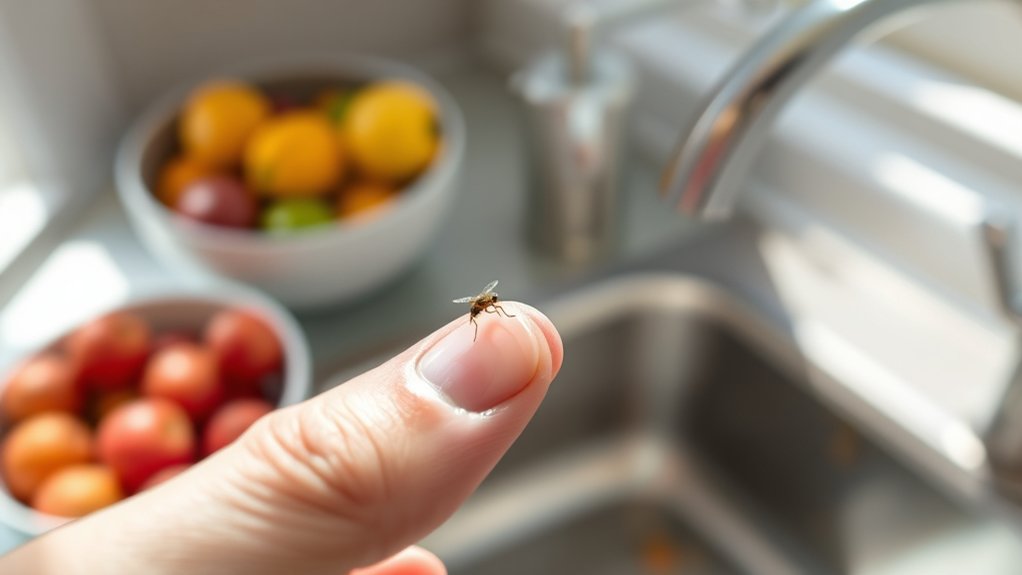
Before you choose a treatment, identify which type of gnat is invading your kitchen. Start by observing its size, color, flight pattern, and location.
Fruit flies look tan or brown, move in quick, erratic bursts, and often hover near produce areas. Fungus gnats appear slender, dark, and mosquito-like; they usually crawl or fly weakly around houseplants.
Drain flies have fuzzy, mothlike wings and tend to rest on nearby walls.
Study gnat behavior for several minutes instead of guessing from a single sighting. Note whether the insects gather around soil, sink openings, damp cloths, or other moist areas.
Then inspect likely gnat breeding sites without disturbing them. Look for larvae, clusters of adults, or repeated activity in one location.
A flashlight and phone camera can help you compare details. Correct identification matters because each species responds to different control methods.
Once you know what you’re seeing, you can select a targeted treatment and avoid wasting time on the wrong approach.
Remove Kitchen Gnat Food Sources
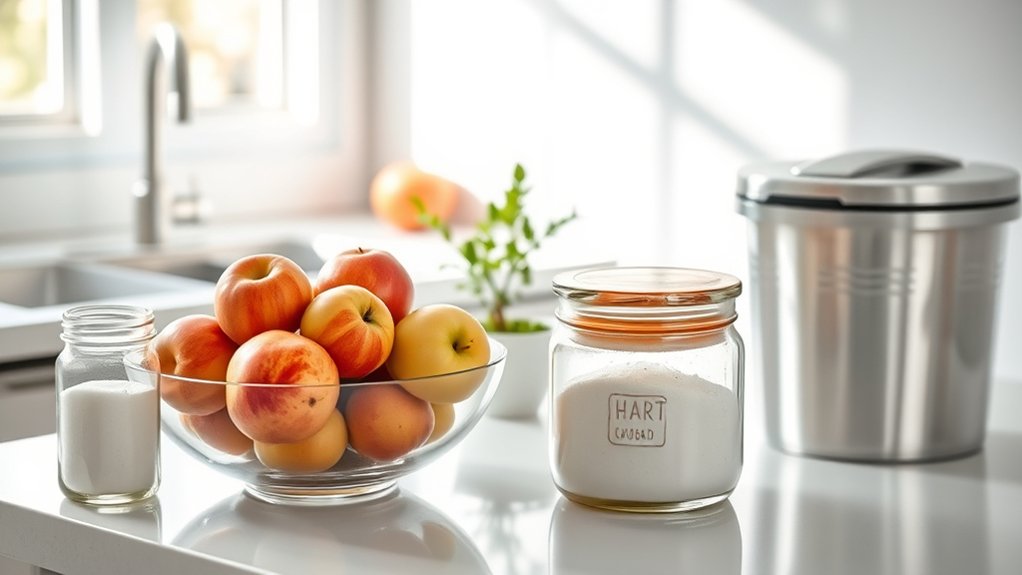
Remove kitchen gnat food sources by throwing out overripe produce and cleaning up spills as soon as they happen. Empty the trash regularly, too, so gnats can’t feed or breed inside it. These simple steps will make your kitchen less inviting to gnats.
Discard Overripe Produce
Check your fruit bowl and pantry for overripe produce, and discard anything soft, leaking, moldy, or fermenting in a sealed outdoor trash bin. Don’t leave questionable food in your kitchen trash, where gnats can continue feeding and breeding.
Inspect bananas, melons, tomatoes, onions, potatoes, and other produce daily, especially during warm weather. Fruit ripening accelerates quickly on counters, so move firm items into the refrigerator when appropriate, and use delicate foods promptly.
Improve produce storage by keeping fruits and vegetables separated when possible. Some fruits release ethylene gas, which speeds ripening nearby.
Store potatoes and onions in cool, dry, ventilated areas, away from damp produce. Check packaged foods for hidden spoilage, too, and remove anything attracting gnats.
Repeat this inspection every few days until your kitchen stays free of breeding sources.
Clean Spills Promptly
Wipe up juice, syrup, grease, and other kitchen spills as soon as they happen, because even a thin sticky film can feed gnats and their larvae. Use warm, soapy water to clean counters, cabinet fronts, floors, and the areas beneath small appliances. Dry each surface thoroughly; moisture helps create a welcoming environment.
For quick Pest prevention, pay special attention to these overlooked spots:
- Clean sticky bottle bottoms before returning them to shelves.
- Rinse reusable cups, pet bowls, and food containers immediately.
- Check drawers and seams where spilled liquids can hide.
Improve Food storage by sealing sugar, fruit, snacks, and opened packages in airtight containers. Wipe refrigerator handles and pantry shelves weekly, and inspect cloths or sponges for trapped residue.
A consistently clean, dry kitchen removes feeding sites and helps you feel in control. Don’t let tiny spills become a recurring infestation.
Empty Trash Regularly
A clean kitchen can still attract gnats if the trash holds food scraps, peels, or damp packaging. Empty your garbage bin daily, especially after discarding ripe fruit, vegetable trimmings, meat, or sugary containers.
Tie bags securely and take them outside instead of letting them sit overnight. Wipe the bin’s interior and lid with soapy water each week, then dry both surfaces thoroughly.
Rinse recyclable cans and bottles before placing them in your recycling container. Practice smart compost management by covering scraps, balancing wet and dry materials, and emptying indoor caddies frequently.
For better fruit storage, keep ripe produce in the refrigerator or sealed containers, and remove spoiled pieces immediately. Check beneath liners for leaks, too.
These habits eliminate odors and feeding sites, making your kitchen far less inviting to gnats.
Clean Drains Where Gnats Breed
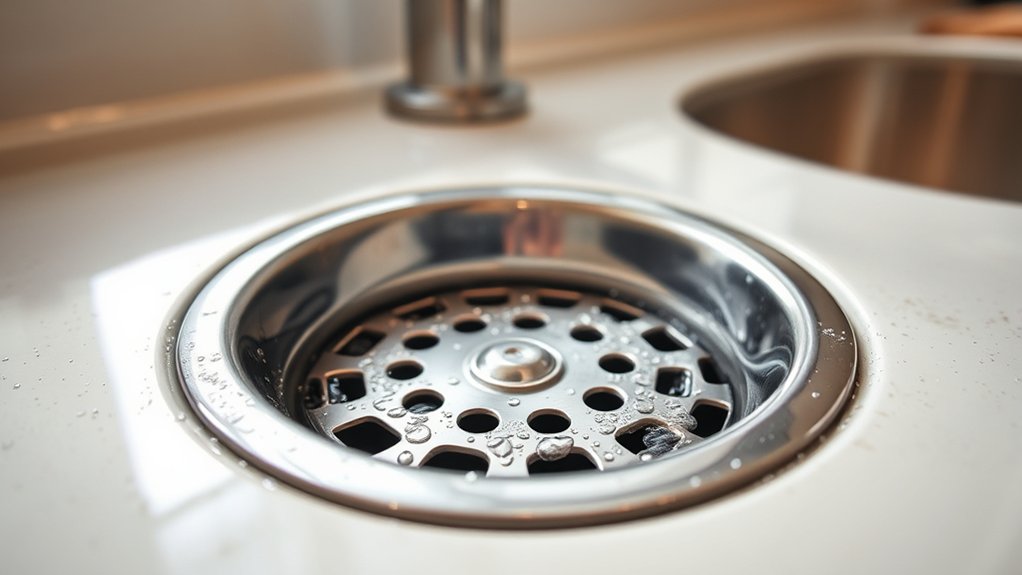
Clean your drains to remove the damp organic matter where gnats breed. Scrub the drain openings, then flush them with boiling water to loosen and wash away buildup. Remove any remaining residue regularly so gnats don’t come back.
Scrub Drain Openings
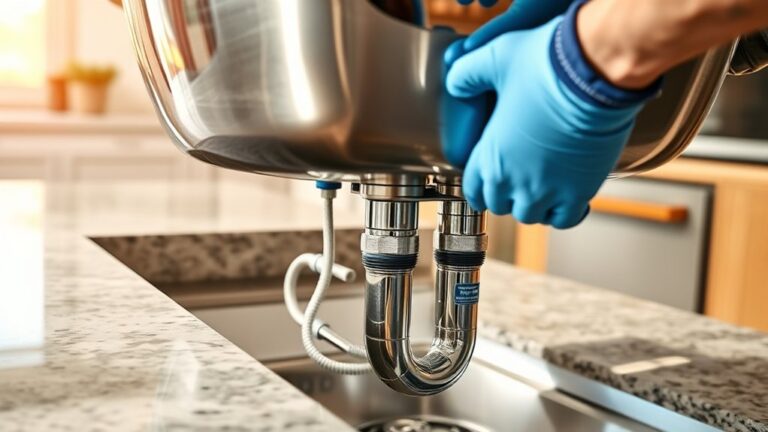
Because gnats often breed in the organic film inside drains, scrub the drain opening and stopper with a stiff brush and hot, soapy water. Work around the rim, underside, and crevices where residue hides.
Remove the stopper if possible, then brush away slime and trapped food particles. Rinse the brush after use, and wipe nearby splashes so moisture doesn’t attract more pests.
Add these habits to your routine:
- Schedule weekly drain maintenance to prevent buildup.
- Inspect the opening whenever you notice gnats, odors, or slow drainage.
- Clean the stopper’s grooves before replacing it.
A clean opening removes breeding material and helps you feel in control again. Wear gloves, ventilate the area, and avoid mixing cleaning products.
Check adjacent drains, too, because gnats may shift to another neglected opening. Keep the area dry between cleanings.
Flush With Boiling Water
After scrubbing away residue, slowly pour a kettle of boiling water down the drain to loosen remaining grime and flush out gnat-friendly buildup. Direct the stream around the drain walls, where eggs and larvae may cling.
This simple boiling water sterilization step raises the temperature briefly, helping kill insects and sanitize the passage without chemicals. Pour steadily, but don’t splash yourself or use this method on fragile plastic pipes that could warp.
Repeat the treatment once daily for several days if gnats keep appearing. Watch the drain afterward; fewer adults hovering nearby signals progress.
For rapid gnat elimination, pair this hot-water flush with a clean, dry sink and a tightly fitted drain stopper overnight. Handle the kettle carefully, and keep children and pets away while you work.
Remove Organic Buildup
Food residue and slime inside drains give gnats a place to feed and lay eggs, so scrub away this organic buildup thoroughly. Remove the drain cover, then pull out hair, food particles, and other debris with a brush or paper towel.
Apply an enzyme drain cleaner to break down Organic decay without damaging your pipes. Let it sit as directed, then rinse with hot water.
For a deeper clean, scrub the stopper, drain walls, and overflow opening, where Bacterial growth can thrive unseen.
- Protect yourself: Wear gloves and avoid mixing cleaning products.
- Reach hidden grime: Use a narrow bottle brush to clean beneath the rim.
- Prevent a return: Wipe the sink nightly and keep drains dry between uses.
Repeat this cleaning every few days until gnats disappear, and fix leaks that keep the drain damp.
Check Under Appliances for Moisture
Check under your refrigerator, dishwasher, and sink for leaks, condensation, or damp debris that can attract kitchen gnats. Pull appliances forward carefully, then inspect hoses, valves, drain lines, and floor seams with a flashlight. Even a slow drip can keep hidden organic residue wet enough to support gnats.
Wipe every damp area thoroughly and dry it completely. If you find standing water, use towels or a wet vacuum, then check again after several hours.
Look for warped flooring, water stains, peeling sealant, or musty odors that signal a recurring problem. Don’t push an appliance back until the space is dry.
Include these checks in your regular appliance maintenance routine. Moisture monitoring helps you catch condensation and small leaks before they create a breeding site.
Tighten accessible connections, replace cracked tubing, and reseal gaps when appropriate. For persistent leaks, call a qualified technician or plumber.
Keep the area beneath appliances clean, dry, and well ventilated so gnats lose the damp conditions they need.
Clean Trash and Recycling Bins
Empty your trash and recycling bins regularly to keep gnats from gathering around food residue. Then, scrub the inside of each bin with hot, soapy water to remove sticky buildup and lingering odors.
Empty Bins Regularly
Dirty trash and recycling bins can give kitchen gnats a steady source of food and moisture. Empty them regularly, especially after tossing fruit peels, coffee grounds, or damp packaging.
Don’t let waste sit overnight when your kitchen feels warm or humid. As part of your kitchen organization routine, tie bags securely and take them outside before odors and moisture build up.
- Act early: Remove food waste as soon as you notice it.
- Separate wisely: Keep compost, trash, and recycling in clearly labeled containers.
- Stay consistent: Check every bin daily during a gnat outbreak.
Use practical storage solutions, such as lidded bins and replacement liners nearby, to make disposal quick. Rinse recyclable containers before placing them inside, and keep outdoor garbage containers closed.
This simple habit cuts off gnats’ food supply and helps your kitchen feel fresher, calmer, and easier to manage.
Scrub Bin Interiors
Even after you’ve emptied your bins, residue can cling to the bottom and sides, attracting kitchen gnats. Take trash and recycling bins outside, then rinse them with a hose.
Add hot water and a few drops of dish soap, and scrub the interior, lid, rim, and handles with a stiff brush. Pay special attention to sticky spills and seams where larvae or eggs might hide.
Rinse thoroughly and let each bin dry completely in direct sunlight before replacing the liner. For stubborn smells, sprinkle baking soda inside, let it sit overnight, and brush it out the next day.
This simple bin deodorization step supports odor neutralization and makes your containers less appealing to gnats. Clean your bins weekly, or immediately after leaking bags, to prevent buildup and recurring infestations.
Treat Plants Harboring Fungus Gnats
Treat plants harboring fungus gnats by isolating them from other plants and letting the top 1–2 inches of soil dry out between waterings. Check leaves, stems, and soil for adult flies, larvae, and decay.
Remove fallen foliage, empty saucers, and replace heavily infested soil outdoors. Handle these plant pests promptly:
- Cover the soil with a thin layer of sand or fine gravel to discourage egg-laying and help keep the surface dry.
- Apply a labeled biological treatment containing *Bacillus thuringiensis* israelensis to the soil, following the product directions for fungus control.
- Repot the plant if larvae remain, using a clean container and fresh, sterile potting mix. Wash roots gently first.
Water from the bottom only when the plant needs it, and don’t leave standing water in the saucer. Keep affected plants separated for at least two weeks, inspecting them regularly.
Prune damaged growth and improve airflow around crowded containers. Don’t overfertilize, since lush, constantly moist soil can encourage recurring infestations.
Make an Apple Cider Vinegar Trap
Make an apple cider vinegar trap to catch adult kitchen gnats near sinks, trash cans, or fruit bowls. Pour about half an inch of apple cider vinegar into a small glass, then add two drops of dish soap.
The soap breaks the surface tension, causing insects to sink when they land. Cover the glass with plastic wrap and poke several tiny holes through it, or leave it uncovered for a simpler setup.
Place the trap where you notice flying insects, but keep it away from children and pets.
Use Fruit fly identification to distinguish small, tan fruit flies from darker fungus gnats. This trap works best for fruit flies, while fungus gnats usually gather around damp potting soil.
Combine the trap with Gnat habitat management by wiping spills, refrigerating ripe produce, sealing food waste, and drying wet areas. Replace the vinegar every few days, or sooner when it becomes cloudy or fills with insects.
Use Traps for Persistent Gnats
When gnats persist after cleaning and an apple cider vinegar trap, add commercial sticky traps or small light traps near their flight paths. Place sticky cards beside the sink, trash can, or fruit bowl, where adults commonly hover.
Choose yellow cards if available; their color attracts many small flying pests. For nighttime activity, position a light trap away from competing lamps, then follow the manufacturer’s instructions.
Choose yellow sticky cards for daytime activity; use light traps at night, positioned away from competing lamps.
Use this simple setup:
- Map the swarm: Watch for a few minutes and identify the busiest area.
- Set the trap: Keep it level, unobstructed, and safely away from children and pets.
- Check daily: Replace a full card or empty a light trap promptly.
Traps won’t eliminate hidden larvae, but they’ll reduce adult gnats and show whether your DIY solutions or natural remedies are working. Don’t spray insecticide near food, dishes, or preparation surfaces.
If activity remains intense after several days, add another trap at the nearest flight path rather than overcrowding one spot.
Prevent Kitchen Gnats From Returning
Prevent kitchen gnats from returning by removing the moisture, food residue, and organic matter they need to breed. Wipe counters, sweep crumbs, and rinse dishes promptly, especially after preparing produce or sweet foods.
Empty trash and recycling frequently, and scrub their containers to remove sticky buildup.
Keep sink drains clean by flushing them with hot water and brushing away residue around the drain opening. Fix leaks under the sink, dry damp sponges, and hang dish towels so they can air out.
Store fruit in the refrigerator or sealed containers, and discard anything that’s overripe.
Include appliance maintenance in your routine. Clean refrigerator drip trays, garbage disposals, coffee makers, and other areas where moisture and debris collect.
Don’t overwater houseplants, and remove fallen leaves from their soil. When arranging kitchen decor, avoid blocking airflow or concealing spills and leaks.
Seal food tightly, wash reusable produce bags, and inspect your kitchen regularly so small problems don’t become breeding sites.
Know When to Call Pest Control
If cleaning and moisture control don’t reduce the gnats within a week or two, or they keep returning in large numbers, contact a pest control professional. Persistent infestations may signal hidden breeding sites, leaking pipes, contaminated drains, or nearby garden pests entering through screens and doors.
Call sooner if you notice these warning signs:
- Gnats swarm around multiple rooms, food areas, or drains despite thorough cleaning.
- You find larvae, foul odors, mold, or damp damage beneath cabinets and appliances.
- Children, pets, or allergy sufferers experience irritation, making continued exposure especially concerning.
A licensed technician can identify the species, locate breeding areas, and recommend targeted pest control methods. Ask about products, ventilation requirements, treatment timing, and safer options for kitchens with children or pets.
Don’t rely on repeated foggers or random sprays. They may miss hidden larvae and worsen exposure.
Before the visit, remove clutter, cover food, repair leaks, and note where you’ve seen the most activity. Follow the technician’s instructions, then maintain dry drains and clean surfaces to prevent another outbreak.
Frequently Asked Questions
Can Kitchen Gnats Bite People or Pets?
Kitchen gnats usually don’t bite people or pets. You may notice them buzzing around food, drains, houseplants, or damp soil, but they typically cause irritation rather than injury.
Some small flies can bite, though, so watch for itchy marks and identify the insect carefully. Focus on pest prevention by removing standing water, cleaning spills, sealing produce, and reducing gnat breeding sites.
Contact a veterinarian or healthcare professional if unusual bites or symptoms persist.
How Long Does a Typical Kitchen Gnat Infestation Last?
A typical kitchen gnat infestation lasts one to three weeks, though it can persist for months if you leave breeding sites undisturbed. You’ll shorten the problem by removing overripe produce, cleaning spills, emptying trash, and drying damp areas.
Preventative measures, such as storing food properly and fixing leaks, stop reinfestation. Natural remedies, including apple-cider-vinegar traps, may reduce adult gnats, but eliminating larvae and breeding material provides the fastest, most lasting results.
Are Kitchen Gnats Dangerous to Food or Human Health?
Kitchen gnats usually don’t endanger your health, but they can contaminate food with bacteria as they crawl over produce, drains, and waste. One female fruit fly can lay up to 500 eggs, so a few quickly become a nuisance.
You’ll reduce risk by discarding exposed food, washing fresh items, and storing ingredients sealed. Remove indoor attractants, such as spills and fermenting scraps, to interrupt their pest lifecycle and prevent recurring infestations.
What Is the Difference Between Gnats and Fruit Flies?
Gnats and fruit flies differ in appearance, habits, and breeding sites. You’ll usually see fruit flies around ripe produce, vinegar, or fermenting liquids; they have rounded bodies and reddish eyes.
Gnats typically look slimmer, darker, and more mosquito-like, often gathering near damp soil, drains, or decaying organic matter. Natural remedies, such as traps and cleanliness, can help control both.
Prevention tips include covering food, fixing leaks, emptying trash, and cleaning drains regularly.
Can Professional Pest Control Completely Eliminate Kitchen Gnats?
Professional pest control can usually eliminate kitchen gnats, but it can’t guarantee permanent results if breeding sources remain. Technicians identify and treat drains, damp soil, trash areas, and hidden spills, then recommend steps to prevent reinfestation.
You can support treatment with Natural remedies, such as vinegar traps, while practicing Home prevention by cleaning drains, storing produce properly, sealing food, fixing leaks, and removing standing water. Follow your technician’s instructions carefully for lasting control.
Conclusion
Getting rid of kitchen gnats fast requires removing what attracts them, not just killing adults. Toss overripe produce, scrub drains, dry hidden moisture, and empty bins.
Then set an apple cider vinegar trap to catch stragglers. For example, if you’ve cleaned the counters but gnats keep appearing, a damp spill beneath your refrigerator may be the breeding site.
Once you fix that leak and keep surfaces dry, you’ll prevent the infestation from returning. Call pest control if it persists and you still need help getting rid of kitchen gnats fast.